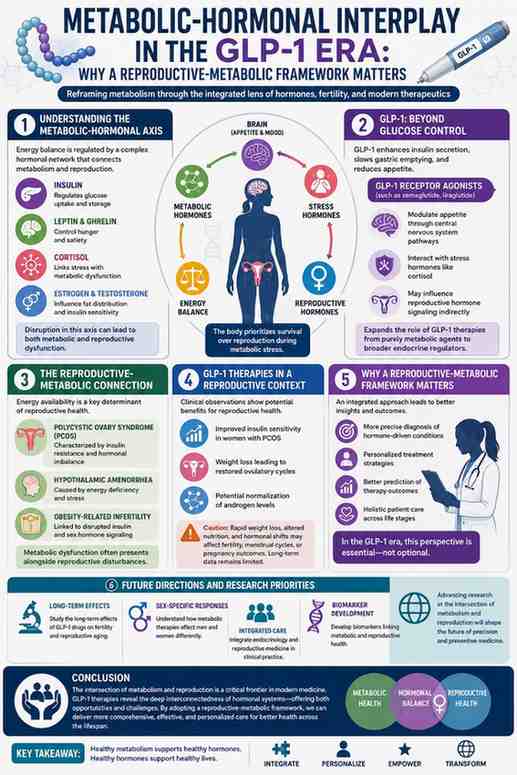
Introduction: The rise of glucagon-like peptide-1 (GLP-1) receptor agonists has transformed the management of obesity, type 2 diabetes, and metabolic dysfunction. However, as these therapies gain widespread use, a deeper scientific conversation is emerging one that connects metabolism with reproductive endocrinology. Increasing evidence suggests that metabolic and reproductive systems are not independent silos but part of a tightly interconnected network. This has led to growing support for a reproductive-metabolic framework, especially in the GLP-1 era, where interventions can influence both energy balance and hormonal health.
Understanding Metabolic-Hormonal Interplay
The human body maintains homeostasis through continuous interaction between metabolic and hormonal systems. Key regulators include:
- Insulin: Controls glucose metabolism and influences ovarian and testicular function
- Leptin: Signals energy sufficiency and regulates reproductive readiness
- Ghrelin: Modulates appetite and may suppress reproductive hormones under energy deficit
- Sex hormones (estrogen, progesterone, testosterone): Influence fat distribution, insulin sensitivity, and energy use
Core insight: Energy availability directly impacts reproductive capability—an evolutionary mechanism ensuring reproduction occurs under favorable conditions.
The Role of GLP-1 in Metabolic Regulation
GLP-1 is an incretin hormone produced in the gut that enhances insulin secretion, suppresses glucagon release, delays gastric emptying, and promotes satiety.
Clinical benefits of GLP-1 therapies:
- Significant weight reduction
- Improved glycemic control
- Reduced cardiovascular risk
- Appetite regulation and behavioral changes
Emerging observation: Beyond metabolic outcomes, GLP-1 therapies may indirectly influence reproductive hormones by improving insulin sensitivity and reducing adiposity.
Why a Reproductive-Metabolic Framework Is Needed
Traditional healthcare models often treat metabolic disorders (like obesity and diabetes) separately from reproductive issues (such as infertility or menstrual irregularities). However, this separation overlooks critical biological overlap.
Key reasons for integration:
- Insulin resistance is a shared driver of metabolic and reproductive disorders
- Adipose tissue acts as an endocrine organ affecting hormone levels
- Hormonal imbalances can worsen metabolic dysfunction
Example: Conditions like polycystic ovary syndrome (PCOS) demonstrate how metabolic dysfunction (insulin resistance) directly disrupts reproductive health.
GLP-1 and Reproductive Health: What the Evidence Suggests
Although GLP-1 receptor agonists are not primarily designed for reproductive health, their systemic effects create important secondary outcomes:
- Improved ovulatory function due to better insulin regulation
- Reduced androgen levels in hyperandrogenic conditions
- Weight loss-mediated fertility benefits
- Potential normalization of menstrual cycles
Critical insight: Metabolic correction often precedes hormonal normalization, suggesting that treating metabolism can restore reproductive balance.
The Bidirectional Relationship: Hormones Affect Metabolism Too
While metabolism influences hormones, the reverse is equally true:
- Estrogen enhances insulin sensitivity
- Testosterone affects muscle mass and glucose utilization
- Progesterone impacts appetite and energy expenditure
Implication: Hormonal imbalances can predispose individuals to metabolic diseases, creating a feedback loop.
Clinical Implications of the Reproductive-Metabolic Model
Adopting this integrated framework could transform patient care:
| Traditional Approach | Reproductive-Metabolic Approach |
|---|---|
| Separate treatment for diabetes and infertility | Unified strategy addressing insulin resistance and hormonal balance |
| Symptom-focused care | Root-cause-driven interventions |
| Short-term outcomes | Long-term systemic health improvement |
Key takeaway: Integrated care improves both metabolic and reproductive outcomes simultaneously.
Population-Level Impact in the GLP-1 Era
The widespread adoption of GLP-1 therapies raises important public health considerations:
- Increased reproductive health improvements as a secondary benefit
- Potential reduction in infertility linked to obesity
- Improved pregnancy outcomes through better metabolic control
However: More long-term studies are needed to fully understand reproductive safety and outcomes.
Challenges and Considerations
- Limited long-term reproductive data on GLP-1 therapies
- Variability in patient response
- Ethical considerations in prescribing for non-diabetic populations
- Need for interdisciplinary collaboration (endocrinology + gynecology)
Insight: The success of this framework depends on bridging gaps between medical specialties.
Future Directions: Toward Precision Hormonal-Metabolic Medicine
The future of healthcare lies in personalized, system-based approaches:
- Integration of metabolic and reproductive biomarkers
- AI-driven predictive models for hormonal-metabolic disorders
- Targeted therapies addressing both systems simultaneously
Prediction: GLP-1 therapies may become part of broader protocols that include hormonal optimization strategies.
Conclusion: A Paradigm Shift in Modern Medicine
The GLP-1 era has done more than revolutionize metabolic treatment—it has exposed the deep interdependence between metabolism and reproduction. Recognizing this connection through a reproductive-metabolic framework offers a more holistic, effective, and scientifically grounded approach to health.
Final insight: Treating metabolism is no longer just about weight or glucose—it is about restoring the body’s entire hormonal ecosystem.
For breaking news and live news updates, like us on Facebook or follow us on Twitter and Instagram. Read more on Latest Health on thefoxdaily.com.


COMMENTS 0