- What Happened in Warangal?
- Why the Kakatiya Connection Matters
- Villagers Say the Temple Was Neglected Long Before Demolition
- The Bigger Issue: India’s “Invisible Heritage” Crisis
- Development vs Heritage: A Growing National Debate
- Political Reactions Intensify
- Officials Promise Reconstruction
- Can Reconstruction Truly Restore Heritage?
- A Unique Angle Most Coverage Is Missing
- Why Rural Heritage Sites Are Especially Vulnerable
- Could This Incident Change Heritage Policy?
- The Emotional Dimension: Why Communities React So Strongly
- Future Outlook: Development Will Need Smarter Heritage Integration
- Conclusion
The demolition of an ancient Shiva temple believed to date back nearly 800 years has triggered widespread outrage in Telangana’s Warangal district, exposing a growing Conflict between Infrastructure expansion and the preservation of historical heritage.
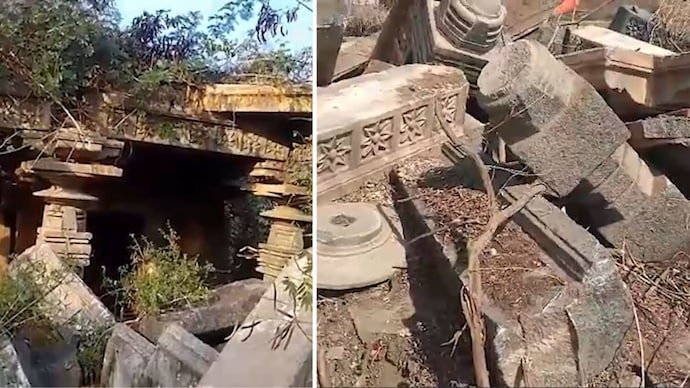
The temple, located within a historic mud fort in Ashok Nagar village under Khanapur mandal, was allegedly demolished during land-levelling work for a proposed Integrated School project. Residents say the shrine belonged to the Kakatiya era, one of South India’s most culturally influential dynasties, and accuse authorities of failing to protect a structure deeply tied to the region’s identity.
As images of the flattened shrine spread across Social Media and local communities, anger intensified. Villagers, heritage activists and opposition leaders questioned how an ancient structure could allegedly be destroyed without proper archaeological assessment or conservation review.
The Controversy has now evolved beyond a local dispute. It has reignited a national conversation around how India protects its lesser-known historical sites especially those outside officially protected monument lists.
What Happened in Warangal?
According to local accounts, the Shiva temple stood inside a historic mud fort associated with the reign of Kakatiya ruler Ganapati Deva. The fort and temple were reportedly located on land identified by the Telangana government for an Integrated School project aimed at expanding educational infrastructure.
During site-clearing and levelling operations, the temple structure was allegedly demolished.
Residents claim the demolition happened without public consultation, heritage mapping, or visible intervention from the Archaeology Department.
The backlash intensified because many villagers say they had repeatedly requested restoration of the neglected temple over the years.
Instead of restoration, they now allege the structure was erased entirely.
Why the Kakatiya Connection Matters
The temple’s historical significance lies largely in its connection to the Kakatiya dynasty, which ruled large parts of present-day Telangana and Andhra Pradesh between the 12th and 14th centuries.
The Kakatiyas are widely remembered for:
- Temple architecture
- Advanced irrigation systems
- Fortified settlements
- Distinct stone craftsmanship
- Cultural integration across regions
Structures from the Kakatiya period are considered foundational to Telangana’s historical identity.
Some of the dynasty’s architectural achievements, including the Ramappa Temple, have received international recognition for their engineering and artistic sophistication.
That is why even smaller village shrines associated with the Kakatiya period hold emotional and cultural value for local communities.
For many residents, the demolished Shiva temple was not merely a religious structure it represented continuity with Telangana’s historical roots.
Villagers Say the Temple Was Neglected Long Before Demolition
One of the strongest criticisms emerging from the controversy is that the temple had allegedly remained abandoned for years.
Residents claim repeated requests for:
- Restoration work
- Protective fencing
- Revival of rituals
- Archaeological surveys
- Conservation funding
were ignored by authorities.
Locals also alleged that treasure hunters had targeted the abandoned site multiple times in the past, including attempts involving explosives.
The accusations point toward a broader issue affecting many rural heritage structures in India neglect often begins long before destruction.
Unlike famous monuments protected by tourism revenue and national visibility, smaller heritage sites frequently exist in administrative grey zones where ownership, maintenance responsibility and conservation funding remain unclear.
The Bigger Issue: India’s “Invisible Heritage” Crisis
The Warangal temple controversy highlights a major problem experts have increasingly warned about: thousands of historically important structures across India remain undocumented, under-protected, or entirely outside formal preservation systems.
India has:
- Globally famous UNESCO sites
- Protected Archaeological Survey monuments
- State heritage structures
- Unregistered local heritage sites
The last category is often the most vulnerable.
Many village temples, stepwells, forts and shrines are historically significant but lack formal recognition. As a result, they become highly exposed during:
- Road expansion projects
- Urbanisation
- Mining activities
- Real estate development
- Government infrastructure projects
The Telangana controversy reflects this larger national challenge.
Development vs Heritage: A Growing National Debate
The demolition has reignited a sensitive question:
Can rapid development coexist with heritage conservation?
India is currently undergoing one of the fastest infrastructure expansion phases in its History. Governments across states are investing heavily in:
- Schools
- Highways
- Industrial corridors
- Housing projects
- Smart cities
- Public utilities
While these projects are essential for economic growth, critics argue heritage assessments often remain an afterthought.
In many cases, local historical structures are identified only after damage has already occurred.
The Warangal incident now symbolizes that tension.
| Development Goals | Heritage Concerns | Core Challenge |
|---|---|---|
| New schools and public infrastructure | Loss of historical identity | Balancing growth with preservation |
| Rapid project execution | Lack of archaeological surveys | Time pressure vs due process |
| Land optimisation | Destruction of undocumented monuments | Poor heritage mapping |
| Economic modernization | Cultural displacement | Development without historical integration |
Political Reactions Intensify
The demolition quickly evolved into a political flashpoint.
BJP leaders strongly criticised the incident, accusing the administration of failing to protect Telangana’s cultural legacy.
BJP district general secretary Rana Pratap Reddy demanded reconstruction of the temple in its original architectural form and questioned whether legal approvals had been obtained before demolition work began.
Former BRS MLA Peddi Sudarshan Reddy also attacked the government, arguing that heritage was being sacrificed in the name of development.
The controversy is politically significant because cultural heritage has increasingly become a powerful emotional and electoral issue across India.
Historical structures are no longer viewed only as archaeological assets they are often tied to regional pride, identity and political narratives.
Officials Promise Reconstruction
Following public backlash, Warangal District Collector Satya Sharada and local MLA Donthi Madhava Reddy visited the site.
The administration announced plans to reconstruct the Shiva temple at the same location.
Officials said:
- The Archaeology Department would be consulted
- The original design would be studied
- The reconstructed shrine would reflect traditional architecture
- An idol of Goddess Saraswati would also be installed
While the assurances may calm tensions temporarily, many locals remain skeptical.
Critics argue reconstruction can never fully replace an original centuries-old structure.
Once an authentic historical monument is destroyed, its archaeological continuity and historical integrity are permanently altered.
Can Reconstruction Truly Restore Heritage?
This is one of the most overlooked aspects of the controversy.
Rebuilding a temple is not the same as preserving an original monument.
An ancient structure carries:
- Original stonework
- Historical craftsmanship
- Cultural layering over centuries
- Archaeological evidence
- Authentic architectural evolution
Once demolished, much of that authenticity is lost forever.
Even the most accurate reconstruction becomes, in historical terms, a replica rather than the original artifact.
This distinction is critical in heritage conservation globally.
A Unique Angle Most Coverage Is Missing
Most discussions around the temple demolition focus on religion or Politics.
But the deeper issue may actually be administrative visibility.
Many historical structures in rural India effectively become “invisible heritage.”
They exist physically, but not institutionally.
If a monument is:
- Not digitally mapped
- Not archaeologically documented
- Not legally protected
- Not publicly catalogued
then development agencies may not treat it as heritage infrastructure during planning.
The Warangal case exposes the urgent need for modern heritage databases integrated into land-use planning systems.
Without digital heritage mapping, similar incidents are likely to continue.
Why Rural Heritage Sites Are Especially Vulnerable
Large monuments in metropolitan areas usually receive media attention, tourism funding and political visibility.
Rural heritage sites often do not.
This creates several vulnerabilities:
- Limited security
- Poor documentation
- Encroachment risks
- Lack of conservation budgets
- Administrative neglect
Ironically, many of these lesser-known sites contain rich local histories and unique architectural features unavailable elsewhere.
Yet they are frequently excluded from mainstream heritage discussions.
Could This Incident Change Heritage Policy?
The controversy could potentially push Telangana and other states toward stronger heritage oversight mechanisms.
Experts may increasingly advocate for:
- Mandatory heritage impact assessments
- Digital mapping of historical structures
- Integrated archaeology reviews before land clearance
- Local heritage registries
- Community-led conservation programs
There may also be growing pressure to improve coordination between:
- Urban development departments
- Revenue authorities
- Archaeology departments
- Local governments
- Cultural ministries
Currently, many such agencies function separately, increasing the risk of oversight failures.
The Emotional Dimension: Why Communities React So Strongly
Heritage structures are not merely old buildings.
For communities, they represent:
- Collective memory
- Cultural continuity
- Religious identity
- Regional pride
- Intergenerational connection
That emotional connection explains why incidents like the Warangal demolition trigger reactions far beyond architecture or archaeology.
People often feel that part of their own identity has been erased.
Future Outlook: Development Will Need Smarter Heritage Integration
India’s infrastructure expansion is unlikely to slow down.
However, the Warangal controversy may strengthen demands for “heritage-sensitive development.”
The future may increasingly require:
- AI-assisted heritage mapping
- Drone-based archaeological surveys
- Public consultation before land clearance
- Preservation-first planning models
- Real-time monitoring of historical sites
The core challenge is no longer whether India should develop but how it can modernize without erasing historical memory.
Conclusion
The demolition of the alleged 800-year-old Shiva temple in Telangana’s Warangal district has become far more than a local controversy. It has evolved into a larger debate about heritage preservation, administrative accountability and the hidden cost of rapid development.
While officials have promised reconstruction, the incident has exposed serious concerns about how vulnerable India’s lesser-known historical structures remain.
Key Takeaways:
- An ancient Shiva temple linked to the Kakatiya era was allegedly demolished during school project work
- Villagers say repeated restoration requests were ignored for years
- The controversy has triggered political backlash across Telangana
- Officials have promised reconstruction and Archaeology Department consultation
- The incident highlights India’s growing “invisible heritage” crisis
- Experts may push for stronger heritage mapping and preservation systems
Ultimately, the Warangal temple controversy raises a difficult but increasingly urgent question for modern India:
Can a nation preserve its civilizational memory while racing toward rapid development?
The answer may shape not only Telangana’s heritage future, but India’s broader cultural landscape for generations to come.
For breaking news and live news updates, like us on Facebook or follow us on Twitter and Instagram. Read more on Latest India on thefoxdaily.com.






COMMENTS 0