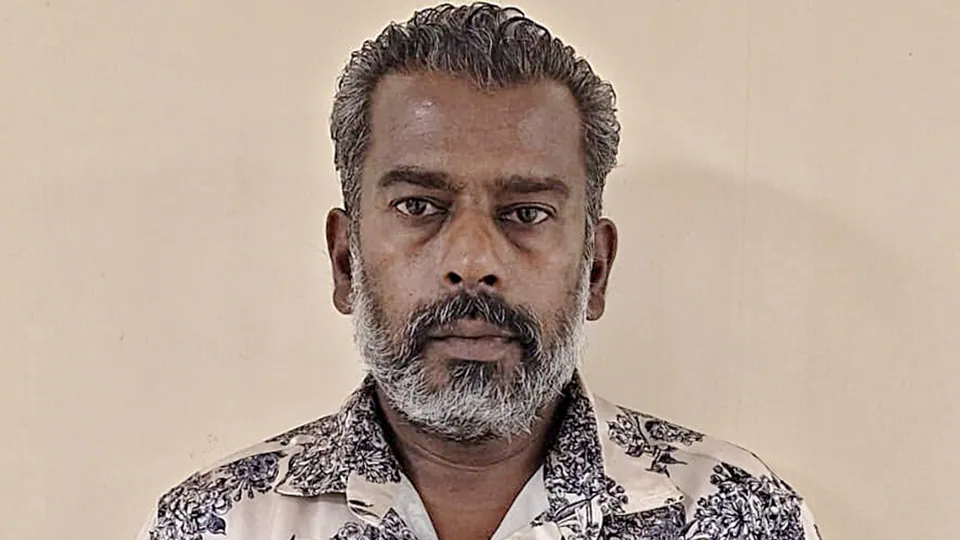
A significant development has emerged in the Bengaluru mass murder investigation after the accused, Indushekhar, identified two decomposed bodies recovered from a forest area in Salem district of Tamil Nadu. He identified the remains as those of his wife, Sunitha, and mother-in-law, Rupavathi, according to police sources.
Indushekhar is accused of killing seven members of his wife’s family, including Sunitha and a seven-year-old boy, allegedly following a domestic dispute in Bengaluru. Investigators believe he disposed of the victims’ bodies at different locations after the killings.
Police took the accused to the forest location late Friday night, where he identified the two bodies. The remains had been found in a severely decomposed condition, making the identification process an important step in the investigation.
The latest development is expected to help investigators complete formal identification procedures and coordinate with the victims’ relatives. Police are also continuing searches at other locations where the accused allegedly disposed of bodies.
Accused identifies two bodies recovered from Salem forest
According to police sources, Indushekhar was taken to the forest area in Salem district on Friday night. During the visit, he identified two bodies recovered from the Yercaud forest region as those of Sunitha and Rupavathi.
The identification is a major development because the condition of the remains had complicated the process of establishing the victims’ identities. Police are now preparing to take family members to the location so that the necessary identification and recovery procedures can be completed.
A senior police officer, speaking on condition of anonymity, confirmed that the accused had identified the two bodies as those of his wife and mother-in-law. The officer said further procedures, including postmortem examinations and handing over the remains to the family, would be carried out according to established protocols.
Authorities are expected to conduct the postmortem examinations in the presence of relatives, subject to the applicable procedures. After the examinations, the bodies will be handed over to the family.
The relatives will also decide whether to perform the last rites in Tamil Nadu or transport the bodies to Bengaluru. That decision is expected to be made after discussions with the family and completion of the required formalities.
Police continue search for the remaining victims
Investigators believe that Indushekhar allegedly disposed of the seven victims’ bodies at different locations after killing them. The recovery of two bodies in Salem has therefore not brought the search operation to an end.
Police are examining the accused’s statements to identify the locations where the remaining bodies may have been abandoned. The investigation involves travelling to several places across Karnataka and neighbouring areas of Tamil Nadu to verify the information and conduct searches.
Among the locations investigators are planning to visit are Charmadi Ghat, Shiradi Ghat, Nandi Hills and Chamundi Hills. These places have become relevant because the accused allegedly mentioned them during questioning as locations connected to the disposal of bodies.
Police are expected to take Indushekhar to these locations as part of the investigation. Officials will need to verify his claims against physical evidence and other findings rather than rely solely on his statements.
The recovery process could be challenging because some locations are forested or difficult to access. Decomposition and environmental conditions may also complicate searches and identification. Investigators are therefore working to establish the exact locations and recover any remaining bodies as quickly as possible.
Police investigate alleged motive involving gold jewellery
Alongside the search for the victims’ bodies, investigators are examining a possible financial motive behind the killings. Police sources allege that Indushekhar removed gold ornaments from the bodies of his mother-in-law and other victims after the murders.
The jewellery reportedly included chains, earrings and rings. Investigators suspect that the accused cleaned ornaments that had become stained with blood before selling some of them.
According to the police account, he allegedly spent the money obtained from selling the jewellery. He is also said to have retained some of the remaining ornaments and pledged them to arrange money for fuel and travel expenses.
These allegations have led investigators to examine jewellery transactions and financial movements that may help establish what happened after the killings. Police are attempting to determine which ornaments were sold, which were pledged and whether any items can still be recovered.
The alleged handling of the jewellery could also help investigators reconstruct the accused’s movements and activities after the murders. Financial records, pawn transactions and other available evidence may be compared with the timeline being developed by the police.
However, the alleged financial motive remains part of the investigation. Authorities will need to establish whether the jewellery transactions were directly connected to the killings and determine the role they may have played in the sequence of events.
Travel between Bengaluru, Mangaluru and other locations under scrutiny
Investigators are also examining Indushekhar’s movements after the alleged murders. Police sources said he travelled between Bengaluru, Mangaluru, Chennai and Nandi Hills during the period under investigation.
The travel routes are important because police suspect that the accused moved between different locations while disposing of the bodies and managing the aftermath of the killings.
Investigators are working to establish when he visited each place, how he travelled and whether his movements match the locations he identified during questioning. They are also examining fuel expenses and financial transactions that could help confirm the timeline.
Reconstructing the accused’s movements may help police determine where individual victims were allegedly killed, how the bodies were transported and where they were abandoned. It could also help identify gaps or inconsistencies in his account.
The investigation is therefore examining both physical evidence and financial records. Any information recovered from the accused’s travel history will need to be corroborated with other evidence before investigators can establish a complete sequence of events.
Kannada messages from deceased Shankar’s phone raised suspicion
A message sent from the mobile phone of one of the deceased victims, Shankar, reportedly played an important role in drawing attention to the case. According to the investigation details, Shankar’s friends became suspicious after receiving messages written in Kannada from his phone.
They reportedly knew that Shankar did not normally communicate with them in Kannada. The unexpected change in language raised questions about whether he was actually sending the messages or whether someone else had access to his phone.
The discrepancy prompted his friends to question the messages and alert the authorities. This information provided investigators with an important lead as they began examining the circumstances surrounding the family’s disappearance and deaths.
Messages sent from a missing or deceased person’s phone can become significant investigative evidence, particularly when the communication pattern changes unexpectedly. In this case, the reported language difference attracted attention because it did not match Shankar’s usual way of communicating with his friends.
Investigators are examining the circumstances surrounding the messages and how they were used after Shankar’s death. Establishing who sent them, when they were sent and what devices or accounts were involved could help clarify the timeline of events.
Accused remanded to 12 days of police custody
Indushekhar, who was arrested in connection with the Rajajinagar mass murder case, has been remanded to 12 days of police custody by the 32nd Additional Chief Judicial Magistrate Court.
The custody period gives investigators an opportunity to question him about the alleged motive, the sequence of killings, the disposal of the bodies and the locations where the remaining victims may have been left.
Police are also expected to use the period to verify information provided during questioning. This includes taking the accused to locations connected to the investigation and attempting to recover physical evidence.
The questioning is focused on several key issues: how the alleged killings were carried out, whether financial disagreements played a role, how the jewellery was handled and how the accused travelled between different locations after the incident.
Investigators are also trying to determine whether the accused acted alone and whether any other individuals were involved in activities connected to the alleged crimes. The supplied information does not establish that anyone else has been charged in connection with the case.
What happens next in the Bengaluru mass murder investigation?
The immediate priority for investigators is to complete the identification and postmortem procedures for Sunitha and Rupavathi while continuing the search for the remaining victims. The family will be informed about the developments and involved in the formalities required before the bodies are handed over.
Police will also continue examining locations mentioned by Indushekhar, including Charmadi Ghat, Shiradi Ghat, Nandi Hills and Chamundi Hills. The searches are intended to establish whether the remaining bodies or other evidence can be recovered.
At the same time, investigators are expected to examine jewellery transactions, travel records, mobile phone communications and other evidence that could help reconstruct the events. The reported Kannada messages from Shankar’s phone may remain an important part of that inquiry.
The identification of the two bodies in Salem represents a major step for the families seeking answers about the victims. However, several questions remain unanswered, including the precise sequence of the alleged killings, the full extent of the accused’s movements and the locations of the other bodies.
As the investigation continues, police will need to corroborate the accused’s statements with forensic findings, recovered evidence and independent records. The recovery of the remaining victims and the completion of the investigation will be crucial to establishing the facts of the Bengaluru mass murder case.
For breaking news and live news updates, like us on Facebook or follow us on Twitter and Instagram. Read more on Latest India on thefoxdaily.com.





COMMENTS 0