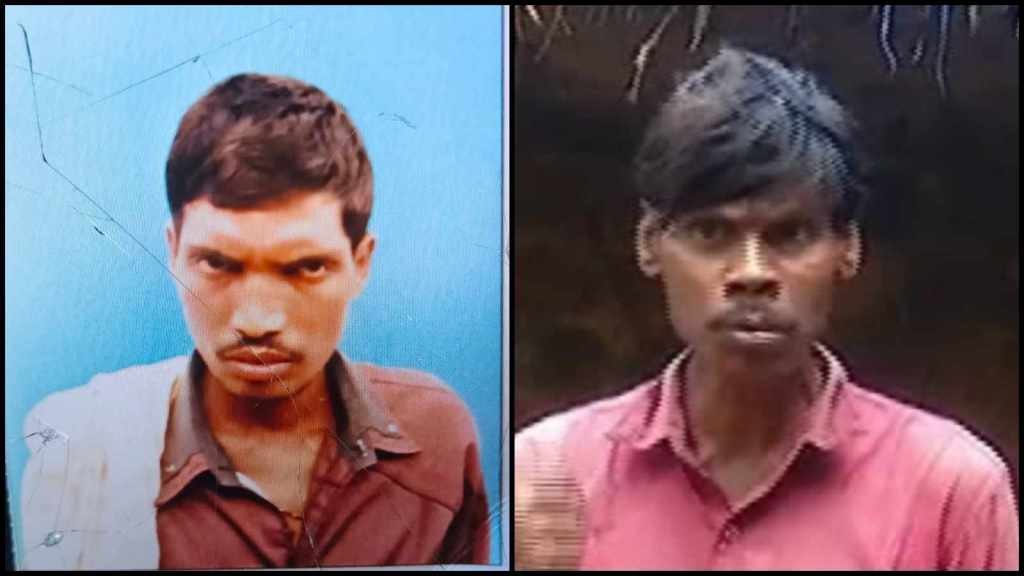
A murder investigation in Odisha’s Balangir district took a disturbing turn after police recovered a headless body from a pond and later found the missing head inside the suspected killer’s house, barely 20 metres from where the body had been dumped.
Police have arrested 40-year-old Satrughan Sahu, a resident of Bagada village under Deogaon police station, in connection with the killing of 45-year-old Santosh Kharsel. Investigators allege that Sahu attacked Kharsel with an iron katari, severed his head and disposed of the body in a nearby pond.
According to police, the investigation then revealed an alleged motive rooted in superstition. Authorities suspect Sahu believed that a human sacrifice could help reunite him with his estranged wife, WHO has been living at her maternal home in Patnagarh for about 11 years.
The case has raised serious questions not only about the circumstances of Kharsel’s death but also about how an apparently isolated personal crisis can become intertwined with dangerous supernatural beliefs.
How the Balangir murder investigation began
The case came to light after Kharsel was reported missing on August 18 by his brother-in-law. Kharsel, a native of Teparmunda village in Balangir district, had reportedly been last seen with Sahu.
When police recovered a body from a pond, the absence of the head initially created a different line of suspicion. Investigators considered whether the killer had removed the head in an attempt to destroy evidence or make identification more difficult.
That assumption changed as officers followed the victim’s movements and examined his last known interactions.
Police learned that Kharsel had met Sahu on August 18. Investigators allege that Sahu subsequently took him to his house, where the fatal attack occurred during the night.
The missing head was found just 20 metres from the pond
The location of the missing body part became one of the most striking elements of the investigation.
Police allege that after killing Kharsel, Sahu disposed of the headless body in a pond located approximately 20 metres from his house. The severed head, however, was allegedly not taken far away.
Investigators found it buried inside a pit in a room at Sahu’s residence. Police recovered the head on Thursday, changing the direction of the investigation and providing investigators with an important piece of evidence in reconstructing the alleged sequence of events.
The proximity between the pond and the accused’s home also meant that investigators were able to examine both locations as connected parts of the same crime scene.
Police allege human sacrifice was the motive
According to Northern Range Inspector General of Police Himanshu Lal, the investigation so far indicates that the killing was allegedly carried out as part of a human-sacrifice ritual.
Police allege that Sahu had developed the belief that a human sacrifice could help bring his wife back to him. His wife has reportedly been staying with her maternal family in Patnagarh for around 11 years, while the couple’s two children had also been living away from him.
Investigators believe this personal situation was central to the alleged motive.
Rather than treating the murder as an apparently random killing, police began examining whether ritual or religious material found at the accused’s home could explain why the victim’s head had been separated from his body and preserved rather than simply discarded.
How police say the victim was targeted
Investigators allege that Sahu had been looking for someone he could use as a victim when he encountered Kharsel at a bus stand.
Police say the two men subsequently met on August 18 and Kharsel was taken to Sahu’s house. During the night, investigators allege, Sahu attacked him with an iron katari and killed him.
The body was then allegedly transported to the nearby pond, where it was disposed of without the head.
Police later found the head buried inside the accused’s room. The discovery, investigators said, helped them reassess the original theory that the severing was primarily intended to conceal the victim’s identity.
Puja material and blood evidence deepen the police theory
Investigators said they found religious and ritual material inside the accused’s house that contributed to their suspicion that the murder may have been linked to an alleged human-sacrifice belief.
Police also reported finding blood samples on brass deities and portraits in front of which Sahu was allegedly offering prayers.
A forensic team examined the crime scene, while police said blood samples and other evidence were collected from the house. Investigators also seized the alleged weapon used in the killing and other articles.
Police said clothes recovered from Sahu’s house contained blood that they identified as belonging to the victim.
These physical findings are important because they provide investigators with evidence beyond the circumstances surrounding the missing-person report and the discovery of the body.
What police say about the accused
Balangir Superintendent of Police Abhilash G said investigators have evidence linking Sahu to the killing and that a confessional statement had also been obtained during the investigation.
Police have said they are working towards filing a chargesheet within 60 days.
Authorities have so far ruled out the involvement of other people, although the investigation remains ongoing. That means the police theory of the crime could still be subject to further evidence gathered during the investigation and subsequent legal proceedings.
The distinction matters because an arrest and a police allegation do not by themselves establish guilt. The accused will have the opportunity to contest the allegations through the legal process.
Why the recovery of the head changed the investigation
The discovery of the severed head inside the accused’s home was more than a breakthrough in locating missing evidence. It potentially provided investigators with a clue about the alleged purpose behind the killing.
If the head had simply been disposed of elsewhere, investigators might have continued to focus primarily on concealment or identification. Instead, its alleged burial inside the accused’s room, alongside the reported discovery of ritual material, led police to investigate a different possibility.
Investigators now allege that the head was deliberately retained rather than discarded, which they say is consistent with their theory of a ritual motive.
This illustrates why investigators often examine seemingly unusual details of a crime scene. The location of evidence can be as significant as the evidence itself when reconstructing what happened.
The role of superstition in the alleged crime
Police have described the alleged motive as superstition-driven, saying Sahu believed that human sacrifice could help restore his relationship with his wife.
That allegation does not mean that the belief itself explains every aspect of the crime. Investigators still have to establish the sequence of events, the accused’s state of mind and the evidence connecting him to the killing.
What the case does highlight is the potentially dangerous consequences when deeply held personal distress becomes connected to beliefs involving violence or sacrifice.
In this case, police allege that the breakdown of a marriage and prolonged separation from family became intertwined with a belief that an act of extreme violence could change his circumstances.
Police also examined the victim’s vulnerability
Investigators said family members described Kharsel as being in an unstable mental state, which police believe may have made him an easier target.
That aspect remains part of the investigation and should be distinguished from a formal medical assessment or established diagnosis.
From the investigators’ perspective, however, understanding the circumstances in which Kharsel met Sahu and why he accompanied him to the house is important to reconstructing how the alleged crime occurred.
The police theory is that Sahu encountered Kharsel at a bus stand and subsequently brought him home before the alleged attack.
A solitary life described by neighbours
People living near Sahu reportedly described him as someone who maintained a largely solitary life and had limited interaction with neighbours.
Such descriptions can help investigators build a picture of an accused person’s circumstances, but they do not by themselves establish motive or responsibility for a crime.
In this case, police are relying on a combination of circumstances, physical evidence, forensic examination and statements gathered during the investigation to establish their version of events.
What happens next in the Balangir case?
The immediate focus for investigators will be on completing the evidence-gathering process and establishing a coherent sequence of events from the victim’s last known movements to the alleged killing and disposal of the body.
The weapon, clothing, blood evidence, material recovered from the house and forensic findings are expected to form part of that process.
Police have also indicated that they intend to file the chargesheet within 60 days. The prosecution will ultimately have to establish the allegations through evidence in court.
The exact legal consequences for Sahu will therefore depend on the charges formally brought against him and the evidence presented during judicial proceedings.
The bigger concern behind the case
The Balangir murder is particularly disturbing because the alleged motive was not presented by police as an ordinary dispute that escalated into violence. Investigators say they believe the accused deliberately sought a victim because of a superstition connected to his estranged marriage.
That alleged sequence makes the case a reminder of how dangerous violent interpretations of superstition can become.
It also shows why the investigation has focused so closely on the material found inside the accused’s home. The reported presence of puja items, blood evidence and the buried head has given investigators a framework for testing the human-sacrifice theory against physical evidence.
At the same time, the case should not be reduced to a sensational story about ritual practices. The central issue remains a homicide investigation involving a deceased man, an arrested suspect and evidence that must ultimately be tested through due process.
A crime reconstructed from a few crucial clues
The investigation began with a missing-person report and the discovery of a headless body in a pond. The most obvious question was where the missing head had gone and why it had been removed.
Police say the answer was unexpectedly close: inside the home of the man they identified as the last person seen with the victim.
From there, the investigation moved toward a far more disturbing theory. Authorities allege that the head was deliberately retained, ritual material was present at the house and Sahu believed a human sacrifice could help reunite him with his estranged wife.
Those allegations will now have to be tested through the Criminal Justice process. For investigators, however, the discovery of the head just 20 metres from the pond appears to have been the crucial break that connected the abandoned body, the suspected killer and the alleged motive.
For breaking news and live news updates, like us on Facebook or follow us on Twitter and Instagram. Read more on Latest India on thefoxdaily.com.






COMMENTS 0