- The Rise of Viral Evidence in Sexual Harassment Cases
- Public Harassment Is No Longer Hidden
- The Surveillance Paradox: More Cameras, Same Fear
- Why Bystander Inaction Remains One of the Biggest Problems
- The Normalisation of Everyday Harassment
- The Contradiction Between Moral Policing and Public Safety
- Why Viral Outrage Cannot Replace Systemic Reform
- How Public Transport Became a Flashpoint in Safety Debates
- Technology Is Exposing Society, Not Fixing It
- The Psychological Cost of Constant Vigilance
- Why Faster Police Action Still Matters
- The Larger Question India Must Confront
- Conclusion
India’s public spaces are under constant surveillance today. CCTV cameras monitor streets, passengers carry smartphones everywhere, and viral videos can trigger national outrage within hours. Yet despite this unprecedented visibility, incidents of sexual harassment and public sexual misconduct continue to emerge with disturbing regularity.
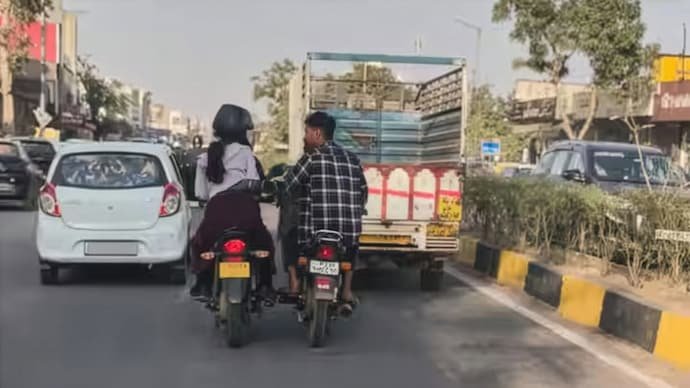
Recent cases from Rajasthan once again pushed this reality into public debate. In Jaipur, multiple men were arrested after allegedly harassing a woman riding on a bike taxi, while another accused was detained for allegedly molesting a pregnant woman in a residential locality. In both cases, decisive police action accelerated only after videos and CCTV footage surfaced publicly.
The pattern is becoming impossible to ignore.
Across Indian cities, cameras are increasingly documenting behaviour women have long spoken about: harassment in buses, trains, streets, flights, marketplaces, and even heavily monitored public infrastructure. Technology is exposing the scale of the problem more clearly than ever before. However, it is also revealing another uncomfortable truth the certainty of being recorded is not acting as a strong enough deterrent.
This contradiction lies at the centre of India’s growing conversation around women’s safety, public accountability, and social behaviour.
The Rise of Viral Evidence in Sexual Harassment Cases
Over the past few years, mobile phone footage and CCTV recordings have become central to public conversations around crimes against women. In many cases, these videos are not just evidence they become the reason authorities respond quickly.
That shift has fundamentally changed how sexual misconduct cases enter public consciousness.
Earlier, many incidents remained confined to police complaints, private trauma, or local reports. Today, one viral clip can generate nationwide outrage within hours. Social Media platforms amplify incidents instantly, forcing institutions to react under public scrutiny.
But the growing dependence on viral visibility raises serious concerns.
Does justice now require proof designed for public consumption? Are victims receiving attention because crimes happened or because the internet witnessed them?
These questions are increasingly relevant in India’s urban safety discourse.
Public Harassment Is No Longer Hidden
The widespread availability of cameras has destroyed one long-standing myth: that public spaces are naturally safer because they are crowded.
Repeated incidents across Indian cities suggest the opposite.
Women have reported harassment inside metro trains, city buses, suburban rail networks, marketplaces, parks, and airports places traditionally considered “public” and therefore supposedly secure.
In Delhi, a widely discussed incident involving a man masturbating inside a city bus shocked viewers online. The clip spread rapidly across social media, eventually compelling police action. Women later remarked that such behaviour was not unusual, only rarely documented.
Similarly, courts and police authorities have dealt with multiple incidents involving public sexual misconduct inside metro systems, despite extensive surveillance infrastructure.
This reveals an important reality: cameras can record crimes, but they do not automatically prevent them.
The Surveillance Paradox: More Cameras, Same Fear
India today is significantly more monitored than it was a decade ago.
Cities have expanded CCTV networks. Public transportation systems advertise surveillance-based safety measures. Airports and metro stations operate under constant monitoring. Smartphone penetration has also transformed ordinary citizens into real-time recorders of public behaviour.
Yet women continue to negotiate fear in daily movement.
The contradiction highlights what experts often describe as the “surveillance paradox.” Monitoring systems increase evidence collection after incidents occur, but they do not necessarily change the mindset enabling harassment.
In many cases, perpetrators appear confident that:
- Bystanders will not intervene
- Victims may hesitate to complain
- Authorities may respond slowly
- Social stigma may silence reporting
- Legal processes may take years
That perceived social protection weakens the deterrent effect of surveillance itself.
Why Bystander Inaction Remains One of the Biggest Problems
One of the most troubling patterns emerging from these incidents is not only the misconduct itself but the passivity surrounding it.
Videos frequently show crowded environments where witnesses record events but rarely intervene directly.
The Jaipur bike-taxi incident reflected this reality. The act was captured and circulated, yet immediate intervention was reportedly absent.
This phenomenon is not unique to India, but its persistence raises difficult social questions.
Why do people hesitate to help?
Several factors contribute:
- Fear of police and legal complications
- Concern about personal safety
- Social conditioning to avoid involvement
- Distrust in judicial processes
- Normalization of harassment in public spaces
Over time, repeated inaction creates dangerous social messaging. Perpetrators begin operating with the expectation that resistance will be minimal.
In effect, silence becomes part of the Environment enabling misconduct.
The Normalisation of Everyday Harassment
Perhaps the most uncomfortable aspect of these incidents is how routine many women describe them to be.
For countless women in Indian cities, strategies for avoiding harassment are deeply embedded into daily life:
- Choosing safer routes
- Avoiding isolated transport sections
- Sharing live locations
- Traveling during specific hours
- Ignoring verbal harassment to avoid escalation
These behavioural adjustments reflect a society where public risk management has become normalised for women.
The viral videos shock the broader public because they visually expose experiences many women have privately navigated for years.
Cameras are not creating the problem. They are documenting what already exists.
The Contradiction Between Moral Policing and Public Safety
India’s social landscape also reveals a deep contradiction.
Consenting couples are frequently questioned in parks, women’s clothing choices become subjects of public debate, and moral policing often receives visible support in parts of society.
At the same time, non-consensual behaviour in public spaces continues to persist with alarming frequency.
This imbalance reflects a broader issue in public discourse: social attention is often disproportionately focused on regulating women’s behaviour rather than addressing male misconduct.
The result is a distorted safety framework where:
- Women face scrutiny for personal choices
- Victims anticipate blame or questioning
- Harassment complaints may initially be minimised
- Institutional urgency often emerges only after public outrage
That dynamic weakens trust in preventive policing.
Why Viral Outrage Cannot Replace Systemic Reform
Public outrage has become one of the strongest accelerators of institutional response in India.
When videos trend online, authorities often move rapidly:
- Arrests happen faster
- Officials issue public statements
- Internal inquiries begin
- Media attention increases accountability
While this visibility is important, it also creates an uneven justice ecosystem.
Cases with viral footage receive attention. Cases without cameras may struggle for urgency.
That imbalance risks creating a system where visibility determines institutional responsiveness.
True reform requires moving from reactive outrage to preventive accountability.
How Public Transport Became a Flashpoint in Safety Debates
Many recent incidents have emerged from public transportation systems, highlighting the unique vulnerability women face while commuting.
Public transport compresses strangers into shared spaces where anonymity, crowding, and limited mobility intersect. This creates conditions where harassment can occur quickly and often subtly.
India’s expanding metro systems and urban transport networks were expected to improve women’s mobility. In many ways, they have. Yet safety concerns continue to shadow that progress.
| Public Space | Common Safety Concern | Challenge |
|---|---|---|
| City buses | Physical harassment | Limited monitoring inside crowded sections |
| Metro trains | Inappropriate touching | Crowded coaches during peak hours |
| Suburban trains | Stalking and exposure incidents | High-density commuting |
| Ride services | Isolation risks | Dependence on rapid complaint systems |
| Flights | Passenger misconduct | Delayed reporting and response mechanisms |
The challenge is no longer simply creating access to mobility. It is ensuring that women can move without constant psychological vigilance.
Technology Is Exposing Society, Not Fixing It
There is a temptation to believe technology alone can solve public safety problems.
However, the recent wave of viral misconduct videos demonstrates the limits of purely surveillance-based approaches.
CCTV networks can identify suspects. Smartphones can document abuse. Facial recognition systems may strengthen investigations.
But none of these tools automatically address:
- Gender attitudes
- Entitlement
- Normalization of harassment
- Fear of reporting
- Institutional delay
- Social indifference
Technology can expose societal behaviour. It cannot independently transform it.
That transformation requires legal certainty, social accountability, Education, and faster institutional response mechanisms.
The Psychological Cost of Constant Vigilance
Public discussions around women’s safety often focus on physical harm, but the psychological burden is equally significant.
Many women navigate public spaces through continuous situational assessment:
- Who is standing nearby?
- Is this route safe?
- Can someone help if needed?
- Should I avoid confrontation?
- Will anyone believe me?
This mental calculation shapes ordinary routines in ways many men never experience.
The cumulative impact affects freedom, mobility, confidence, and quality of life.
When public safety becomes conditional rather than guaranteed, freedom of movement itself becomes unequal.
Why Faster Police Action Still Matters
Despite criticism of delayed responses in many cases, faster police action after viral incidents does demonstrate one important shift: public pressure is increasingly influencing accountability.
Authorities today operate under far greater digital scrutiny than before.
Social media can rapidly expose administrative inaction, forcing quicker responses from institutions concerned about public perception.
However, long-term trust will depend not on reactive arrests alone but on consistent treatment of complaints before videos emerge publicly.
Victims should not need viral evidence to receive urgency.
The Larger Question India Must Confront
The growing archive of recorded harassment incidents poses a larger societal question.
What kind of public culture allows misconduct to persist openly despite cameras, crowds, and awareness campaigns?
The answer cannot be reduced to policing alone.
This is equally a conversation about:
- Social behaviour
- Gender attitudes
- Urban culture
- Institutional trust
- Civic responsibility
- Public empathy
Every viral video documents more than a Crime. It documents the environment surrounding that crime the reactions, the hesitation, the silence, and the systemic gaps.
Conclusion
India’s cameras are capturing a reality that women have long understood: public visibility does not automatically equal public safety.
From buses and metro trains to flights and crowded roads, incidents of sexual misconduct continue to expose the fragile nature of safety in everyday movement. Viral videos have undoubtedly increased accountability and accelerated police response in several cases. They have made denial more difficult.
But visibility alone is not enough.
The deeper challenge lies in transforming a culture where harassment is often normalized, bystander intervention remains rare, and institutional urgency frequently depends on public outrage.
The uncomfortable truth is that India is no longer lacking evidence. The evidence is everywhere recorded, uploaded, shared, and debated daily.
The real question now is whether society, institutions, and public culture are prepared to respond with the same consistency and seriousness even when the cameras are not rolling.
For breaking news and live news updates, like us on Facebook or follow us on Twitter and Instagram. Read more on Latest India on thefoxdaily.com.






COMMENTS 0