The Cockroaches Had a Blockbuster. The Sequel Is Struggling on Instagram
The Cockroaches Had a Blockbuster. The Sequel Is Struggling on Instagram
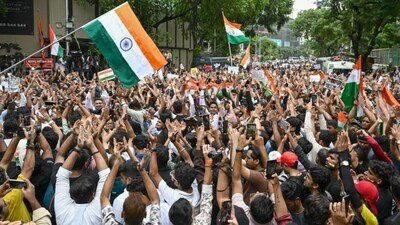
The Cockroach Janata Party (CJP), a youth-driven political movement that gained widespread attention during protests over the NEET paper leak in July 2026, is struggling to maintain its Instagram momentum. An analysis of social media activity by India Today found that the movement’s official Instagram page experienced a sharp decline in engagement and followers during its October campaign, even as some of its prominent leaders continued to attract substantial attention.
The contrast highlights a challenge for movements that emerge and grow rapidly on social media: translating a viral moment into sustained digital influence. CJP’s July campaign connected with students and families concerned about the medical entrance examination controversy, helping the movement establish a recognisable presence beyond the internet. By October, however, its campaign demanding the removal of Chief Election Commissioner Gyanesh Kumar was competing with an issue already being pursued by established opposition parties.
According to India Today’s analysis of Instagram data extracted using Apify, CJP’s total engagement declined by nearly 80% between the two campaign periods. The official page also lost more than 100,000 followers over the preceding 30 days. Meanwhile, Congress added approximately 480,000 followers and the Bharatiya Janata Party (BJP) gained around 98,000 during the same period.
These figures do not establish that former CJP followers moved to Congress or the BJP. They do, however, illustrate a striking change in the social media performance of the movement and the established political parties between July and October.
How CJP’s Instagram Momentum Changed Between July and October
CJP’s rise began with its response to anger surrounding the NEET examination controversy. The movement connected an issue affecting students and their families with street protests, online mobilisation and political demands. Its rapid growth demonstrated how a campaign built around a widely understood grievance could attract attention across digital platforms.
In October, CJP shifted its focus to electoral rolls and a demand for the removal of Chief Election Commissioner Gyanesh Kumar. The issue was already part of a broader political confrontation, with opposition parties, including Congress, campaigning on related concerns.
India Today’s analysis compared two 15-day periods: July 10–25, surrounding the resignation of Union Education Minister Dharmendra Pradhan, and October 1–15, when CJP began its campaign demanding the Chief Election Commissioner’s removal.
The comparison examined Instagram activity across CJP’s official page, its prominent leaders, Prime Minister Narendra Modi, Lok Sabha Leader of the Opposition Rahul Gandhi and 29 Union ministers. The researchers used Apify, a cloud-based data extraction platform, to examine posting activity, follower changes and engagement.
The findings suggest that CJP’s official account lost momentum on several measures at once. Its overall engagement dropped sharply, its average engagement per post declined by more than half, and its follower count fell during the period examined.
However, the results also reveal that the movement’s decline was not uniform across its entire online presence. Some individual leaders continued to generate substantial engagement, suggesting that audiences were responding differently to the organisation’s official page and the personalities associated with it.
Why the NEET Protest Connected With a Wider Audience
One of the most important differences between the July and October campaigns was the nature of the issue being highlighted.
The NEET controversy directly affected students preparing for medical education and families who had invested considerable time, money and effort in the examination process. Concerns about the integrity of a high-stakes test could be understood immediately by people experiencing its consequences.
CJP, which emerged as a Gen Z political movement, was able to position itself around an issue that many young people and parents could relate to personally. The campaign connected online discussion with street-level mobilisation, giving followers a clear reason to engage with the movement.
This combination can be particularly effective on social media. When people recognise a problem from their own lives, they may be more likely to share posts, comment on developments and encourage others to participate. The issue also provides a straightforward narrative that can be communicated through short videos, images, slogans and personal accounts.
The July campaign therefore gave CJP an opportunity to establish itself as a movement responding to a specific public grievance rather than simply another political account competing for attention.
Why the October Election Campaign Struggled to Repeat the Success
The October campaign faced a different challenge. CJP founder Abhijit Dipke was demanding the removal of Chief Election Commissioner Gyanesh Kumar over concerns related to electoral rolls. Unlike the NEET controversy, this was a broader political issue that had already attracted attention from established opposition parties.
Congress and other opposition groups were also raising questions about electoral rolls and election-related processes. As a result, CJP was no longer the only prominent political voice associated with the issue.
That change may have weakened the movement’s ability to own the narrative on Instagram. When several organisations campaign around the same subject, audiences have more accounts from which to obtain information and political commentary. Established parties also have larger organisational networks and experienced political leaders who can attract attention independently of a particular campaign.
The distinction is important because social media visibility depends not only on how serious an issue is but also on how clearly an account differentiates its message from competing voices.
In July, CJP appeared closely connected to a specific student grievance. In October, its campaign overlapped with a political debate already being pursued by larger opposition organisations. India Today’s analysis suggests that this shift coincided with a substantial decline in engagement on the movement’s official Instagram page.
The data do not prove that the change in subject caused the entire decline. Posting frequency, audience behaviour, the initial surge in followers and other platform-related factors may also have contributed.
CJP’s Official Instagram Page Published Fewer Posts
Posting frequency was another major difference between the two periods. According to India Today’s analysis, CJP published 90 posts during the July comparison window but fewer than half that number in October.
The reduction in activity coincided with a steep decline in engagement. The page generated approximately 10.7 lakh interactions during the July period, compared with around 3.8 lakh in October.
That represents a substantial reduction in the total number of interactions generated by the official account. The average engagement per post also fell by more than half, indicating that the decline was not simply the result of publishing fewer posts.
Posting frequency can influence how often audiences encounter a political account, but volume alone does not guarantee engagement. A post must also attract interest, connect with the audience or offer something followers consider worth sharing and discussing.
For a movement attempting to sustain attention after a major campaign, the challenge is therefore twofold: maintain a consistent publishing schedule and give followers a compelling reason to continue interacting with its content.
The July Follower Surge Created a Difficult Benchmark
CJP’s extraordinary growth in July also provides important context for its October decline. During the July campaign, the movement added approximately 47.5 lakh followers in a single fortnight, according to the analysis.
A surge of that size creates an unusually high benchmark for subsequent performance. A campaign that attracts millions of new followers in a short period may struggle to maintain the same rate of growth once the original controversy begins to fade from public attention.
Not every person who follows an account during a viral event will remain equally engaged over time. Some may have joined because they were interested in one specific issue, while others may have followed the movement to monitor developments without becoming regular participants in its online activity.
Nevertheless, the scale of CJP’s October decline suggests that the initial follower surge cannot explain the entire change. The fall in average engagement per post indicates that the official page was also generating fewer interactions from its content during the second campaign.
The challenge for CJP is to turn the attention generated by an exceptional political moment into a more durable audience that continues to respond when the movement takes up a different issue.
Individual CJP Leaders Outperformed the Official Page
One of the most revealing findings in India Today’s analysis is that CJP’s prominent individual leaders performed better relative to the movement’s official account.
Abhijit Dipke’s Instagram account generated approximately three crore interactions during the July period and around 2.1 crore in October. Although that represented a decline of roughly 30%, his account still attracted more engagement than CJP’s main page.
Saurav Das recorded an increase in engagement despite the overall downturn affecting the official account. He published only two posts during the July comparison period but increased that number to 13 in October. His engagement rose nearly fourfold, according to the analysis.
Ashutosh Ranka experienced a different trajectory. He published 115 posts in July, more than the official CJP page, but reduced his output to 24 posts in October. His engagement fell by 56%.
Together, the three leaders recorded a combined engagement decline of approximately 36%, substantially less than the more than 80% decline reported for the official page.
The difference between the movement’s main account and its prominent personalities became even more pronounced in October. In July, the official page generated more engagement than the three leaders combined. In October, their combined engagement was approximately 2.6 times that of the main page.
What the Difference Between Leaders and the Party Page Means
The results suggest that CJP’s online influence may be increasingly concentrated around recognisable individuals rather than the organisation’s central account.
Individual leaders can develop distinct relationships with their audiences. Followers may respond to a person’s communication style, public appearances, opinions or involvement in specific events. Such connections can persist even when a movement’s official page loses momentum.
An official account, by contrast, must continually communicate the organisation’s broader identity, priorities and activities. If its content becomes less distinctive or its campaign loses relevance for some followers, engagement can fall even when the people associated with the movement remain visible.
However, the figures do not establish that CJP’s leaders have permanently replaced the official page as the movement’s main source of influence. Instagram interactions are only one measure of online activity, and they do not directly indicate public support, participation in protests or the movement’s organisational strength.
Even so, the contrast highlights the importance of examining individual accounts alongside organisational pages when evaluating the digital performance of a political movement.
Political Instagram Activity Increased, but Engagement Fell
CJP was not the only political presence experiencing a change in Instagram performance. India Today’s analysis also examined 30 accounts belonging to Prime Minister Narendra Modi and 29 Union ministers.
Across those accounts, the number of posts increased from 723 in July to 1,278 in October, a rise of approximately 77%. Twenty-five of the 30 accounts published more posts during the October comparison period.
Despite the increase in publishing activity, the combined engagement of the 30 accounts fell by almost half. Average engagement per post declined by 71.4%.
The findings suggest that greater posting volume did not automatically translate into stronger audience interaction. Political accounts were publishing more content, but the combined performance of the posts was weaker during the October period.
One possible explanation is competition for audience attention. When numerous political accounts publish more frequently, followers have more content competing for their time. This can make it harder for individual posts to stand out, although the data alone cannot establish how much competition contributed to the decline.
The pattern resembles a crowded cinema release schedule: more films may be available, but the audience’s attention is divided among them. Similarly, a larger volume of political content does not necessarily produce a corresponding increase in total engagement.
PM Modi’s Engagement Fell Despite More Posts
Prime Minister Narendra Modi increased his Instagram output from eight posts in July to 10 in October. Yet his total engagement declined by approximately 60.2%, falling from around 5.2 crore interactions to 2.1 crore.
The figures illustrate the difference between posting activity and audience response. Modi published more content in the October period, but the combined interactions generated by those posts were significantly lower than in July.
Such comparisons should be interpreted within the context of the two different time windows. Major political developments, the subjects of individual posts and the wider news environment can influence engagement from one period to another.
Consequently, the decline does not necessarily mean that the Prime Minister’s overall political influence or public support fell by a similar percentage. It indicates a change in Instagram engagement as measured by the analysis.
Rahul Gandhi Did Not See a Major Engagement Surge
Rahul Gandhi appeared to be a potential beneficiary of CJP’s October campaign because he was also at the forefront of the opposition’s effort concerning electoral rolls. As Leader of the Opposition in the Lok Sabha, Gandhi was already associated with the issue that CJP had taken up.
However, his Instagram engagement also declined. According to the analysis, his total interactions fell from approximately 2.6 crore in July to 2.2 crore in October, a decrease of around 16%.
That was a smaller decline than the one recorded by Modi. Gandhi’s total engagement in October also edged above the Prime Minister’s figure during the comparison period.
However, the posting figures complicate a direct comparison. Gandhi published 59 Instagram posts in October, while Modi published 10. Despite the difference in output, Modi generated approximately five and a half times more engagement per post, according to India Today’s calculations.
In July, Modi’s total engagement had been approximately twice Gandhi’s. By October, the difference in their total interactions had narrowed, but the figures do not establish that the opposition’s electoral-roll campaign had translated into a broader online advantage.
The findings underline why total engagement and engagement per post should be considered separately. An account that publishes more frequently may accumulate a substantial number of interactions while generating less engagement from each individual post.
Several Union Ministers Recorded Sharp Engagement Gains
Although combined engagement across the 30 government-linked political accounts declined by nearly half, 19 of the accounts recorded increases between July and October.
Union ministers Mansukh Mandaviya and Gajendra Singh Shekhawat experienced particularly sharp gains, with their engagement rising more than sevenfold. External Affairs Minister S. Jaishankar and Union minister Jyotiraditya Scindia also recorded substantial increases.
Union Home Minister Amit Shah’s engagement rose by 41%. The analysis indicated that Shah overtook Chirag Paswan to become the leading account by Instagram engagement among the ministers during the October protest period.
Not every minister benefited from the increase in overall political posting activity. Ashwini Vaishnaw’s engagement fell by 60%, while Chirag Paswan recorded a decline of 36%.
The contrasting results suggest that the performance of political accounts depended on more than the number of posts published. Some accounts attracted considerably more interaction, while others experienced substantial declines during the same period.
However, the supplied data do not establish which individual posts drove the largest gains or whether those gains reflected sustained changes in audience interest. A short-term increase in engagement should not automatically be interpreted as a permanent shift in a politician’s online standing.
Why Posting More Does Not Guarantee Better Engagement
The experience of CJP, Modi, Gandhi and the Union ministers illustrates a wider challenge in social media communication: publishing more frequently does not necessarily produce stronger audience engagement.
Posting volume is only one part of an account’s performance. The subject of a post, its timing, the relevance of the issue to followers and the way information is presented can all affect how audiences respond.
A political account may publish numerous updates during a major campaign but struggle to maintain attention if the content does not offer followers a clear reason to engage. Conversely, a smaller number of posts can generate significant interaction when they connect with an issue that audiences consider important.
Campaigns also compete within a crowded information environment. When several parties and public figures focus on the same controversy, their messages can overlap, making it more difficult for any single account to dominate the conversation.
For political movements, the lesson is not simply to post more or less. It is to understand which issues connect with audiences, how individual leaders contribute to the overall message and whether the organisation can sustain attention beyond a single viral event.
What the Instagram Data Can and Cannot Tell Us
India Today’s analysis provides a snapshot of political social media activity across two specific 15-day periods. It identifies changes in follower counts, posting frequency and engagement for CJP, its prominent leaders and established political figures.
These measures are useful for understanding how political accounts performed on Instagram during the periods examined. They can reveal whether an account attracted more interactions, whether publishing activity increased and how its performance compared with other accounts.
However, Instagram engagement is not the same as electoral support. A like, comment or share does not necessarily indicate agreement with a politician, and a decline in interactions does not prove that a movement has lost its political relevance.
Similarly, follower changes cannot establish where people who unfollow an account subsequently go. The fact that CJP lost followers while Congress and the BJP gained them does not prove that users transferred their support between those organisations.
The comparison also covers two different political campaigns, meaning that the subject matter and surrounding events were not identical. The data therefore show a change in observed performance but do not, by themselves, establish a single cause.
Nor do the figures measure offline participation, organisational capacity, public opinion across the country or the eventual political consequences of the campaigns.
Can CJP Turn Viral Popularity Into Lasting Political Influence?
CJP’s experience highlights the difficulty of sustaining a movement that grows rapidly around a specific public controversy. The July campaign gave the organisation visibility and a large influx of followers, but the October comparison shows that the initial success did not translate into equivalent engagement on its official Instagram page.
The movement’s individual leaders, however, continued to attract substantial attention. Dipke’s account remained highly active in terms of engagement, while Saurav Das recorded a major increase. This suggests that CJP’s online presence cannot be evaluated through the official page alone.
At the same time, established political parties and leaders remain important competitors for attention. Congress expanded its Instagram following during the 30-day period examined, the BJP also gained followers, and several Union ministers recorded higher engagement during the October comparison window.
Whether CJP can regain momentum will depend on more than its next Instagram campaign. Its ability to build a recognisable identity, communicate a distinctive message and maintain a connection with supporters across different issues may be just as important as the performance of individual posts.
Conclusion: CJP’s July Breakthrough Has Not Been Repeated
The contrast between CJP’s July and October campaigns reveals a sharp shift in its Instagram performance. The movement’s official page experienced a steep fall in engagement and lost more than 100,000 followers over the preceding 30 days, even as Congress and the BJP recorded follower growth.
Its individual leaders performed better collectively than the main page, while the wider political landscape showed that increased posting activity did not necessarily produce increased engagement. Prime Minister Narendra Modi and Rahul Gandhi both recorded declines, and several Union ministers experienced sharply different results.
The figures suggest that CJP’s first campaign benefited from a highly relatable issue that helped it stand out. Its later campaign entered a political debate already occupied by established opposition parties, while the official page published considerably less content than it had in July.
Still, Instagram data cannot determine whether CJP has lost its broader political significance. What they show is that the movement’s extraordinary digital breakthrough has been difficult to reproduce and that in an increasingly crowded political social media environment, capturing attention once is not the same as keeping it.
For breaking news and live news updates, like us on Facebook or follow us on Twitter and Instagram. Read more on Latest India on thefoxdaily.com.






COMMENTS 0