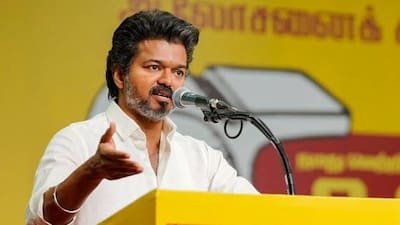
As political parties prepare for a series of crucial electoral contests across India, several influential regional players in the South appear to be exploring new political options ahead of the 2029 Lok Sabha elections. Andhra Pradesh Chief Minister N Chandrababu Naidu’s meeting with Tamil Nadu Chief Minister and Tamilaga Vettri Kazhagam (TVK) chief C Joseph Vijay, YSR Congress Party (YSRCP) leader Y S Jagan Mohan Reddy’s changing position on a key election law, and the Dravida Munnetra Kazhagam’s (DMK) search for political alternatives have brought the question of southern political realignment into focus.
While the Bharatiya Janata Party (BJP) and the Congress-led INDIA bloc continue to compete for political influence nationally, regional parties in southern India are assessing their options amid shifting alliances and changing voter preferences. Their decisions could influence the balance of power in Parliament and the strategies of national parties ahead of the next general election.
Naidu’s outreach to Vijay has attracted particular attention because the Telugu Desam Party (TDP) chief remains a key ally of the BJP-led National Democratic Alliance (NDA). Meanwhile, Jagan’s expression of regret over supporting legislation governing the appointment of election commissioners has encouraged speculation about whether the YSRCP could reconsider its political positioning.
In Tamil Nadu, the DMK faces a separate challenge following the Congress’s decision to join the Vijay-led government. The development has forced the Dravidian party to reassess its relationships with national opposition parties while considering whether a non-BJP, non-Congress political front could offer an alternative.
Chandrababu Naidu’s Meeting With Vijay Sparks Political Speculation
Naidu’s meeting with Vijay during Vijayawada Utsav 2.0, a cultural event organised around Dussehra festivities in Andhra Pradesh, has drawn attention beyond its immediate public setting. Naidu welcomed the Tamil Nadu chief minister and TVK leader, creating an opportunity for engagement between two influential figures from neighbouring southern states.
Some political observers have interpreted the meeting as part of Naidu’s broader effort to expand his influence across southern India. As an experienced political leader and a key figure in the NDA, Naidu has considerable relevance to the BJP’s parliamentary calculations. His engagement with Vijay has therefore prompted questions about whether he is seeking to build relationships that could provide greater flexibility in future political negotiations.
A senior BJP leader who has worked with the Andhra Pradesh BJP suggested that Naidu’s outreach could serve as a signal to the central leadership that the TDP has the potential to act as an influential pressure group. According to the leader, political alliances are often shaped by changing circumstances and mutual interests rather than permanent ideological commitments.
The remarks reflect a wider reality of coalition politics: parties that depend on one another for parliamentary strength may still seek to preserve their independent political identities and bargaining power. Maintaining relationships across party lines can provide regional leaders with additional options if the national political landscape changes.
However, the meeting alone does not establish that Naidu intends to leave the NDA or form a new alliance. The TDP remains an important BJP ally, and the public engagement with Vijay could serve several political, administrative and developmental purposes.
Why Naidu’s Outreach Matters to the BJP
The BJP has reason to monitor Naidu’s political moves closely because the TDP’s parliamentary strength makes it an important component of the NDA coalition. Regional allies can influence negotiations over government priorities, legislation and the distribution of political responsibilities.
Naidu’s engagement with leaders outside the NDA could help him demonstrate that his political relationships are not limited to the ruling coalition at the Centre. Such outreach may increase his leverage in negotiations by reinforcing the possibility that he can maintain constructive relations with other regional parties.
A senior BJP leader cited in the report argued that Naidu’s timing was significant, suggesting that the BJP was facing pressure on several issues. The leader also emphasised that the party had never underestimated Naidu’s political abilities.
These observations should be understood as political assessments rather than evidence of an imminent alliance change. Regional leaders frequently interact with counterparts from other parties without altering their formal coalition arrangements. The significance of Naidu’s meeting will depend on whether it is followed by sustained political coordination, shared initiatives or concrete changes in alliance strategy.
The relationship also highlights the balance Naidu must maintain. As Andhra Pradesh chief minister, he needs to pursue the state’s development priorities while managing his party’s position within the NDA. Building relationships with other southern leaders could support regional cooperation without necessarily undermining his existing national alliance.
Did Naidu’s Meeting With Vijay Send a Message to Young Voters?
A TDP leader quoted in the report attached a generational dimension to Naidu’s meeting with Vijay, arguing that the engagement could send a message to younger voters. The leader suggested that Vijay’s political rise had demonstrated the influence of Generation Z and that Naidu’s public interaction with him could help the Andhra Pradesh chief minister connect with a younger audience.
The argument reflects the growing importance of youth engagement in electoral politics. Younger voters are an important constituency for parties seeking to broaden their support, particularly as political communication increasingly takes place through digital platforms and direct public outreach.
Vijay’s position as a film star-turned-politician gives him a distinctive public profile. His political appeal and the TVK’s emergence have attracted attention in Tamil Nadu, where established parties have traditionally competed within a political landscape shaped by the Dravidian movement.
For Naidu, engaging with Vijay could offer an opportunity to be seen alongside a prominent figure associated with a different generation of political supporters. The TDP leader’s comments suggest that the optics of the meeting were considered significant, particularly at a time when political parties were responding to concerns and protests involving young people.
Nevertheless, a meeting between two chief ministers cannot by itself demonstrate that either leader has gained support among younger voters. That would require evidence from voter surveys, electoral results or other reliable indicators. The TDP leader’s remarks represent the party’s interpretation of the potential political value of the interaction.
TDP Says River Interlinking and Infrastructure Are the Priority
The TDP has pushed back against interpretations that place political realignment at the centre of Naidu’s meeting with Vijay. Lavu Krishna Devarayalu, the party’s parliamentary leader, said the interaction was intended to advance infrastructure and environmental projects, particularly river interlinking.
Devarayalu described river interlinking as an issue close to Naidu’s priorities and said the chief minister had raised it at different platforms. He also referred to concerns about the effects of changing climatic conditions on agriculture, arguing that improved water management and infrastructure could benefit farmers across several southern and eastern states.
According to Devarayalu, discussions around river interlinking involve Andhra Pradesh, Tamil Nadu and Telangana, with potential benefits extending to Karnataka and Odisha. Such cooperation could address shared concerns relating to water availability, irrigation and agricultural development, although specific projects would require detailed planning and agreement among the states concerned.
River management is an important policy issue in southern India, where agricultural activity, urban development and drinking-water requirements place competing demands on water resources. Inter-state river projects can also raise questions about water allocation, environmental impacts, financing and the responsibilities of participating governments.
Devarayalu said the Andhra Pradesh government was also prioritising farmer-focused initiatives and irrigation projects. He criticised the previous YSRCP government, led by Jagan Mohan Reddy, over the pace of irrigation development between 2019 and 2024.
These comments represent the TDP’s assessment of the previous government’s record. The broader question is whether engagement between southern chief ministers can translate into agreed infrastructure projects, effective coordination and measurable benefits for farmers and communities.
The developmental explanation does not necessarily rule out political considerations. Meetings between political leaders can simultaneously address administrative priorities, regional interests and relationship-building. Determining whether Naidu’s outreach signals a wider political strategy will require observing what follows the meeting.
Jagan Mohan Reddy’s Change of Tone on Election Commissioners’ Law
While Naidu’s meeting with Vijay has prompted speculation about the TDP’s future options, Jagan Mohan Reddy’s recent remarks have drawn attention to the YSRCP’s position on the BJP-led NDA government.
The former Andhra Pradesh chief minister expressed regret over helping the government pass the Chief Election Commissioner and Other Election Commissioners (Appointment, Conditions of Service and Term of Office) Act, 2023. He described his support for the legislation as a mistake, a statement that has revived speculation among opposition parties about whether the YSRCP could move closer to the INDIA bloc.
The legislation governs the process for selecting the Chief Election Commissioner and other election commissioners. Under its framework, the selection committee comprises the prime minister, a Union minister nominated by the prime minister and the Leader of the Opposition in the Lok Sabha.
Critics of the arrangement argue that the government has a numerical advantage on the selection panel, raising concerns about the independence of the Election Commission. Supporters of the legislation have defended the statutory framework, while the composition of the committee has remained a significant point of political debate.
Jagan’s expression of regret is politically relevant because it indicates a change in his stated position on a major institutional issue. Opposition parties that have criticised the legislation may see his remarks as an opportunity to engage with the YSRCP on electoral reforms and other questions relating to democratic institutions.
However, a revised position on one law does not automatically amount to a decision to join an opposition alliance. The YSRCP’s future alignment would depend on a wider set of considerations, including its relationship with the Congress, its political interests in Andhra Pradesh and the positions taken by other parties.
Why Jagan’s Political Position Matters to the INDIA Bloc
The Congress-led INDIA bloc has an interest in understanding whether regional parties that have maintained independent positions could become more closely aligned with the opposition ahead of the 2029 Lok Sabha elections.
Regional parties can influence national politics through their parliamentary representation, state-level organisation and ability to mobilise voters around local issues. In a closely contested Parliament, even parties that do not formally join a national alliance can affect legislative calculations and the broader balance between government and opposition.
Jagan’s latest remarks could create an opening for discussions with opposition leaders, particularly on the powers and independence of constitutional institutions. But the political significance of his statement will depend on whether it is followed by concrete steps, such as coordinated parliamentary action, formal discussions or a clear declaration about future alliances.
The YSRCP’s calculations are also shaped by Andhra Pradesh’s political environment. The party governed the state from 2019 to 2024, before the TDP-led alliance returned to power. Any future national alignment would have to be assessed alongside the YSRCP’s competition with Naidu’s party and its efforts to rebuild its political position within the state.
For the Congress, engagement with Jagan would present both opportunities and challenges. Cooperation on specific issues may be possible even without a formal alliance, but broader political coordination would require agreement on priorities and an assessment of how the relationship could affect each party’s support base.
DMK Faces a Political Dilemma After Congress Joins Vijay-Led Government
The DMK is confronting a different set of political challenges in Tamil Nadu following the Congress’s decision to end its association with the party and join the government led by Vijay after the state elections in May.
The development has altered the DMK’s immediate political calculations. Having worked with the Congress as part of a broader opposition arrangement, the Dravidian party must now consider how to respond to the change while preserving its influence in Tamil Nadu and its relationships with opposition parties nationally.
One option under consideration, according to a DMK insider quoted in the report, is exploring a non-Congress, non-BJP front. The source suggested that parties facing political pressure from the TVK could have an incentive to work together.
Such an arrangement would not be straightforward. Regional parties have their own electoral priorities, leadership ambitions and disagreements over national policy. Bringing them together would require a common agenda that could accommodate different interests without weakening their individual political identities.
The DMK also faces a dilemma over its relationship with the BJP. The party has opposed several BJP positions, particularly on issues relating to federalism, language and the distribution of political power. A direct alliance with the BJP could therefore carry political costs among sections of its traditional support base.
At the same time, maintaining an independent position would require the DMK to determine how best to influence national legislation and preserve its political relevance outside Tamil Nadu. Its choices will be shaped by the balance between state-level competition and the wider opposition’s parliamentary strategy.
DMK Explores a Non-Congress Opposition Front
The DMK has already made efforts to explore the possibility of closer coordination with parties outside the Congress-led opposition arrangement. Last month, senior party leader K Kanimozhi met Nationalist Congress Party (Sharadchandra Pawar) leaders Sharad Pawar and Supriya Sule, as well as Trinamool Congress founder Mamata Banerjee.
The meetings were aimed at exploring the prospects for a non-Congress opposition front, according to the report. They indicate that the DMK is considering alternatives as it reassesses its national political relationships following the change in Tamil Nadu’s governing arrangement.
The parties involved have their own political bases and strategic interests. The Trinamool Congress has a strong presence in West Bengal, while the NCP (SP) operates within Maharashtra’s political landscape. A potential front would need to account for these regional priorities while identifying issues on which the parties could cooperate nationally.
The DMK’s parliamentary position gives it a potential role in such discussions. According to the report, the party has 22 MPs in the Lok Sabha and eight in the Rajya Sabha. Its representation provides a platform for raising regional concerns and influencing parliamentary debates, even as its future alliance strategy remains under consideration.
However, meetings between opposition leaders do not necessarily mean that a formal third front is imminent. Building a viable coalition requires agreement on leadership, electoral coordination, parliamentary strategy and the relationship between regional ambitions and national objectives.
Election Commission Concerns and the Delimitation Debate
The DMK has also raised concerns about the Election Commission’s credibility and called for changes to the electoral process. Following a meeting of its MPs, the party leadership demanded the scrapping of the Special Intensive Revision (SIR) process and a return to ballot papers for elections. The BJP has rejected the demand for a return to ballot papers.
The demands reflect the DMK’s wider concerns about electoral administration and public confidence in democratic institutions. The party has also criticised the BJP’s continued defence of Chief Election Commissioner Gyanesh Kumar, according to the report.
These issues could become important points of coordination among opposition parties, particularly those seeking changes to election procedures or greater scrutiny of the Election Commission. However, differences over the appropriate reforms and the political consequences of taking a shared position could complicate efforts to build a unified front.
Another issue affecting the DMK’s calculations is the BJP’s outreach over a delimitation-linked constitutional amendment bill concerning the advancement of women’s reservation to 2029. The report states that the proposed bill was defeated in the Lok Sabha during a special session in April.
Delimitation, which involves redrawing constituency boundaries, can have significant implications for the distribution of parliamentary representation among states. Southern states have historically raised concerns about how changes in representation could affect their political influence relative to more populous states.
For the DMK, the challenge is to assess the implications of any proposed constitutional changes while deciding whether cooperation with the BJP on a particular legislative issue is politically feasible. The party’s response will also be influenced by its wider relationship with the Congress and other opposition groups.
Could a Southern Political Front Emerge Before 2029?
The developments involving Naidu, Vijay, Jagan and the DMK have fuelled discussion about whether southern regional parties could create a more coordinated political grouping before the next Lok Sabha elections. Their interests overlap on some issues, including federalism, infrastructure, regional development and the role of constitutional institutions, but their immediate political circumstances differ.
Naidu is operating from within the BJP-led NDA while maintaining relationships with leaders outside the alliance. Jagan has expressed regret over supporting legislation that has become a major issue for opposition parties, but he has not, in the supplied account, announced a formal realignment. The DMK is reassessing its national partnerships after the Congress joined Vijay’s government in Tamil Nadu.
These distinctions matter because regional outreach and formal coalition-building are not the same. Leaders can coordinate on infrastructure or specific parliamentary issues without agreeing to contest elections together. They can also use public engagement to strengthen their bargaining positions without committing to a new political arrangement.
A southern front would face several practical challenges. It would need to reconcile differences among parties in Andhra Pradesh, Tamil Nadu, Telangana and other states, determine its relationship with the Congress, and agree on a common programme for national politics. Electoral competition between regional parties could also limit the scope for cooperation.
At the same time, regional parties may see value in maintaining flexibility as the national political environment evolves. By strengthening relationships across party lines, they can preserve options for future negotiations and pursue state-specific interests while evaluating broader coalition possibilities.
What to Watch Ahead of the 2029 Lok Sabha Elections
The coming months could offer clearer indications of whether the recent developments represent isolated political interactions or the beginning of a broader realignment.
- Naidu’s relationship with the NDA: Whether the TDP continues to operate primarily through its existing alliance with the BJP or expands political coordination with regional leaders outside the coalition.
- Jagan’s next steps: Whether his criticism of the election commissioners’ appointment law leads to parliamentary coordination or discussions with the Congress-led INDIA bloc.
- The DMK’s alliance strategy: Whether its discussions with regional parties produce a concrete proposal for a non-Congress opposition grouping.
- Vijay and the TVK’s political influence: How the party’s role in Tamil Nadu changes the calculations of established regional parties and their national partners.
- Regional policy cooperation: Whether river interlinking, irrigation and infrastructure initiatives lead to sustained collaboration among southern state governments.
- Electoral and constitutional issues: How debates over election administration, delimitation and women’s reservation shape relations among regional and national parties.
Ultimately, the political moves of Naidu, Vijay, Jagan and the DMK point to a period of reassessment among some of southern India’s influential parties. Their actions have opened questions about coalition flexibility, regional cooperation and the future of opposition politics, but they do not yet establish that a new southern alliance is taking shape.
With the 2029 Lok Sabha elections still ahead, the key question is whether these leaders will turn their outreach and shifting positions into sustained political coordination. Until then, their moves are best understood as signs of strategic positioning in a changing political landscape rather than proof of a settled realignment.
For breaking news and live news updates, like us on Facebook or follow us on Twitter and Instagram. Read more on Latest India on thefoxdaily.com.





COMMENTS 0