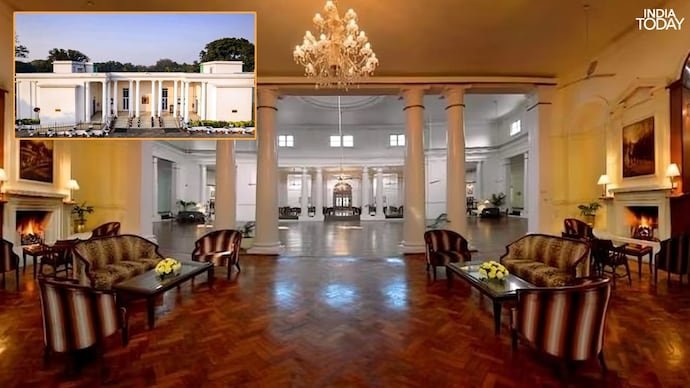
The Delhi Gymkhana Club one of India’s oldest, wealthiest and most exclusive institutions is staring at a future few once imagined possible: losing its iconic home in the heart of Lutyens’ Delhi and potentially fading into history.
In a dramatic escalation of a years-long battle over Governance, privilege and public accountability, the Central government has ordered the club to vacate its sprawling 27-acre premises near the Prime Minister’s official residence by June 5. The land, according to the government, is now required for defence-linked infrastructure and other public-interest projects.
But this is not merely a property dispute.
The Delhi Gymkhana saga has evolved into something much larger a story about old power structures colliding with modern governance, bureaucratic intervention confronting elite exclusivity, and India’s changing political culture challenging institutions once considered untouchable.
For decades, the Gymkhana was more than a club. It was a social fortress of influence where generals, judges, ministers, diplomats, senior bureaucrats and industrialists built networks over bridge tables, golf lawns and evening drinks.
Now, after years of legal intervention, accusations of mismanagement and failed reform attempts, the institution itself may be approaching its biggest existential crisis since its founding in 1913.
Why the Delhi Gymkhana Club Matters Beyond Delhi’s Elite Circles
At first glance, the dispute may appear to concern only a privileged private club.
But the Gymkhana controversy touches on several much bigger national questions:
- How public land leased to elite institutions should be used
- Whether old exclusive clubs remain compatible with modern democratic values
- The extent of government authority over legacy institutions
- Transparency and governance in non-profit entities
- The relationship between privilege and public accountability
The Gymkhana sits on some of the most expensive and strategically significant land in India adjoining the Prime Minister’s residence in central Delhi. Yet it operated for decades on a highly concessional lease reportedly costing only Rs 1,000 annually.
That contrast elite exclusivity on subsidised public land increasingly became politically and legally difficult to defend.
How the Crisis Began: Complaints, Audits and Allegations
The roots of the current crisis go back several years.
What started as internal dissatisfaction among some members gradually escalated into a full-scale legal and administrative battle involving the Ministry of Corporate Affairs (MCA), the National Company Law Tribunal (NCLT), the National Company Law Appellate Tribunal (NCLAT) and eventually the Supreme Court.
The government’s intervention was triggered by complaints alleging:
- Financial irregularities
- Nepotism in membership admissions
- Deviation from the club’s original objectives
- Poor emphasis on sports activities
- Lack of transparency in governance
- Concentration of influence among select families
The allegations became especially sensitive because the Delhi Gymkhana Club is registered as a Section 8 non-profit entity under the Companies Act, meaning it was expected to prioritize sports and recreation rather than operate as an elite social enclave.
Government inspections reportedly found that only a tiny portion of spending was directed toward sports activities while significantly larger sums were allegedly spent on hospitality-related expenses.
The “Blue Blood” Problem Became Central to the Case
One of the most explosive aspects of the legal proceedings was the accusation that the club had evolved into an exclusionary institution serving a narrow social elite.
The NCLAT’s observations became nationally controversial when it remarked that the club functioned like a relic of the colonial era and perpetuated exclusivity among those with “blue blood in their veins.”
That language reflected growing institutional frustration with how access to the club operated.
Membership at Delhi Gymkhana had become legendary for its waiting periods.
Applicants often waited 20 to 30 years for membership approvals, despite paying significant non-refundable fees.
| Delhi Gymkhana Membership Facts | Details |
|---|---|
| Founded | 1913 |
| Land Size | 27 acres |
| Location | Lutyens’ Delhi near PM residence |
| Lease Rent | Approx. Rs 1,000 annually |
| Permanent Membership Cap | 5,600 members |
| Typical Waiting Period | 20–30 years |
| Utility Charges | Up to Rs 7.5 lakh for some applicants |
| Applicants on Waiting Lists | Thousands |
Critics argued that membership effectively functioned as a hereditary privilege system where influence and family legacy played a major role.
Supporters of the club, however, countered that exclusivity is inherent to private member institutions globally and that long waiting periods are common in elite clubs worldwide.
The Bureaucratic Takeover Changed Everything
The turning point came in 2021 when the NCLAT ordered the suspension of the elected General Committee and allowed the Centre to appoint an administrator.
This was unprecedented.
For perhaps the first time in modern India, the government directly intervened in the management of one of the nation’s most elite private clubs.
The move triggered intense backlash from sections of the membership who viewed it as excessive state interference.
Others welcomed the intervention, arguing that the institution had resisted reform for too long.
The administrator and later the government-appointed committee were tasked with restructuring governance, addressing membership concerns and aligning the club with its stated objectives.
However, critics now argue that despite years of bureaucratic oversight, little fundamentally changed.
Why the Government Finally Moved to Take Back the Land
The Centre’s latest order directing the club to vacate its premises marks the culmination of this long-running confrontation.
Officially, the government says the land is required for:
- Defence-linked infrastructure
- Governance-related projects
- Public-interest development
- Integration with adjoining government land
But politically and symbolically, the move also reflects a broader shift in how the Indian state is approaching elite legacy institutions occupying public assets.
The message is difficult to miss:
Institutions operating on subsidized public land may increasingly be expected to demonstrate broader public utility and transparency.
The Gymkhana case could therefore become a precedent affecting other elite clubs and institutions across India.
What Competitors Are Missing: This Is Also About Changing Power Structures
Most reporting has focused narrowly on the legal battle or eviction order.
But the deeper story is about how India’s traditional power ecosystem is evolving.
For decades, elite clubs like Delhi Gymkhana acted as informal centers of influence where relationships across Politics, bureaucracy, business and the Military were cultivated privately.
These institutions thrived during an era when access itself was power.
But India’s political culture is changing.
Modern power increasingly comes from:
- Public visibility
- Digital influence
- Electoral legitimacy
- Institutional control
- Corporate scale
- Technology networks
Traditional social clubs still matter symbolically, but they no longer monopolize elite networking the way they once did.
That shift partly explains why institutions like Delhi Gymkhana have become more vulnerable to scrutiny than in previous decades.
The Colonial Legacy Still Shapes the Debate
The Gymkhana’s origins also remain politically sensitive.
Founded in 1913 as the Imperial Delhi Gymkhana Club during British colonial rule, the institution historically represented elite imperial social culture.
Although “Imperial” was dropped after Independence, many critics argue the club retained aspects of colonial-era exclusivity in practice.
The legal references to “blue blood” and “apartheid” reflected attempts to frame the dispute not merely as a governance issue, but as a constitutional and social justice question.
That framing gave the government’s intervention broader ideological legitimacy.
Did the Bureaucratic Takeover Actually Improve Anything?
This remains one of the biggest unanswered questions.
According to several former members and insiders, routine operations at the club continued largely unchanged because professional staff already managed day-to-day functioning.
Critics of the takeover argue:
- Elections were delayed repeatedly
- Governance reforms stalled
- Members were not meaningfully consulted
- The appointed committee lacked transparency
- The intervention became bureaucratic rather than transformative
Supporters, however, argue that the intervention exposed longstanding structural issues that would otherwise have remained hidden indefinitely.
The failure to complete reforms within NCLAT’s deadlines also intensified legal complications and ultimately contributed to the current crisis.
What Happens Next?
The immediate future of the Delhi Gymkhana Club remains uncertain.
Several scenarios are now possible:
Complete Eviction
The government could fully reclaim the land and repurpose it for public infrastructure projects.
Legal Challenge
Members and former management bodies may continue litigation in higher courts.
Relocation
The club could potentially relocate, though losing its iconic Lutyens’ Delhi location would fundamentally alter its identity.
Institutional Restructuring
A compromise involving governance reforms and partial retention of facilities cannot be ruled out.
However, the symbolic damage to the institution’s aura of permanence may already be irreversible.
The Bigger Question: Can Elite Clubs Survive in Modern India?
The Delhi Gymkhana crisis raises broader questions about the future of elite legacy institutions in a rapidly changing India.
Younger generations increasingly value accessibility, merit-based systems and transparency over inherited exclusivity.
At the same time, traditional clubs continue offering something difficult to replicate digitally: trusted private networks built through long-term social relationships.
The challenge for such institutions will be adapting to modern expectations without completely losing their identity.
Those that fail to evolve may face increasing political, legal and social scrutiny.
Conclusion: The Fall of an Untouchable Institution
The Delhi Gymkhana Club once represented the very pinnacle of India’s establishment culture a rarefied world of influence, exclusivity and prestige hidden behind manicured lawns in the heart of power.
Today, that world appears deeply shaken.
What began as complaints about governance and membership practices evolved into a sweeping confrontation involving courts, bureaucrats, political power and questions about public accountability.
The government’s order to vacate the premises by June 5 may ultimately mark the symbolic end of one of India’s most iconic elite institutions in its current form.
Whether the Gymkhana survives legally or physically is now almost secondary to the larger reality its crisis represents: the old structures of privilege in India are no longer as untouchable as they once seemed.
And in modern Delhi, where power itself has changed shape, even the most exclusive gates may no longer guarantee permanence.
For breaking news and live news updates, like us on Facebook or follow us on Twitter and Instagram. Read more on Latest India on thefoxdaily.com.


COMMENTS 0