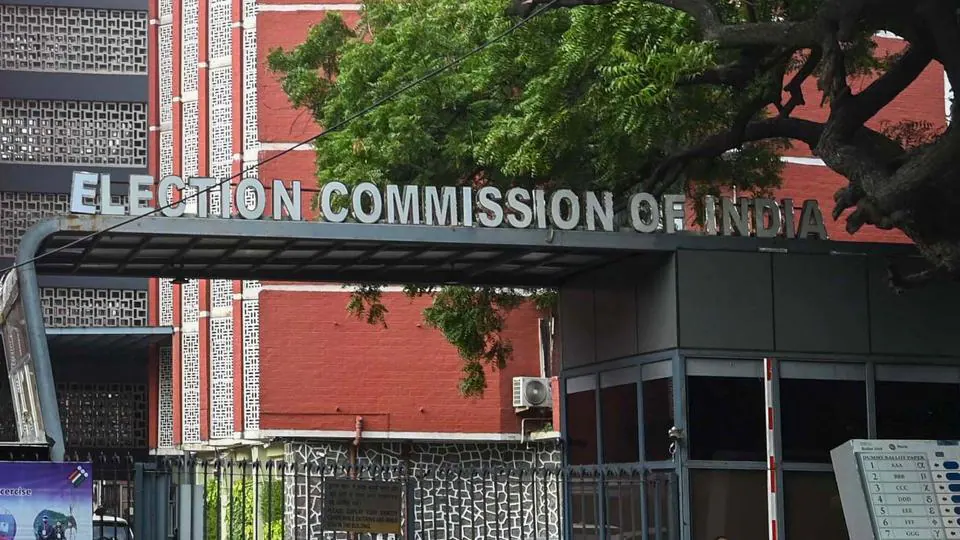
The Election Commission of India (ECI) has introduced a series of changes to its internal decision-making procedures, Voter Registration rules, electoral-roll management and Special Intensive Revision (SIR) process since September 23. The developments followed a report by The Indian Express that raised questions about how decisions were being taken within the poll body and whether all three members were being consulted.
The report said Election Commissioners Sukhbir Singh Sandhu and Vivek Joshi had recorded at least 14 objections over 10 months to decisions they claimed were made without their knowledge or approval. The objections reportedly concerned changes to the management of electoral-roll databases and the handling of voter additions, deletions and restorations.
The ECI maintained that differences of opinion were part of its normal decision-making process and said its decisions had been unanimous. The subsequent changes have covered meeting procedures, technology oversight, voter registration declarations, objections seeking voter deletions, SIR hearings and electoral-roll revision schedules.
The commission has also introduced measures to identify eligible voters left out of electoral rolls and improve access to roll data for recognised political parties. These steps are significant because electoral rolls determine who can participate in elections, making the accuracy, accessibility and administration of voter records central to the electoral process.
What Triggered the Changes at the Election Commission?
The sequence of developments followed The Indian Express report about objections raised by Sandhu and Joshi over decisions taken within the ECI. According to the report, the concerns related to the handling of electoral-roll systems and decisions involving the addition, deletion and restoration of voter names.
The issue attracted wider attention as the commission continued implementing the Special Intensive Revision of electoral rolls. The process involves reviewing voter records and mapping existing electors to earlier electoral rolls, with additional steps required when records cannot be matched or contain discrepancies.
The controversy also prompted public demonstrations demanding the resignation of Chief Election Commissioner Gyanesh Kumar and the scrapping of the SIR. Authorities responded with security measures that included Metro closures, internet shutdowns, prohibitory orders and additional personnel in Delhi, according to the supplied report.
The ECI defended its decision-making process, maintaining that differences among members were normal and that decisions had been unanimous. The measures announced since September 23 nevertheless introduced clearer procedures for meetings, technology-related decisions and several aspects of electoral-roll administration.
1. ECI Introduces New Rules for Internal Decision-Making
At a meeting on September 26, the ECI decided to formalise several aspects of its internal decision-making and administrative procedures.
Under the changes, agendas are to be circulated before commission meetings, while minutes are to be issued afterwards. Directions given by election commissioners to officers must be complied with, and foreign visits by officers will require the commission’s approval.
The commission also decided that proposals for new information technology modules and portals would first be discussed by a committee of officers before being placed before the ECI.
These measures establish a more structured process for documenting discussions, handling instructions and reviewing technology proposals. Circulating agendas in advance can help members prepare for meetings, while issuing minutes afterwards provides a record of what was discussed and decided.
The requirement for commission approval of foreign visits and the procedure for reviewing new IT systems also clarify how certain administrative decisions should be handled. The significance of these measures lies in the formalisation of procedures within an institution responsible for administering elections across the country.
2. ECINet to Undergo Review by a Committee
The ECI ordered a review of ECINet, the platform underpinning its electoral-roll systems. The review is to be conducted by a committee headed by a senior deputy election commissioner and including an independent expert from an Indian Institute of Technology (IIT) or an Indian Institute of Information Technology (IIIT).
The commission also said field officers would receive additional flexibility within the system wherever required.
ECINet plays an important role in the digital processes used to manage electoral information. Systems supporting voter registration and electoral-roll revisions need to accommodate additions, deletions, corrections and other changes while enabling officials to process applications and maintain records.
A review of the platform could help the commission examine how the system operates and whether changes are needed to support field-level requirements. The inclusion of an independent technical expert also brings outside expertise into the review process.
However, the announcement does not by itself establish that the review has identified technical failures or that specific changes have already been implemented. Its practical impact will depend on the committee’s findings and the action taken in response.
3. Form 6 Declaration Rules Were Revised
Form 6 is used by eligible applicants seeking registration as new voters. The ECI’s handling of a declaration associated with this form changed during the period covered by the announcements.
In July, the online Form 6 was modified to ask applicants whether their own name or a relative’s name appeared in the electoral roll from the previous intensive revision.
At its September 26 meeting, the commission said the prescribed form under the Registration of Electors Rules, 1960, would apply outside the SIR period. The declaration was subsequently removed from the online Form 6 in states where the SIR had concluded.
The changes are relevant because voter registration forms determine what information applicants must provide when seeking inclusion in electoral rolls. A declaration connected to a previous intensive revision can be particularly relevant in states where the commission is mapping current records against earlier rolls.
The September 26 decision clarified the form to be used outside the SIR period, while the later removal of the declaration in states where the exercise had concluded marked a further change in the online application process.
Applicants should use the applicable official Form 6 and follow the instructions issued for their state and the relevant revision period. The form and supporting requirements may differ according to the stage of the electoral-roll exercise.
4. ECI Caps Form 7 Applications Seeking Voter Deletions
On October 9, the ECI limited the number of Form 7 applications an individual elector can submit to challenge entries in electoral rolls.
Under the new limits, an elector can file a maximum of 10 Form 7 applications during a claims-and-objections period. During continuous updating of the electoral rolls, the limit is five applications per month.
The change followed allegations that objections against registered voters were being filed in bulk. Form 7 is used to raise objections to the inclusion of a name in an electoral roll and to seek deletion where applicable.
Bulk objections can create administrative challenges because electoral registration officers must examine applications and determine whether the grounds for deletion are valid. At the same time, procedures for challenging an entry must preserve the ability to raise legitimate objections.
The ECI’s new rules include additional requirements intended to strengthen the handling of these applications. Electoral registration officers must hear the objector in person, record a separate statement for each application and give the affected voter an opportunity to be heard before deciding the objection.
These requirements establish separate procedural steps for each application and provide an opportunity for the voter whose name is challenged to respond.
The impact of the limits will depend on how the rules are implemented and how officials handle applications that raise legitimate concerns. The requirement to hear both the objector and the affected voter is particularly important because deletion decisions can directly affect a person’s ability to vote.
5. SIR Hearings Shift Towards Booth-Level Verification
The ECI announced a change to the procedure for electors who receive notices during the SIR because their records cannot be mapped to the previous intensive-revision roll or because they have what the commission describes as “logical discrepancies”.
Under the revised arrangement, booth-level officers (BLOs) will visit the affected voters, collect supporting documents and upload them to ECINet. The electoral registration officer will then decide the matter on the basis of the submitted information.
Voters will no longer routinely be required to attend hearings at the electoral registration officer’s office. Hearings will be reserved for exceptional cases and should preferably take place online. Where authorised, an adult family member may attend on the elector’s behalf.
The change shifts more of the initial document-collection process to field-level verification. Instead of requiring every affected elector to travel to an officer’s office, BLOs can collect documents during household visits and submit them through the digital system.
This approach could reduce the practical burden on voters who face difficulties travelling to official offices, including older residents and people with mobility constraints. Online hearings in exceptional cases could also provide an alternative to in-person attendance.
However, the revised process does not mean that every discrepancy will automatically be resolved through a household visit. Electoral registration officers remain responsible for deciding cases, and hearings can still be required where the circumstances warrant further examination.
The effectiveness of the change will depend on the quality of field verification, the timely uploading of documents and clear communication with voters about what evidence is required.
6. Special Drive to Identify Voters Left Out of Electoral Rolls
On October 1, the ECI communicated with chief electoral officers of states and Union Territories, directing them to conduct a special drive to identify eligible voters who had been left out of the electoral rolls after the SIR.
Under the instructions, BLOs are to compare the current electoral rolls with the rolls that existed before the SIR, identify missing names and visit households to help eligible residents submit Form 6 applications.
The initiative addresses a central concern in any intensive electoral-roll revision: ensuring that eligible voters are not excluded because their records could not be matched, because of documentation difficulties or because they did not complete the necessary registration process.
Comparing current and earlier rolls gives officials a way to identify people whose names appear in previous records but are missing from the revised list. Household visits can then help determine whether the individuals remain eligible and need assistance applying for inclusion.
The distinction between identifying a missing name and automatically restoring it is important. The drive is intended to help eligible residents submit the required application, after which the prescribed registration process must be followed.
The measure places responsibility on field officials to look actively for potential omissions rather than relying entirely on individuals to discover that their names are missing and initiate the process themselves.
7. Special Summary Revision Announced in 17 States and Union Territories
On October 15, the ECI announced a Special Summary Revision (SSR) of electoral rolls in 17 states and Union Territories, using January 1, 2027, as the qualifying date.
An SSR differs from an SIR in how the electoral roll is prepared. An SIR involves an intensive exercise to revise and verify the rolls, including mapping records to earlier electoral lists. An SSR builds on the existing electoral roll and provides a process for eligible voters to register, correct details and raise objections.
The commission announced the following schedule for the SSR:
- November 12, 2026: Draft electoral rolls are due to be published.
- December 11, 2026: The period for filing claims and objections is scheduled to end.
- January 4, 2027: Final electoral rolls are scheduled to be published.
The ECI said separate schedules would be announced for states where the SIR was ongoing or had recently concluded.
The SSR provides a route for eligible residents to seek inclusion in the electoral roll and for existing voters to correct inaccurate details. The claims-and-objections period also allows issues concerning entries to be raised before the final roll is published.
For voters, the key dates determine when they can check the draft roll, submit applications or objections and verify whether their requested changes have been incorporated into the final list.
Because the schedule may differ in states undergoing the SIR, voters should check the official announcements and instructions applicable to their state rather than assume that the same dates apply everywhere.
8. Electoral Rolls to Be Shared in Readable PDF Format
The ECI directed officials to provide draft and final electoral rolls, without photographs, to recognised political parties in a readable PDF format rather than as image-only PDFs.
The commission also directed that supplements covering additions, deletions and modifications be shared at the draft stage.
The change responds to a long-standing demand by Opposition parties for electoral-roll data that can be searched and analysed more easily. Image-only PDFs can make it difficult to locate specific entries, compare records or examine changes across large lists.
Readable documents can make it easier for authorised users to search voter names and inspect information contained in the rolls. Sharing supplements at the draft stage can also help political parties examine proposed additions, deletions and corrections before the final roll is issued.
Greater accessibility can support scrutiny of electoral-roll changes, although the format alone does not establish whether individual entries are accurate. The underlying records still need to be examined, and any concerns must be addressed through the applicable procedures.
The direction represents a change in how electoral-roll information is supplied to recognised political parties. Its practical value will depend on whether the documents are genuinely searchable and usable, and whether the required supplements are provided in time for meaningful review.
9. SIR Claims-and-Objections Deadlines Extended in Delhi and Maharashtra
The ECI’s September 26 decisions also extended deadlines associated with the SIR process in Delhi. The claims-and-objections deadline was extended to October 30, while the deadline for disposing of those claims and objections was moved to November 30.
Maharashtra’s schedule was also revised. Under the updated timetable in the supplied report, claims and objections can be filed until October 26, disposal is due by November 10 and the final electoral roll is scheduled for November 16.
Deadline extensions can give voters and other eligible participants additional time to submit claims or objections. They also affect the time available to electoral officials to examine applications, verify documents and resolve disputes before the final roll is published.
The distinction between the deadline for filing claims and objections and the deadline for their disposal is important. The first determines when submissions must be made, while the second sets the target for officials to decide the matters raised.
For voters in Delhi and Maharashtra, the revised dates make it important to check the applicable state schedule and submit any required application or objection within the prescribed period. Those awaiting a decision should also follow official updates on the status of their cases and the publication of the final roll.
What the Changes Mean for Voters and Electoral-Roll Transparency
Taken together, the changes announced since September 23 cover both the internal functioning of the ECI and the procedures through which electoral rolls are maintained.
The revised meeting procedures and review of ECINet concern administration and technology oversight. Changes to Form 6, limits on Form 7 applications and revised SIR hearings affect how voter registration, objections and verification are handled. The special drive for left-out voters and the readable-PDF direction address concerns about inclusion and access to electoral information.
The SSR schedule and deadline extensions also establish important dates for people seeking to register, correct information or raise objections. However, different revision exercises and state-specific timetables mean that voters need to consult the instructions applicable to their location.
Several of the announced measures are procedural rather than final outcomes. A technology review does not itself establish that a system has been corrected, and a special drive to identify missing names does not automatically guarantee that every eligible voter will be included. Their impact will depend on implementation, documentation, verification and the decisions made by electoral registration officers.
The central questions will be whether these changes make the decision-making process more transparent, reduce unnecessary burdens on voters and ensure that legitimate claims and objections are handled fairly and on time.
For voters, the immediate priority is to verify their names and details in the relevant electoral roll, follow official announcements about revision schedules and use the prescribed procedures to request inclusion or correction. For the ECI, the challenge is to implement the revised procedures consistently while maintaining the accuracy and integrity of electoral rolls.
For breaking news and live news updates, like us on Facebook or follow us on Twitter and Instagram. Read more on Latest India on thefoxdaily.com.






COMMENTS 0