- Primary Keyword: Lipulekh border dispute
- What Is the Lipulekh Issue? (5W1H Breakdown)
- India’s Position: “Clear and Consistent”
- Nepal’s Stand: Treaty-Based Claim and Formal Protest
- Why the Mansarovar Yatra Route Matters
- A Deeper Look: Why This Dispute Keeps Returning
- Unique Insight: The “Silent Strategic Layer”
- China’s Quiet but Crucial Role
- Real-World Impact: Why This Matters Beyond Borders
- Comparison: Past vs Present Approach
- What Happens Next? Possible Scenarios
- Conclusion: A Familiar Dispute in a Changing Context
The long-simmering border dispute between India and Nepal has resurfaced sharply after Kathmandu formally objected to the use of the Lipulekh Pass for the Kailash Mansarovar Yatra. India has firmly rejected Nepal’s claims, calling them “untenable” and asserting that the route has been in use for decades.
This latest diplomatic exchange is not just about a pilgrimage route it touches on sovereignty, historical treaties, regional Geopolitics, and the delicate balance of India-Nepal relations. With both sides standing their ground yet signaling openness to dialogue, the situation reflects a familiar pattern: tension without rupture, disagreement without disengagement.
Primary Keyword: Lipulekh border dispute
What Is the Lipulekh Issue? (5W1H Breakdown)
- Who: India and Nepal, with china as a geographical stakeholder
- What: Dispute over territorial ownership of Lipulekh, Kalapani, and Limpiyadhura
- When: Ongoing dispute, recently reignited in May 2026
- Where: Tri-junction area between India, Nepal, and China
- Why: Differing interpretations of historical treaties and maps
- How: Diplomatic protests, official statements, and strategic positioning
India’s Position: “Clear and Consistent”
India has maintained that the Lipulekh Pass has long been used as a route for the Kailash Mansarovar Yatra, dating back to the 1950s. According to New Delhi, this is not a new arrangement but a continuation of established practice.
More importantly, India has strongly rejected Nepal’s territorial claims, stating that they are not supported by historical evidence. The use of the term “untenable” signals a firm diplomatic stance, indicating that India sees little merit in revisiting its position under current arguments.
At the same time, India has kept the door open for dialogue, emphasizing diplomacy as the preferred path forward.
Nepal’s Stand: Treaty-Based Claim and Formal Protest
Nepal’s objection is rooted in its interpretation of the 1816 Sugauli Treaty, a key historical document that defined the boundary between British India and Nepal.
Kathmandu argues that regions including Lipulekh, Kalapani, and Limpiyadhura fall within its sovereign territory based on this treaty. The government has taken formal diplomatic steps, sending Protest notes to both India and China.
This dual outreach is significant it underscores Nepal’s intent to internationalize awareness of the issue, while also acknowledging China’s geographical relevance in the tri-junction area.
Key Claims Compared
| Aspect | India’s Position | Nepal’s Position |
|---|---|---|
| Historical Basis | Established usage since 1954 | 1816 Sugauli Treaty interpretation |
| Territorial Claim | Part of Indian territory | Integral part of Nepal |
| Current Action | Continued use of route | Formal diplomatic protest |
| Approach | Reject claims, open to talks | Assert claim, seek dialogue |
Why the Mansarovar Yatra Route Matters
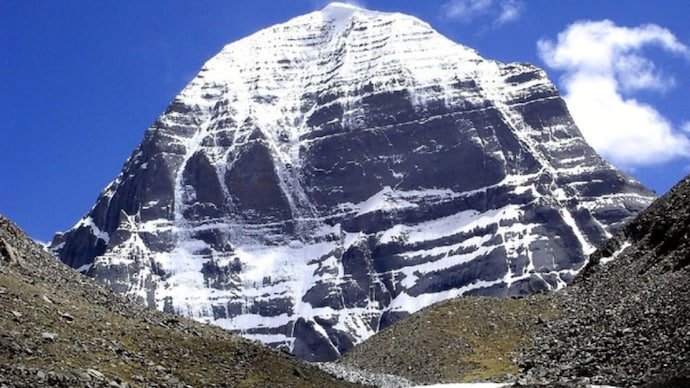
At first glance, this may seem like a dispute over a pilgrimage route. But the Kailash Mansarovar Yatra carries deep religious, cultural, and strategic importance.
- Religious Significance: One of the most sacred pilgrimages for Hindus, Buddhists, and Jains
- Strategic Location: Situated near a sensitive tri-border region
- Infrastructure Value: Roads and access routes have military and economic implications
Control over such routes is not just symbolic it influences mobility, surveillance, and regional influence.
A Deeper Look: Why This Dispute Keeps Returning
The Lipulekh border dispute is not new. It has resurfaced multiple times over the years, often triggered by infrastructure projects, map publications, or political developments.
So why does it keep coming back?
1. Ambiguity in Historical Documents
The Sugauli Treaty, while foundational, leaves room for interpretation especially regarding river origins that define boundaries.
2. Strategic Geography
The region sits at a critical junction involving India, Nepal, and China, making it geopolitically sensitive.
3. Domestic Politics
Border issues often gain prominence during periods of political transition or national assertion in both countries.
4. Infrastructure Development
Road construction and connectivity projects tend to trigger renewed claims and counterclaims.
Unique Insight: The “Silent Strategic Layer”
One angle often missed in mainstream coverage is the strategic undercurrent beneath the diplomatic language.
While both India and Nepal publicly emphasize dialogue, their actions suggest a careful balancing act:
- India continues to develop infrastructure and maintain access
- Nepal reinforces its claims through formal diplomatic channels
This creates a situation of “managed tension” where neither side escalates aggressively, but neither backs down either.
This approach helps avoid immediate Conflict but keeps the dispute unresolved.
China’s Quiet but Crucial Role
Although not directly involved in the dispute, China’s position is strategically important. The Lipulekh Pass lies near the India-China border, and any development in the area has implications for Beijing.
Nepal’s decision to inform China about its claims indicates an awareness of this dynamic. However, China has largely remained cautious, avoiding overt involvement in the India-Nepal dispute.
This restraint reflects a broader strategy: maintaining stability while preserving its own strategic interests.
Real-World Impact: Why This Matters Beyond Borders
For ordinary citizens, especially in India and Nepal, the dispute has both symbolic and practical implications.
- Pilgrims: Uncertainty around travel routes and accessibility
- Border Communities: Impact on trade, movement, and local economies
- Diplomatic Relations: Strains that could affect broader cooperation
However, it’s important to note that despite periodic tensions, India and Nepal share deep cultural, economic, and people-to-people ties that continue to anchor the relationship.
Comparison: Past vs Present Approach
| Factor | Earlier Disputes | Current Situation |
|---|---|---|
| Tone | Occasionally confrontational | Firm but diplomatic |
| Engagement | Limited dialogue | Open to negotiations |
| International Angle | Mostly bilateral | Involves China awareness |
| Outcome | Unresolved | Still evolving |
What Happens Next? Possible Scenarios
Looking ahead, several outcomes are possible:
1. Diplomatic Talks Resume
Both sides engage in structured dialogue to clarify claims and reduce tensions.
2. Status Quo Continues
No major changes, with both countries maintaining their positions.
3. Increased Tension
Further developments, such as new infrastructure or political statements, could escalate the issue.
At present, the first two scenarios appear more likely, given the emphasis on diplomacy from both sides.
Conclusion: A Familiar Dispute in a Changing Context
The Lipulekh border dispute is a classic example of how History, geography, and Politics intersect. While the immediate trigger may be the Mansarovar Yatra route, the underlying issues run much deeper.
India’s firm rejection of Nepal’s claims and Nepal’s equally firm assertion of its position reflect a stalemate but not a breakdown.
The real story here is not just about disagreement, but about how two neighboring countries manage that disagreement without letting it define their relationship.
As both sides signal willingness for dialogue, the coming months will be crucial in determining whether this issue moves toward resolution or remains another chapter in a long-running dispute.
For breaking news and live news updates, like us on Facebook or follow us on Twitter and Instagram. Read more on Latest India on thefoxdaily.com.






COMMENTS 0