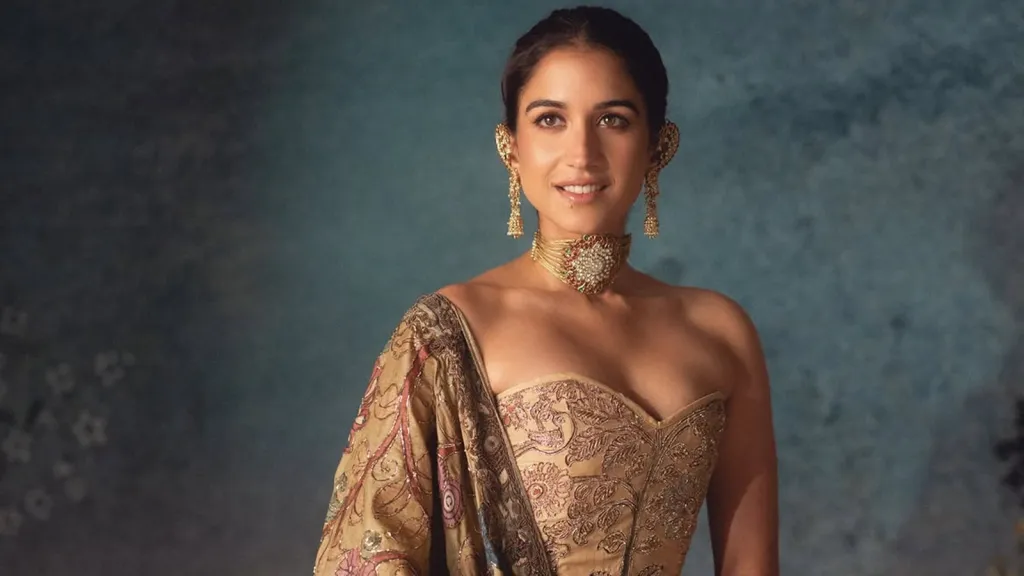
Radhika Ambani’s Kalamkari Ensemble Features Hand-Painted Motifs and Zardozi Work
Radhika Ambani brought together traditional Indian craftsmanship and contemporary couture in a striking Kalamkari ensemble designed by Mayyur Girotra. Featuring hand-painted mythological motifs, intricate embroidery and a sculptural corset, the outfit celebrated India’s rich textile heritage while offering a modern interpretation of traditional artistry.
The look was showcased at a pre-Navratri celebration hosted by the Ambani family to mark the first anniversary of Swadesh, a platform dedicated to promoting Indian art, craft and the work of local artisans.
While Nita Ambani made a statement in a magenta Ashavali silk sari and Isha Ambani wore a custom hand-painted Torani ensemble featuring Radha Krishna motifs, Radhika opted for a contemporary Kalamkari-inspired look that combined elaborate textile art with modern silhouettes.
Created in collaboration with Swadesh, Radhika’s ensemble highlighted the beauty of hand-painted textiles, traditional embroidery and the craftsmanship behind India’s enduring design traditions.
Radhika Ambani’s Kalamkari Outfit Celebrates Indian Craftsmanship
The ensemble reflected designer Mayyur Girotra’s approach to combining traditional Indian textiles with contemporary design. Known for sculptural silhouettes, detailed embroidery and innovative interpretations of heritage crafts, the designer brought these elements together in a look that kept the textile’s artistic character at the forefront.
The skirt featured elaborate hand-painted compositions inspired by Krishna Leela and Kalpavriksha, also known as the Tree of Life. These traditional themes were complemented by decorative elements drawn from nature, including peacocks, sacred cows, lotus blossoms and intricate floral vines.
Rather than treating the fabric simply as a decorative element, the design allowed the painted imagery to tell a story. The motifs drew attention to the cultural and symbolic significance of Kalamkari, a textile tradition known for its detailed illustrations and narrative compositions.
The ensemble also demonstrated how heritage crafts can be adapted for contemporary fashion without losing their connection to traditional techniques and artistic knowledge.
What Is Kalamkari? Understanding the Traditional Indian Art Form
Kalamkari is a traditional Indian textile art associated with intricate hand-painted or hand-drawn designs. The name comes from the Persian word kalam, meaning pen, reflecting the technique used to create detailed patterns and illustrations on fabric.
The craft is particularly associated with the historic temple town of Srikalahasti in Andhra Pradesh, where artisans have developed a distinctive tradition of depicting mythological stories, religious figures and elaborate decorative motifs.
Explaining the art form on Instagram, Mayyur Girotra described Kalamkari as a refined textile tradition in which intricate motifs and mythological narratives are meticulously drawn by hand.
The process traditionally involves specialised drawing techniques and natural dyes derived from botanical sources and minerals. Colours are carefully applied in stages to develop detailed compositions, with the finished work reflecting the artisan’s control over line, shading and pattern.
Kalamkari is closely connected to India’s artistic and cultural heritage. Its imagery often draws from mythology, nature and religious storytelling, making the textile more than a surface decoration. Each composition can communicate a narrative through figures, plants, animals and symbolic elements.
The technique also requires patience and considerable skill. The precision of the drawings, the arrangement of colours and the layering of details all contribute to the visual richness of the finished fabric.
Krishna Leela and Kalpavriksha Motifs Take Centre Stage
One of the most distinctive features of Radhika Ambani’s ensemble was its use of hand-painted motifs inspired by Krishna Leela and Kalpavriksha.
Krishna Leela refers to the divine stories and playful episodes associated with Lord Krishna. In traditional Indian art, these narratives are often represented through pastoral scenes, figures, animals and elements of nature.
The Kalpavriksha, commonly understood as the wish-fulfilling or divine Tree of Life, is another significant motif in Indian artistic traditions. It is associated with abundance, continuity and the interconnectedness of life.
On Radhika’s skirt, these themes were brought together with depictions of peacocks, sacred cows, lotus blossoms and floral vines. The combination created a richly detailed composition rooted in Indian visual storytelling.
According to Girotra, these narrative motifs helped bring the symbolic richness of Kalamkari to life. Their placement across the skirt allowed the traditional artwork to remain the central focus of the outfit.
The design offered a contemporary way to showcase familiar cultural themes while retaining the intricate detail associated with hand-painted textiles.
Zardozi, Pitta, Dabka and Appliqué Add Texture
The hand-painted artwork was complemented by an elaborate range of embroidery techniques, including Zardozi, Pitta, Dabka and appliqué.
Zardozi is a traditional form of metallic embroidery that uses decorative threads and embellishments to create elaborate patterns. Historically associated with royal garments and ceremonial textiles, it is valued for its rich finish and detailed workmanship.
Dabka embroidery uses coiled metallic elements to create raised patterns and textured surfaces. Pitta work is another decorative embroidery technique used in traditional Indian embellishment, while appliqué involves attaching shaped pieces of fabric to a base textile to create patterns or decorative compositions.
In Radhika’s ensemble, these techniques added depth and dimension to the painted motifs. Metallic embellishments framed and accentuated the artwork, creating a contrast between the softness of the painted compositions and the structured texture of the embroidery.
The combination of hand painting and intricate embellishment demonstrated how different craft traditions can work together within a single garment. Each technique contributed a distinct visual quality while allowing the underlying textile artwork to remain prominent.
How Radhika Ambani Styled the Kalamkari Ensemble
Radhika paired the intricately decorated skirt with a structured corset and a flowing dupatta, creating a balance between traditional Indian design and contemporary styling.
The corset introduced a defined silhouette, while the dupatta retained the fluidity associated with Indian occasion wear. Together, the pieces gave the ensemble a modern shape without distracting from the elaborate skirt.
Her accessories complemented the outfit’s rich detailing. A sleek, pulled-back bun kept the overall look polished, while tasselled earrings and an elaborate gold choker added a statement finish.
She completed the styling with a statement ring and a pink lotus held in her hand. The accessories were carefully chosen to complement the ensemble without overwhelming its intricate artwork and embroidery.
The overall look demonstrated how traditional textile craftsmanship can be styled through contemporary silhouettes and carefully selected accessories.
Swadesh and the Spotlight on Indian Artisans
The ensemble was created in collaboration with Swadesh, a platform that champions Indian art and craft and brings attention to local artisans.
The Ambani family’s pre-Navratri celebration marked the platform’s first anniversary and highlighted the role of traditional craftsmanship in contemporary design.
Radhika’s outfit reflected this focus by placing hand-painted textiles and specialised embroidery at the centre of the look. Its combination of traditional motifs, natural-dye artistry and detailed embellishment demonstrated the creative possibilities of India’s textile heritage.
Such collaborations can also draw attention to the skills and knowledge behind handmade textiles. From painting intricate mythological scenes to executing metallic embroidery, each technique represents a specialised craft tradition passed down and developed over generations.
By incorporating these techniques into contemporary couture, designers can introduce traditional Indian craftsmanship to new audiences while highlighting the work of the artisans who sustain it.
A Contemporary Interpretation of India’s Textile Heritage
Radhika Ambani’s Kalamkari ensemble brought together mythology, nature-inspired motifs, hand-painted artistry and intricate embroidery in a contemporary silhouette.
The Krishna Leela and Kalpavriksha compositions gave the skirt its narrative character, while Zardozi, Pitta, Dabka and appliqué added texture and dimension. The structured corset, flowing dupatta and restrained accessories completed the look.
Beyond its fashion appeal, the ensemble offered a glimpse into the artistic traditions that continue to shape Indian couture. By combining heritage techniques with modern design, the outfit celebrated the craftsmanship, symbolism and creative knowledge embedded in traditional textiles.
Disclaimer: This article is based on information available in the public domain and details shared by the designer.
For breaking news and live news updates, like us on Facebook or follow us on Twitter and Instagram. Read more on Latest Lifestyle on thefoxdaily.com.






COMMENTS 0