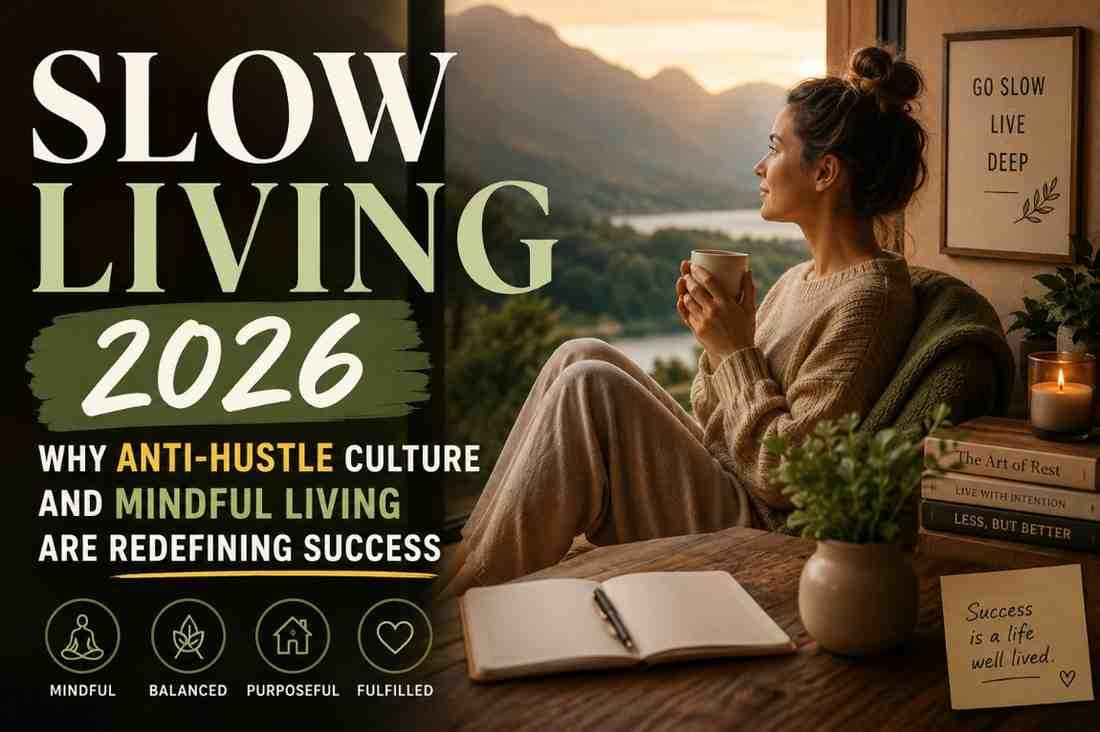
For years, success was defined by how busy you were. Long hours, constant notifications, and a packed schedule became badges of honor. But in 2026, that definition is rapidly changing. A growing number of people are stepping away from the hustle mindset and embracing a slower, more intentional way of living.
This shift—often called Slow Living or Anti-Hustle Culture 2.0—is not about laziness or lack of ambition. Instead, it’s about choosing quality over quantity, meaning over noise, and balance over burnout.
What Is Slow Living, Really?
Slow living is a lifestyle approach that encourages you to be more present, intentional, and mindful in your daily life. It doesn’t mean doing everything slowly—it means doing the right things at the right pace.
At its core, slow living is about:
- Prioritizing mental and emotional well-being
- Reducing unnecessary stress and overstimulation
- Creating space for meaningful experiences
- Living in alignment with your values—not just your deadlines
Why Anti-Hustle Culture Is Rising Now
The rise of anti-hustle culture didn’t happen overnight. It’s a response to years of chronic stress, digital overload, and burnout—especially among young professionals.
Several key factors are driving this shift:
1. Burnout Is No Longer Ignored
Studies in workplace psychology show increasing levels of emotional exhaustion, reduced productivity, and disengagement. People are no longer willing to sacrifice their health for constant output.
2. Digital Overload
With smartphones, social media, and 24/7 connectivity, the brain rarely gets a break. Notifications, emails, and content consumption create a constant state of alertness—leading to anxiety and fatigue.
3. Redefining Success
Success is shifting from “more money, more work” to “better life, more freedom.” People now value flexibility, mental peace, and time over relentless career pressure.
4. Post-Pandemic Mindset Shift
The global pandemic forced many to slow down—and rethink priorities. That perspective has stayed, influencing long-term lifestyle choices.
Key Elements of the Slow Living Movement
🌿 1. Digital Detox
One of the most important aspects of slow living is reducing screen time. This doesn’t mean abandoning technology—but using it consciously.
- No-phone mornings or evenings
- Limiting social media usage
- Taking regular “offline days”
🧘 2. Mindfulness and Presence
Mindfulness is about being fully engaged in the present moment—whether you’re eating, walking, or working.
- Meditation and breathing exercises
- Journaling and self-reflection
- Single-tasking instead of multitasking
🏡 3. Intentional Living
Slow living encourages you to make choices that align with your values—not external pressure.
- Choosing meaningful work
- Spending time with people who matter
- Saying “no” to unnecessary commitments
⚖️ 4. Work-Life Balance (Redefined)
Instead of separating work and life, the goal is to integrate them in a way that feels sustainable.
- Flexible schedules
- Boundaries around work hours
- Prioritizing rest and recovery
The Science Behind Slowing Down
From a neurological perspective, constant busyness keeps the body in a mild “fight-or-flight” state. This increases cortisol levels, which over time can lead to:
- Sleep disturbances
- Weakened immunity
- Anxiety and mood disorders
Slow living practices—like mindfulness and rest—activate the parasympathetic nervous system, often called the “rest and digest” mode. This helps:
- Lower stress hormones
- Improve focus and creativity
- Enhance emotional regulation
Benefits of Embracing Slow Living
People who adopt slow living habits often report noticeable improvements in multiple areas of life:
- Better mental health: Reduced anxiety and improved mood
- Improved productivity: More focus, less burnout
- Stronger relationships: More time and presence with loved ones
- Greater life satisfaction: Feeling aligned and fulfilled
Common Myths About Anti-Hustle Culture
Myth 1: It Means Being Lazy
Reality: Slow living is about intentional effort—not avoiding work. Many high performers use it to sustain long-term success.
Myth 2: You Can’t Be Successful Without Hustling
Reality: Sustainable success often comes from clarity, focus, and consistency—not burnout.
Myth 3: It’s Only for Privileged People
Reality: While lifestyle flexibility varies, small changes—like mindful breaks or reducing screen time—are accessible to most people.
How to Start Practicing Slow Living (Without Changing Everything)
You don’t need to overhaul your life overnight. Start small:
- Begin your day without checking your phone for 30 minutes
- Take short mindful breaks during work
- Schedule “unstructured time” in your week
- Limit multitasking—focus on one task at a time
- Create a simple evening routine to unwind
Why This Trend Will Only Grow
As technology continues to accelerate life, the need to slow down becomes even more important. Experts predict that slow living will evolve into a long-term cultural shift rather than a passing trend.
Workplaces are already adapting—introducing mental health days, flexible schedules, and wellness programs. Content creators and influencers are also moving away from hustle culture toward authenticity and balance.
Final Thoughts
Slow living is not about escaping life—it’s about experiencing it more fully. In a world that constantly pushes you to do more, faster, and better, choosing to slow down can be a powerful act of self-awareness.
The real question is no longer “How busy are you?” but “How well are you living?”
For breaking news and live news updates, like us on Facebook or follow us on Twitter and Instagram. Read more on Latest Lifestyle on thefoxdaily.com.

COMMENTS 0