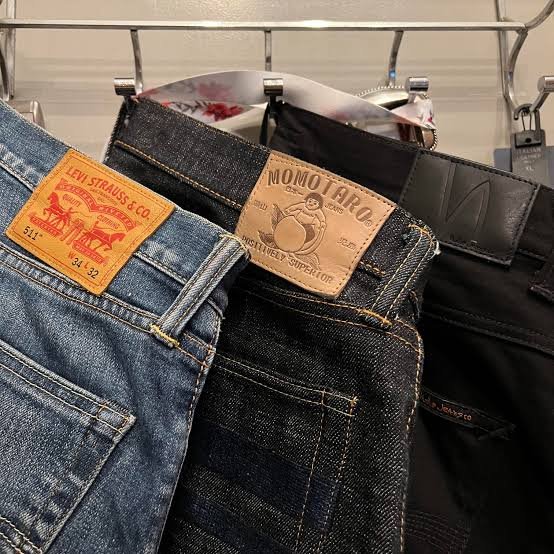
Why Do Jeans Have a Leather Patch on the Back? The History Behind Denim’s Iconic Detail
Have you ever noticed the small patch above the back pocket of your jeans and wondered why it is there? Although it may look like a decorative detail today, the patch has a history rooted in the early days of denim workwear.
Originally, the patch helped manufacturers identify their products and communicate their durability to customers. Over time, it evolved into a recognisable symbol of brand identity, craftsmanship and fashion heritage.
From the famous Two Horse trademark to modern patches made from paper and synthetic materials, this small detail continues to connect contemporary denim with its working-class origins.
How Did the Jeans Patch Originate?
The history of the jeans patch is closely linked to the development of durable workwear in the 19th century.
In 1873, businessman Levi Strauss and tailor Jacob Davis received a US patent for work trousers reinforced with metal rivets at points of strain. These riveted trousers helped establish the design that would eventually become the modern blue jeans.
The rivets strengthened areas that were particularly vulnerable to tearing, making the trousers suitable for demanding working conditions.
As denim became increasingly popular, manufacturers needed ways to distinguish their products from competing garments. Branding became an important part of that process.
According to the official history of Levi Strauss & Co., the company introduced its iconic Two Horse trademark in 1886. The illustration depicted two horses pulling in opposite directions on a pair of trousers, demonstrating the garment’s strength and durability.
The trademark appeared on a patch positioned above the back pocket, creating a distinctive visual feature that customers could associate with the brand.
What Does the Two Horse Logo Mean?
The Two Horse design was more than a decorative logo. It was intended to communicate a clear message about the quality and toughness of the trousers.
The illustration showed two horses attempting to pull the garment apart without success. This visual demonstration conveyed the product’s durability in a way that was easy to understand.
The symbol was particularly useful during a period when not every customer could read a brand name. A recognisable illustration provided a simple way to identify the manufacturer and distinguish its products from competitors.
Over the years, the Two Horse trademark became an enduring part of Levi Strauss & Co.’s identity, linking its modern jeans to the company’s historical reputation for hard-wearing workwear.
Why Were Leather Patches Used on Jeans?
Leather was a practical choice for patches because it offered a durable surface for displaying a brand name, logo or other identifying information.
For manufacturers producing sturdy work trousers, leather also complemented the rugged appearance of denim. The material helped reinforce the association between the garment and durability.
The patch gave companies a consistent place to display their branding, making it easier for customers to recognise their products.
However, not every jeans patch is made from genuine leather.
Manufacturers have used different materials over time, including paper, fabric and synthetic alternatives. Levi Strauss & Co.’s historical records note that the company used heavy-duty, leather-like cardstock patches during the 1950s as it moved away from genuine leather for some products.
Today, the material used for a patch depends on the manufacturer, the design and the intended price point of the garment.
This evolution shows that genuine leather is not essential to the identity or construction of jeans. The patch’s branding function and historical associations are often more important than the material itself.
Is the Leather Patch Meant to Make Jeans Stronger?
Although a patch may provide some local reinforcement where it is attached, its primary purpose on many modern jeans is branding rather than structural strength.
The durability of denim trousers depends mainly on the quality of the fabric, the construction of the seams and the stitching used throughout the garment.
Metal rivets can also play an important role by reinforcing areas that experience repeated stress, such as pocket corners.
These construction details have a more direct effect on how well jeans withstand everyday wear and tear.
The patch, meanwhile, helps identify the manufacturer and connects the garment to the history of denim production.
In other words, while the patch may contribute to the overall design, it is not the main reason a pair of jeans is durable.
Why Has the Jeans Patch Remained Popular?
Jeans have evolved from practical work trousers into one of the world’s most widely worn clothing items. Despite this transformation, the patch has remained a familiar feature of many denim designs.
There are several reasons for its continued popularity.
1. It Helps Identify the Brand
A patch provides a visible location for a company’s logo, name or trademark.
The shape, colour and design can help customers identify a particular brand without needing to examine the garment’s label. For established denim manufacturers, this visual recognition is an important part of their identity.
2. It Connects Modern Jeans to Their History
The patch reminds wearers of denim’s origins as practical clothing designed for demanding work.
For heritage brands, retaining a traditional patch helps preserve a connection with earlier designs and manufacturing traditions. Even when jeans are now worn primarily for casual or fashion purposes, the patch can evoke their original association with strength and utility.
3. It Adds to the Garment’s Appearance
The patch has also become an established design feature.
A contrasting patch can add visual interest to the back of a pair of jeans, while a minimalist design can complement a contemporary style. Manufacturers can use different colours, shapes, materials and logos to create a distinctive look.
As a result, a feature that originally served a practical branding purpose has become part of denim’s visual identity.
Do All Jeans Have a Leather Patch Today?
No. Although the patch remains common, it is not a universal feature of modern jeans.
Some manufacturers continue to use traditional leather patches, while others choose recycled paper, synthetic materials or fabric alternatives. Certain designs use printed labels or different branding placements, and some omit the patch entirely.
These variations reflect changes in manufacturing practices, design preferences and material choices.
The use of alternative materials also demonstrates that a jeans patch does not need to be made from genuine leather to fulfil its branding role.
For consumers, the absence of a leather patch does not automatically indicate lower quality. The durability and construction of jeans depend on several factors, including the denim, stitching, fit and overall workmanship.
The Takeaway: A Small Detail With a Long History
The small patch on the back of jeans carries a history that stretches back to the development of durable denim workwear in the 19th century.
Its early role was to help identify products and communicate their strength, with Levi Strauss & Co.’s Two Horse trademark becoming one of the best-known examples.
Over time, the patch evolved from a practical branding feature into a symbol of denim heritage and style. While genuine leather is no longer the only material used, the familiar detail remains an important part of many jeans designs.
The next time you notice a patch above a pair of jeans’ back pocket, remember that it represents more than decoration. It reflects the garment’s journey from workwear to a global fashion staple.
For breaking news and live news updates, like us on Facebook or follow us on Twitter and Instagram. Read more on Latest Lifestyle on thefoxdaily.com.






COMMENTS 0