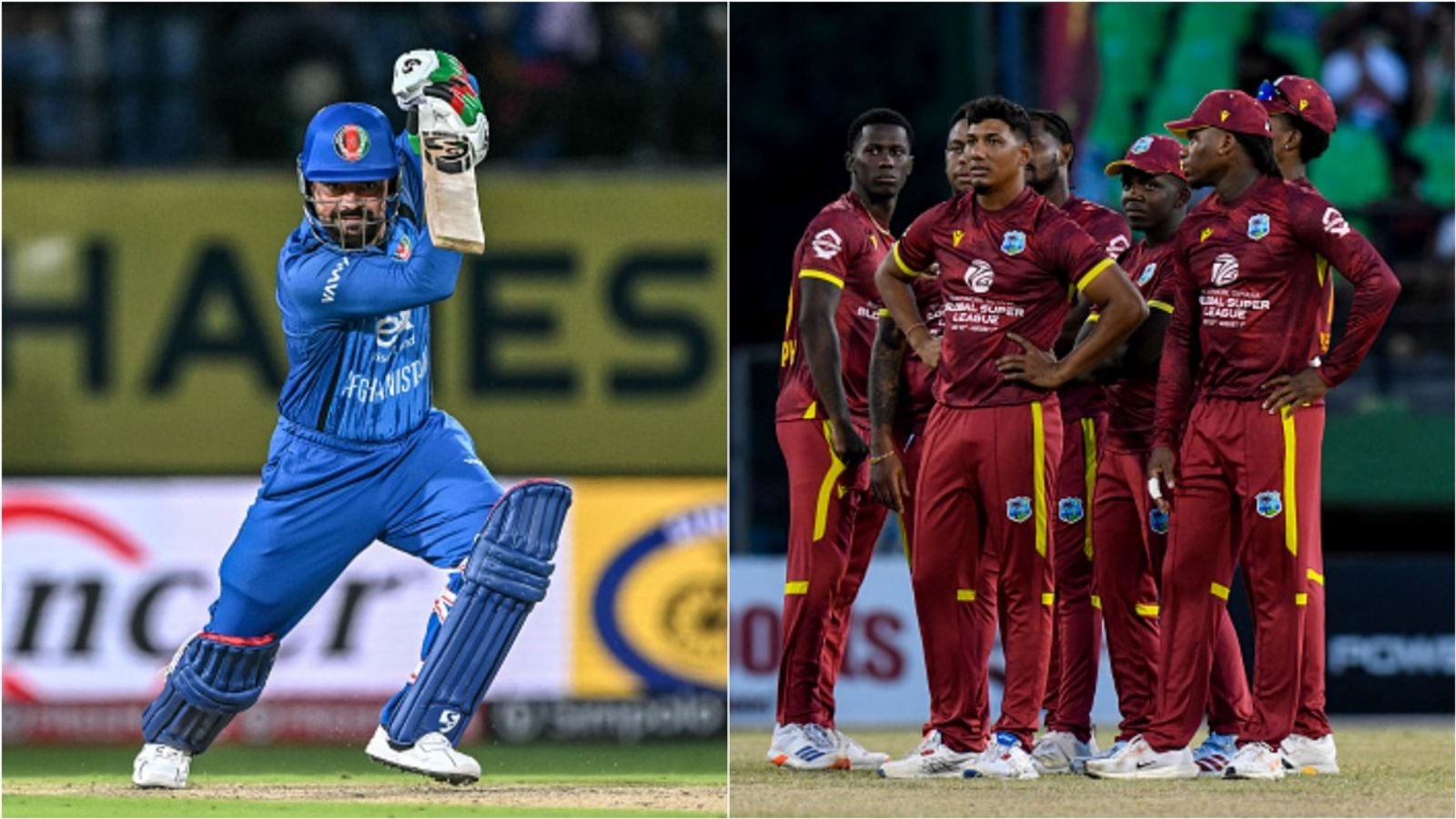
Afghanistan qualify for ODI World Cup 2027 after producing a tense three-wicket victory over Ireland in the second match of their five-game ODI series. The result gave Afghanistan an unassailable 2-0 lead in the series and, more importantly, confirmed their place among the teams earning direct entry into next year’s global tournament.
The qualification is significant beyond the result of one match. Afghanistan’s continued progress reflects how the team has developed into a competitive force in 50-over cricket. Their latest victory was not a straightforward chase, as Ireland created pressure with both bat and ball before Afghanistan eventually found a way to cross the finish line.
At the other end of the qualification story is West Indies. The two-time ODI World Cup champions have once again missed out on direct qualification and will have to use the qualifiers route to reach the tournament. The contrasting fortunes of the two teams underline how much the international ODI landscape has changed.
How Afghanistan Secured Direct Qualification
The qualification system places major importance on the ODI rankings. The top eight teams in the ICC ODI rankings as of September 30, 2026 are scheduled to receive direct qualification, while co-hosts South Africa and Zimbabwe are excluded from that ranking-based allocation.
Afghanistan entered the decisive stage in eighth position with 91 rating points, only two points behind seventh-placed England. Their victory over Ireland therefore carried significance beyond the bilateral series.
By securing an unassailable 2-0 lead in the five-match series, Afghanistan confirmed their position in the direct qualification group. They will join Australia, India, New Zealand, South Africa, Pakistan, Sri Lanka, England, Bangladesh and co-hosts Zimbabwe among the teams already assured of their places.
The achievement means Afghanistan will make their fourth appearance at an ODI World Cup. For a team that has spent much of its international history climbing through the game’s competitive structure, reaching another World Cup represents a major milestone.
Afghanistan’s Qualification Is About More Than One Match
The biggest takeaway from Afghanistan’s qualification is consistency. A World Cup place is rarely secured by one exceptional performance. It is usually the result of collecting enough results across the qualification cycle to remain above the required cut-off.
Afghanistan have increasingly developed an ODI identity around quality spin bowling and match-winning players who can perform under pressure. The Ireland game highlighted both characteristics.
Rashid Khan was central to the result with both bat and ball, while AM Ghazanfar also made a significant contribution with three wickets. When Afghanistan came under pressure during the chase, Rashid again became the player capable of changing the direction of the contest.
This combination can be valuable at a World Cup. Tournament pressure often exposes teams that depend too heavily on one discipline. Afghanistan’s ability to create wickets and then find runs during difficult chases provides them with a useful foundation.
Ireland Put Afghanistan Under Serious Pressure
Ireland’s total of 206 may initially look modest for a 50-over match, but the score became competitive because Afghanistan did not receive an easy chase.
Afghanistan captain Rahmat Shah won the toss and chose to bowl first. The decision initially appeared effective as Ireland lost eight wickets for 128 runs by the 30th over. Rashid Khan and AM Ghazanfar claimed three wickets each and put Afghanistan in a strong position.
However, Ireland managed to avoid a complete collapse. Gavin Hoey and Jai Moondra contributed useful scores in the 30s, helping Ireland move beyond 200 before being bowled out for 206 in 46.3 overs.
That recovery proved important because it changed the nature of Afghanistan’s chase. Instead of completing a routine pursuit, Afghanistan had to manage pressure while continuing to lose wickets.
Rahmanullah Gurbaz Provides the Stability Afghanistan Needed
Afghanistan’s chase was built around Rahmanullah Gurbaz, who provided stability while wickets fell around him. The opener scored 71 runs from 77 balls, including five sixes.
Gurbaz’s innings was particularly valuable because successful ODI chases often require one batter to absorb pressure while other players attack around him. His contribution prevented Afghanistan from losing control of the chase even as Ireland continued to create opportunities.
However, Gurbaz eventually became one of the wickets claimed by Gavin Hoey, who finished with four wickets. His dismissal gave Ireland renewed hope and left Afghanistan’s lower middle order with the responsibility of completing the chase.
Rashid Khan Delivers When Afghanistan Need Him Most
Afghanistan were 176 for six in the 36th over, meaning Ireland had successfully transformed a manageable chase into a genuine contest. At that point, Afghanistan needed a player capable of controlling the pressure without allowing the target to become psychologically difficult.
Rashid Khan delivered exactly that response.
The Afghanistan star remained unbeaten on 37 from 43 balls and helped take his team across the finish line with 31 balls remaining. Yamin Ahmadzai supported him, although he contributed only four runs from 26 deliveries.
The contrasting innings demonstrate an important feature of ODI cricket: not every batter needs to score quickly. When wickets are falling, preserving the partnership can be more important than maintaining a high scoring rate.
Rashid’s performance also underlined his importance to Afghanistan’s structure. His influence extends beyond his role as a specialist leg-spinner. He can contribute with the bat when the team is under pressure, giving Afghanistan an additional match-winning option.
Key Numbers From Afghanistan vs Ireland
| Category | Afghanistan | Ireland |
|---|---|---|
| Result | Won by 3 wickets | Lost by 3 wickets |
| Ireland total | 206 | 206 all out |
| Afghanistan chase | Target achieved with 31 balls remaining | Bowled Afghanistan into a competitive chase |
| Rahmanullah Gurbaz | 71 off 77 balls | Dismissed by Gavin Hoey |
| Rashid Khan | 37* off 43 balls | Also claimed 3 wickets |
| Gavin Hoey | 4 wickets | Key performer for Ireland |
| Rashid Khan | 3 wickets | Major impact with ball and bat |
| AM Ghazanfar | 3 wickets | Major bowling contribution |
West Indies Face Another Qualification Challenge
While Afghanistan celebrated direct qualification, West Indies were left facing a very different reality. The former two-time ODI World Cup champions are 10th in the qualification standings and cannot secure direct qualification through their remaining ODI before the September 30 cut-off, according to the supplied report.
Even a victory in that remaining match would not guarantee West Indies a direct World Cup place. Instead, they will have to go through the qualifiers once again.
This is a significant development for one of the most historically successful teams in ODI cricket. West Indies have won the World Cup twice, but their recent qualification struggles demonstrate how dramatically the competitive landscape has changed.
West Indies’ Recent World Cup Qualification Record Raises Concern
The West Indies situation becomes more serious when viewed against their recent World Cup history.
In the 2023 edition, West Indies failed to make it through the qualifiers and consequently missed the main tournament altogether. That was a major setback for a team whose history is closely connected with the early years of World Cup cricket.
The 2019 World Cup provided another warning sign. West Indies reached the 10-team tournament through the qualifying route but finished ninth after six defeats in nine matches.
The pattern suggests that the challenge is not simply reaching the World Cup. Even when West Indies have qualified, converting their historical reputation into sustained tournament success has proved difficult.
Afghanistan vs West Indies: A Changing ODI Cricket Landscape
The contrasting fortunes of Afghanistan and West Indies provide one of the clearest insights from the current qualification picture.
West Indies possess one of the richest histories in international cricket, including two ODI World Cup titles. Afghanistan, by comparison, are still establishing their legacy at the highest level. Yet Afghanistan have now secured another direct World Cup appearance while West Indies must fight through qualifiers.
This is not simply a story about one team declining and another rising. It demonstrates how modern international cricket increasingly rewards consistency and results rather than historical reputation.
For Afghanistan, the challenge now changes. Qualification is no longer the objective. The focus will shift towards preparing a squad capable of competing against the strongest teams at the World Cup.
Why Rashid Khan Could Be Afghanistan’s Biggest World Cup Asset
Afghanistan’s qualification gives them the opportunity to build their World Cup campaign around players who can influence matches in multiple phases.
Rashid Khan remains the obvious example. His ability to take wickets during the middle overs can disrupt opposition batting plans, while his batting provides Afghanistan with another option when matches become tight.
The Ireland game demonstrated that value perfectly. Rashid first contributed with the ball and later remained unbeaten to finish the chase. That kind of all-round match influence can become particularly valuable in tournament cricket.
However, Afghanistan cannot afford to become overly dependent on him. Their qualification provides an opportunity to develop a broader group of match-winners before the World Cup begins.
The Bigger Challenge Starts After Qualification
Direct qualification is an achievement, but it does not automatically make Afghanistan a World Cup contender. The next stage will involve improving their consistency against stronger opposition and ensuring that their batting can withstand high-quality attacks.
The Ireland match itself provides a useful lesson. Afghanistan were chasing only 207 but still lost six wickets before reaching 176. Against stronger teams, a similar pattern could leave considerably less room for recovery.
That makes batting depth particularly important. Gurbaz provided the main foundation, while Rashid eventually finished the chase. At a World Cup, Afghanistan will need multiple players capable of making substantial contributions rather than relying on a small group.
What Afghanistan’s Qualification Means for the 2027 World Cup
Afghanistan’s presence adds another dangerous opponent to an already competitive World Cup field. Their strongest weapon is the possibility of turning the middle overs into a difficult scoring period through spin and aggressive wicket-taking.
Teams preparing to face Afghanistan will therefore need to think carefully about how they manage the middle overs. Rotating the strike, protecting wickets and identifying scoring opportunities against spin could become important tactical priorities.
Afghanistan, meanwhile, will need to ensure that their batting gives their bowlers enough runs to defend. Their qualification creates a valuable preparation window in which they can experiment, build combinations and identify the players best suited to high-pressure World Cup matches.
A Unique Takeaway: Qualification Has Shifted From Reputation to Reliability
The most striking lesson from the latest qualification picture is that international cricket’s hierarchy is becoming increasingly results-driven.
West Indies’ historical achievements cannot guarantee a World Cup place, while Afghanistan’s growing consistency has earned them direct qualification. That contrast is important for emerging cricket nations because it demonstrates that sustained improvement can eventually translate into access to the sport’s biggest stage.
It also makes the qualification process more competitive. Teams cannot rely on their past records. Every ranking point matters, and a bilateral series can have major consequences for a team’s World Cup future.
What Happens Next for Afghanistan and West Indies?
For Afghanistan, the immediate task is to finish the Ireland series strongly and use the remaining period before the World Cup to strengthen their squad. Qualification gives them certainty, but preparation will determine whether they can turn that opportunity into a deep tournament run.
For West Indies, the route is considerably more demanding. They must navigate the qualifiers successfully just to reach the main tournament. Their recent experience makes that challenge particularly significant because failing again would mean another absence from the world’s premier ODI competition.
The contrasting paths of the two teams could become one of the most interesting subplots of the road to the 2027 World Cup. Afghanistan are building momentum from a position of qualification security, while West Indies are fighting to restore their place among the game’s elite.
Conclusion: Afghanistan Earn Their World Cup Chance as West Indies Face a Defining Test
Afghanistan’s three-wicket victory over Ireland has confirmed their place in the ODI World Cup 2027 and marked another important step in their development as an international cricket team. Their success was built on a strong bowling effort, Rahmanullah Gurbaz’s composed 71 and Rashid Khan’s decisive unbeaten 37.
The result also highlights a changing cricket landscape. Afghanistan’s rise has coincided with continued qualification problems for West Indies, a team whose historic World Cup pedigree remains unquestioned but whose recent results have not provided the same security.
For Afghanistan, direct qualification is the beginning rather than the end of the journey. The next objective will be to convert their growing reputation into consistent performances against the world’s best teams. For West Indies, the qualifiers represent another opportunity to reclaim their place on the biggest stage.
One thing is already clear: the road to the 2027 ODI World Cup is producing a new generation of contenders, and Afghanistan have ensured they will be part of that story.
For breaking news and live news updates, like us on Facebook or follow us on Twitter and Instagram. Read more on Latest Cricket on thefoxdaily.com.






COMMENTS 0