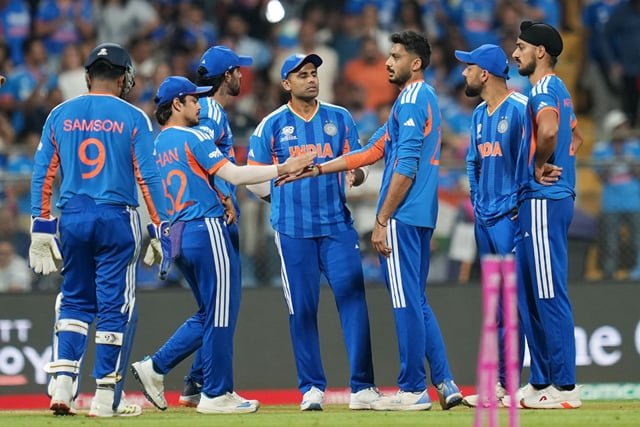
India return to the Holkar Cricket Stadium in Indore for the third T20I against the West Indies on Sunday, October 11, 2026, with the five-match series level at 1-1. Following a remarkable six-wicket defeat in Ranchi, the hosts will look to respond as the contest moves to a venue where they last played a T20I against Afghanistan in January 2024.
India won that previous Indore encounter by six wickets, chasing a target of 173 in just 15.4 overs. While Afghanistan produced a competitive batting performance through Gulbadin Naib, India’s response was powered by aggressive knocks from Yashasvi Jaiswal and Shivam Dube.
The match featured a first-ball dismissal for captain Rohit Sharma, a quick partnership between Jaiswal and Virat Kohli, and a decisive third-wicket stand between Jaiswal and Dube. Ahead of the latest India vs West Indies fixture, here is a closer look at what happened the last time India played a T20I at the Holkar Cricket Stadium.
India vs Afghanistan, 2nd T20I: Match Summary
| Match Detail | Information |
|---|---|
| Match | India vs Afghanistan, 2nd T20I |
| Date | January 14, 2024 |
| Venue | Holkar Cricket Stadium, Indore |
| Afghanistan | 172 all out in 20 overs |
| India | 173/4 in 15.4 overs |
| Result | India won by six wickets |
| Afghanistan’s Top Scorer | Gulbadin Naib – 57 off 35 balls |
| India’s Top Scorer | Yashasvi Jaiswal – 68 off 34 balls |
| Other Key Batter | Shivam Dube – 63 not out off 32 balls |
| India’s Leading Bowler | Arshdeep Singh – 3/32 |
Afghanistan Post 172 After Gulbadin Naib’s Half-Century
India captain Rohit Sharma won the toss and elected to field first in the second T20I of the three-match series against Afghanistan. The visitors needed a strong batting performance to challenge India, and Gulbadin Naib delivered an important contribution in the middle order.
Batting at No. 3, Naib scored 57 runs from 35 deliveries, hitting five fours and four sixes. His innings helped Afghanistan build a competitive total, although the visitors eventually lost all 10 wickets for 172 runs in their allotted 20 overs.
Arshdeep Singh leads India’s bowling effort
Arshdeep Singh was India’s most successful bowler, finishing with figures of 3/32 from four overs. His wickets helped India prevent Afghanistan from pushing the total beyond 172.
Axar Patel also made an important contribution, conceding just 17 runs while taking two wickets. Ravi Bishnoi claimed two wickets as well, although he conceded 39 runs in his four overs.
India’s bowling performance ensured that the target remained within reach. However, the chase was not entirely straightforward, as the hosts lost their captain early in the innings.
Rohit Sharma Falls for a Golden Duck
India’s chase of 173 got off to a difficult start when Rohit Sharma was dismissed for a golden duck in the opening over. Afghanistan pacer Fazalhaq Farooqi removed the Indian captain, giving the visitors an early breakthrough and putting pressure on the home side.
Despite losing Rohit without scoring, India did not allow the early wicket to disrupt their scoring plans for long. Yashasvi Jaiswal and Virat Kohli responded with an attacking partnership that shifted the momentum back towards the hosts.
Jaiswal and Kohli rebuild the innings
Jaiswal and Kohli added 57 runs from just 28 deliveries for the second wicket. Their partnership helped India recover quickly and kept the required run rate under control.
Kohli scored 29 runs from 16 balls, including five fours, before being dismissed. His brief innings provided valuable momentum, while Jaiswal continued attacking the Afghanistan bowlers.
The partnership demonstrated India’s ability to recover from an early setback through positive batting. Rather than allowing Afghanistan to build pressure after Rohit’s dismissal, the hosts maintained an aggressive approach during the powerplay and beyond.
Yashasvi Jaiswal and Shivam Dube Seal India’s Victory
After Kohli’s dismissal, Jaiswal joined Shivam Dube at the crease. The pair produced the decisive partnership of the innings, adding 92 runs from just 42 deliveries for the third wicket.
Jaiswal scored 68 runs from 34 balls, hitting five fours and six sixes. His innings combined boundary-hitting with quick scoring between the wickets, ensuring that India remained comfortably ahead of the required rate.
Dube provided equally important support at the other end. He remained unbeaten on 63 from 32 deliveries, striking five fours and four sixes to help India finish the chase with plenty of overs remaining.
Dube’s unbeaten half-century proves decisive
Dube’s innings was particularly significant because it ensured India did not lose momentum after Jaiswal’s dismissal. His ability to find boundaries and keep the scoreboard moving reduced the pressure on the remaining batters.
India reached 173/4 in 15.4 overs, winning by six wickets. The result gave the hosts a 2-0 lead in the three-match series, which they had already secured by winning the opening encounter.
The successful chase highlighted the value of partnerships in T20 cricket. Although India lost Rohit early, the contributions from Kohli, Jaiswal and Dube ensured that the target was reached without requiring a close finish.
Key Performers From India’s Previous T20I in Indore
| Player | Performance | Impact |
|---|---|---|
| Gulbadin Naib | 57 off 35 balls | Top-scored for Afghanistan |
| Arshdeep Singh | 3/32 in four overs | Led India’s wicket-taking effort |
| Axar Patel | 2/17 in four overs | Delivered an economical spell |
| Virat Kohli | 29 off 16 balls | Helped accelerate India’s chase |
| Yashasvi Jaiswal | 68 off 34 balls | Provided an attacking half-century |
| Shivam Dube | 63 not out off 32 balls | Stayed until the winning target was reached |
How India’s Previous Indore Match Compares With the West Indies Series
India’s previous T20I at the Holkar Cricket Stadium ended with a comfortable victory, but the circumstances surrounding the 2026 West Indies fixture are different. In January 2024, India chased 173 against Afghanistan and reached the target in 15.4 overs. This time, the hosts arrive after conceding 252 runs in a demanding chase in Ranchi.
In the second T20I against the West Indies on October 9, 2026, India scored 249/5 after batting first. Sanju Samson led the innings with 82 off 41 balls, while the other batters also made valuable contributions.
However, West Indies captain Shai Hope scored an unbeaten 102 off 45 deliveries, and Sherfane Rutherford added 84 from 37 balls. Their partnership helped the visitors reach 252/4 in 18.3 overs, securing a six-wicket win with nine balls remaining and levelling the series.
The contrasting results underline an important aspect of T20 cricket: a substantial total or a successful chase in one match does not guarantee the same outcome at another venue. Conditions, bowling execution, batting partnerships and tactical decisions all influence the final result.
What to Expect From the Third India vs West Indies T20I
With the series tied at 1-1, the third T20I in Indore offers both teams an opportunity to take the lead. India will be keen to improve its bowling performance after the Ranchi defeat, while the West Indies will look to build on the confidence gained from completing a successful chase of 250.
India’s bowling will be under scrutiny
India’s inability to defend 249 in Ranchi placed the bowling unit under pressure. The team will need greater consistency in line and length, effective use of its bowling options and a clear strategy against aggressive batters.
Mayank Yadav’s performance in the previous match offered India a positive, as he took three wickets. The team will need contributions from the rest of the attack if it is to restrict the West Indies’ powerful batting line-up.
West Indies will look to maintain their momentum
Hope and Rutherford demonstrated how quickly a large target can be chased when batters build partnerships and maintain an aggressive scoring rate. The visitors will aim to carry that momentum into the third match.
India, meanwhile, will have to find ways to break partnerships before the opposition settles into a comfortable rhythm. Early wickets and better control during the middle overs could prove important in determining the outcome.
Conclusion
The last time India played a T20I at the Holkar Cricket Stadium in Indore was on January 14, 2024, when the hosts defeated Afghanistan by six wickets. Afghanistan scored 172, with Gulbadin Naib making 57, before India’s aggressive chase was led by Yashasvi Jaiswal’s 68 and Shivam Dube’s unbeaten 63.
India reached 173/4 in 15.4 overs despite Rohit Sharma falling for a golden duck. Arshdeep Singh’s three wickets and the contributions from Axar Patel and Ravi Bishnoi had helped restrict Afghanistan to a manageable target.
As India return to Indore for the third T20I against the West Indies, the focus will be on whether the hosts can respond after their Ranchi defeat. With the five-match series level at 1-1, the upcoming contest presents an important opportunity for India to regain the advantage.
For breaking news and live news updates, like us on Facebook or follow us on Twitter and Instagram. Read more on Latest Cricket on thefoxdaily.com.






COMMENTS 0