Ravichandran Ashwin has highlighted India’s struggles on turning pitches after Japan pushed them close, raising questions about how the batting unit may respond away from flat surfaces.
India may have escaped with a two-run victory against Japan in their one-off T20I, but the narrow result exposed an area of concern that former India spinner Ravichandran Ashwin believes opposition teams could target in future matches.
India managed only 32/4 in five overs at the Sano International Ground on Tuesday, September 22, after rain reduced the contest to a five-over game per side. Japan then reached 30/3, leaving India with a victory that was far closer than many would have expected before the match.
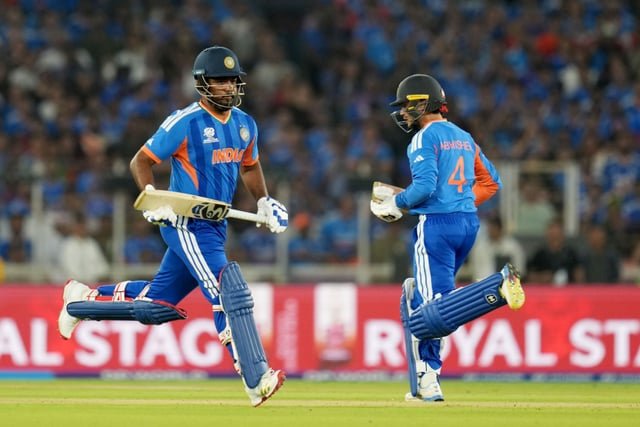
The unusually short contest and difficult playing surface played a major role. The pitch offered significant assistance to spin, making stroke-making difficult for India’s top order. Sanju Samson, Abhishek Sharma and Ishan Kishan all struggled to produce their usual attacking cricket.
For Ashwin, however, the performance was part of a wider pattern. He suggested that India could encounter similar conditions more frequently, particularly when playing teams that deliberately prepare surfaces designed to reduce the advantage of India’s aggressive batting approach.
India’s Top Order Finds Conditions Difficult Against Japan
India entered the match with a batting unit that had recently produced explosive performances. The team had swept Afghanistan 3-0 in their previous T20I series, with the batters enjoying the opportunity to play on a much more conducive surface in Delhi.
The Japan match presented a completely different challenge.
With the contest reduced to just five overs, there was almost no time for the Indian batters to settle. Abhishek Sharma was dismissed for a golden duck, while Sanju Samson and Ishan Kishan also failed to make significant contributions.
Captain Shreyas Iyer eventually became India’s leading scorer with 16 from 12 deliveries. His innings was particularly valuable because the pitch was offering considerable assistance to the spinners and the batting conditions were far removed from the high-scoring T20 surfaces commonly seen in major leagues.
India finished on only 32/4, a total that would normally appear extremely modest in T20 cricket. Japan, however, found the same conditions difficult during the chase and finished on 30/3.
The result demonstrated that the pitch affected both teams. At the same time, it gave Japan an opportunity to compete with a Full Member side in a way that might have been considerably more difficult on a conventional batting-friendly surface.
Ashwin Identifies Turning Pitches as a Potential Challenge
Ashwin’s main observation was that India’s batting strength can become less effective when the pitch does not offer predictable pace and bounce.
The former CSK player argued that opposition teams could recognize this and prepare surfaces where the ball turns or moves laterally. Such conditions can make India’s attacking batters work harder for scoring opportunities and reduce the value of purely aggressive stroke play.
His comments also connect India’s recent overseas results with the Japan performance. The team had already experienced difficult conditions during T20I series in Ireland and England, while their dominant home performances have generally come on surfaces where stroke-making is easier.
This does not mean India cannot succeed on challenging pitches. Rather, the Japan match provided another example of how quickly the batting approach can be tested when the surface changes significantly.
Why India’s Recent Form Matters
India’s batting has traditionally been built around players capable of scoring rapidly during the powerplay. Abhishek Sharma’s aggressive approach, Sanju Samson’s range of strokes and Ishan Kishan’s attacking intent can put enormous pressure on bowling attacks when the conditions allow them to play freely.
However, difficult pitches create a different tactical requirement.
Batters may need to rely more heavily on strike rotation, soft hands, controlled footwork and selective attacking shots. In a five-over match, the margin for adjustment becomes even smaller because losing two or three wickets can immediately put a team under pressure.
India’s 32/4 against Japan therefore offers an interesting example of how conditions can alter the expected balance between bat and ball.
The challenge becomes particularly relevant ahead of India’s upcoming international assignments. The team will eventually travel to New Zealand for an all-format series, where conditions are traditionally capable of providing movement and assistance to seamers, although the actual surfaces used will determine the nature of each contest.
Could Opponents Deliberately Prepare Difficult Pitches?
Ashwin suggested that opposition teams are unlikely to ignore India’s strengths when preparing pitches.
His argument is straightforward: if a team knows India’s batters are extremely dangerous on flat surfaces, creating conditions that offer turn or lateral movement could reduce their scoring options.
This tactical approach would not be unusual in international cricket. Teams have long attempted to maximize their own bowling strengths through pitch preparation, although the degree of assistance available to bowlers depends on local conditions, weather, ground characteristics and match regulations.
India’s opponents could therefore test the batting lineup with slower or more responsive surfaces, particularly in countries where such conditions are naturally available.
For India’s batters, the answer would involve adapting rather than simply trying to reproduce the same high-tempo approach used on batting-friendly wickets.
Japan Showed Why Shorter Formats Can Be Competitive
Ashwin also focused on another aspect of the match: the unusual five-over format.
Rather than viewing the shortened game only as a consequence of rain, he suggested that very short matches could have a wider role in international cricket. His reasoning was that fewer overs can reduce the gap between established teams and emerging sides.
Japan demonstrated that possibility in Sano.
India’s star-studded batting order was restricted to 32 runs, while Japan’s bowlers remained competitive throughout the five-over innings. Japan then needed only three wickets to remain in contention until the final over of their chase.
The result was decided by just two runs, giving Japan one of its most notable performances against a Full Member opponent.
The format also placed greater importance on individual deliveries. A wicket, boundary or misfield could dramatically change the match because there were so few balls available to recover from mistakes.
Japan’s Performance Provides Encouragement Ahead of Asian Games
Japan’s narrow defeat is particularly significant because the team is now preparing for the 2026 Asian Games.
The Japanese side will face Afghanistan on September 24 and Nepal on September 26 in the men’s cricket competition. India, meanwhile, have received direct qualification into the quarter-final stage.
The performance against India could give Japan confidence before those matches. Their bowlers demonstrated that disciplined spin bowling can create pressure even against a powerful batting lineup, while their chase showed that they could remain competitive under a demanding target.
Captain Kendel Kadowaki-Fleming also highlighted the quality of India’s spin attack after the match, while Japan’s teenage spinner Charlie Hara-Hinze produced an eye-catching performance.
For an emerging cricket nation, competing closely with India in a shortened international match provides valuable experience ahead of the Asian Games.
India’s New Zealand Tour Could Provide Another Test
The conditions discussion may become relevant again when India travel to New Zealand later in the year.
India’s tour is scheduled to begin with a five-match T20I series on October 22 in Christchurch, following the Asian Games campaign and India’s home series against the West Indies.
New Zealand’s pitches can offer different challenges from those encountered in India. Seam movement, bounce and weather conditions can influence the contest, although the exact nature of the pitches will vary from venue to venue.
Ashwin believes New Zealand will already be aware of India’s strengths and potential vulnerabilities. His broader point is that India’s batting cannot assume every international surface will behave like a high-scoring IPL wicket.
That makes adaptability an important part of the preparation. India’s batters may need different plans for different conditions instead of relying on one consistent attacking template.
What India’s Batters Can Take From the Japan Game
The Japan match was only five overs long, so it would be premature to draw sweeping conclusions from a single rain-affected contest. The unusual conditions affected both teams, and India still won the match.
However, the game does provide several useful areas for discussion.
- Powerplay adaptability: Aggressive batting must be balanced with an understanding of how the ball is behaving.
- Spin handling: Batters may need clearer plans when the surface offers grip and turn.
- Strike rotation: Singles and twos can become especially important when boundaries are difficult to find.
- Game awareness: Short matches leave little time to recover after early wickets.
- Overseas preparation: Training on different types of surfaces can help batters prepare for changing conditions.
These factors could become increasingly important as India face teams capable of combining tactical bowling plans with challenging playing surfaces.
India Still Won, But the Margin Made the Match Significant
It is important to keep the result in perspective. India won the match by two runs and completed their assignment against Japan successfully.
The contest was also heavily influenced by rain, which reduced the game to five overs per side. Such a format naturally produces unusual scorelines and increases the impact of individual moments.
Nevertheless, Japan’s ability to restrict India to 32/4 created a rare situation in which a Full Member side was forced to defend an extremely small total.
That is why Ashwin’s comments have attracted attention. His argument is not simply about India’s performance against Japan; it concerns how India’s batting approach might be tested when opponents move away from conventional batting-friendly conditions.
Key Takeaways From India vs Japan
| Factor | What Happened |
|---|---|
| India’s score | 32/4 in five overs |
| Japan’s score | 30/3 in five overs |
| Result | India won by two runs |
| India’s top scorer | Shreyas Iyer – 16 off 12 |
| Major challenge | Turning pitch and difficult stroke-making conditions |
| Ashwin’s concern | India could face problems when surfaces offer turn or lateral movement |
| Next major assignment | India’s 2026 Asian Games campaign, followed by the New Zealand tour |
Final Verdict
India’s two-run victory over Japan ultimately delivered the expected result, but the manner of the contest highlighted how strongly pitch conditions can influence a powerful batting lineup.
Ravichandran Ashwin’s comments point to a broader tactical question for Indian cricket: how effectively can the team’s aggressive batters adapt when the pitch does not allow them to play their preferred attacking strokes?
The Japan match alone cannot establish a long-term weakness, particularly because rain reduced the game to only five overs. Still, the 32/4 scoreline showed how quickly the balance can change when spin and uneven conditions become major factors.
Japan, meanwhile, can take considerable encouragement from pushing India to the final ball of a two-run contest. With the Asian Games approaching, the experience could prove valuable for a developing cricket team.
For India, the next challenge will be turning lessons from difficult surfaces into practical batting plans. The upcoming international schedule should provide further opportunities to see how the lineup responds when conditions are less favorable to free-flowing stroke play.
For breaking news and live news updates, like us on Facebook or follow us on Twitter and Instagram. Read more on Latest Cricket on thefoxdaily.com.






COMMENTS 0