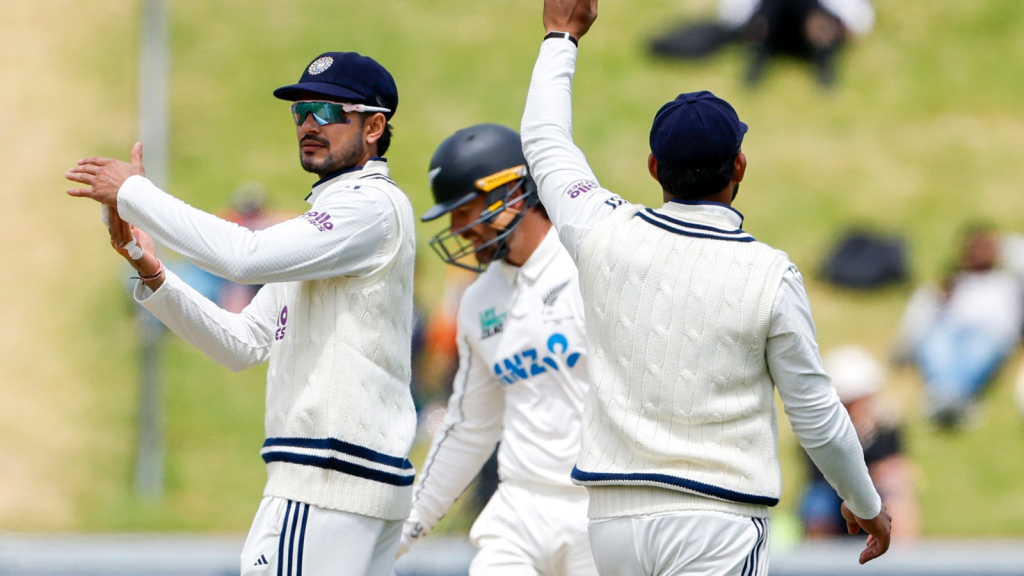
India captain Shubman Gill has raised concerns about the quality and durability of the Kookaburra ball, saying it becomes too soft and loses its effectiveness after just 25 to 30 overs. According to Gill, the problem makes it increasingly difficult for fast bowlers to take wickets, particularly on pitches that offer limited assistance. He also questioned why teams are still not permitted to use saliva to shine the ball, arguing that the restrictions introduced during the COVID-19 pandemic should be reconsidered.
Gill’s comments came after India’s first Test against New Zealand in Wellington ended in a draw on Monday. Despite bowling for 120 overs in New Zealand’s second innings, India could not take all 10 wickets. The Indian captain pointed to the condition of the ball as one of the factors that made the bowling challenge more difficult, alongside the placid nature of the pitch.
The issue is not new for India. Gill said similar concerns had emerged during recent tours of England and Sri Lanka, suggesting that the ball’s condition has become a recurring challenge for bowlers. He believes the problem needs attention because a ball that loses its hardness and shape early can significantly reduce the opportunities available to a bowling side.
Gill says the ball becomes soft after 25-30 overs
Speaking at the post-match press conference in Wellington, Gill explained that the ball used during the Test had become noticeably soft within the first 25 to 30 overs. He said this was much earlier than the stage at which teams would normally expect the ball to lose some of its effectiveness.
“The ball definitely plays a very big role. With our first ball, after around 25-30 overs, it had become very soft. I think the other team complained as well. And we saw this in England too, in the first three-four matches, the ball is getting soft very quickly,” Gill said.
The captain also questioned whether the overall quality of the balls had declined. While he did not offer a definitive explanation for the change, he stressed that the problem becomes particularly serious when the pitch itself does not provide enough movement or bounce to assist the bowlers.
“I don’t know if the quality of the balls has gone down or what has happened, but in such conditions, if there is no help from the wicket and on top of that the ball also gets soft, it becomes very difficult for the bowlers to take wickets,” he added.
Gill acknowledged that a ball naturally loses some of its hardness as a Test innings progresses. However, he believes there is a significant difference between a ball becoming softer after 50 overs and losing its effectiveness after only half that period.
“We understand after 50 overs, the ball will go soft. But if the ball is going soft after 25-30 overs, or it’s going out of shape, it gets very difficult for the bowlers,” the India skipper said.
Soft ball reduces opportunities for caught-behind dismissals
One of Gill’s biggest concerns was the effect of the ball’s condition on the chances of taking wickets through edges. Fast bowlers often rely on movement away from the batter to create opportunities for catches behind the wicket. However, when the ball becomes soft and loses its ability to carry through to the wicketkeeper or slip fielders, those chances can become harder to convert.
Gill argued that edges which might otherwise travel towards the wicketkeeper or slips do not carry as effectively when the ball has lost its hardness. This can remove an important method of dismissal from a bowling side’s options, especially when the surface is not offering much assistance.
“Edges don’t carry. So almost your caught-behind dismissal goes out of the game, and if there isn’t that much movement in the pitch, only LBW and bowled are left. If there isn’t that much movement, even doing that is difficult,” he said.
His explanation highlights the relationship between the condition of the ball and the surface on which a Test match is played. A hard ball can help fast bowlers generate movement and carry, creating opportunities for catches. When it becomes soft early, those advantages can reduce, leaving bowlers with fewer reliable ways to dismiss batters.
On a pitch offering limited movement, the problem becomes even more challenging. Bowlers may have to depend heavily on accurate lines, sustained pressure and changes in pace to create opportunities. If the ball is also losing its effectiveness quickly, maintaining pressure over long periods can become difficult.
Gill questions the continued ban on using saliva
Alongside his criticism of the ball’s durability, Gill questioned the continued restriction on using saliva to shine the cricket ball. The practice was prohibited during the COVID-19 pandemic as a health precaution. The restriction was introduced to reduce the potential risk of spreading infection through the use of saliva on the ball.
Gill believes the circumstances that led to the rule have changed and that cricket authorities should reconsider whether the restriction is still necessary. He argued that allowing players to use saliva would give teams another way to maintain the ball’s condition during a long innings.
“It’s been so long since COVID, why haven’t they allowed shining the ball [with saliva] yet? We are way past COVID times. A rule was made that you can’t apply saliva on the ball to shine it. It’s been seven-eight years since that, and I don’t understand why they aren’t allowing it. This is also a very big factor the ball doesn’t get maintained as well as it used to before,” Gill said.
The India captain suggested that the inability to maintain the ball as effectively as before has added to the difficulties faced by fast bowlers. In his view, the combination of a soft ball, limited assistance from the pitch and restrictions on shining the ball creates an especially demanding situation for bowling teams.
Gill called for teams to be allowed to use saliva again, arguing that the ball’s condition is an important part of maintaining a fair contest between bat and ball.
“Teams should be allowed to use saliva. [With] the condition of the ball if you’re not shining the ball or if you’re not able to maintain the ball well, especially on wickets like these, it makes the job of the bowlers very difficult,” he said.
Why maintaining the ball matters in Test cricket
The condition of the ball can have a major influence on the balance between batting and bowling in Test Cricket. Unlike shorter formats, where teams use a limited number of overs with the ball, Test bowlers must work through long spells and extended innings. Maintaining the ball’s condition can help them continue creating movement and pressure as the match progresses.
Fast bowlers generally look for movement through the air and off the pitch. The condition of the ball, including its hardness, shape and surface, can influence how effectively they achieve those objectives. If the ball becomes soft or loses its shape earlier than expected, bowlers may find it harder to generate the movement and carry needed to trouble established batters.
Shining the ball is also an important part of traditional ball management. Players polish one side while trying to preserve the condition of the other, creating different surface characteristics that can assist swing bowling. Gill’s argument is that removing saliva from the available methods of shining the ball has made maintaining it more difficult, particularly when its quality is already a concern.
His comments do not suggest that ball maintenance alone determines the result of a Test match. Pitch conditions, bowling accuracy, field placements, player fitness and batting quality all influence the outcome. However, Gill believes the ball’s early deterioration can make the task significantly harder for bowlers when other conditions are already unfavourable.
Wellington draw brings bowling conditions into focus
India’s experience in Wellington provided the immediate context for Gill’s criticism. The team had hoped to complete a victory but was unable to dismiss New Zealand completely in the fourth innings. The hosts resisted India’s attack, and the match ended in a draw despite the visitors spending 120 overs attempting to take the remaining wickets.
The Kookaburra ball offered limited assistance during the contest, while the pitch was also described as placid. Those conditions made it difficult for India’s bowlers to create consistent wicket-taking opportunities. Gill’s remarks suggested that the problem was not restricted to the Wellington Test, as he had noticed similar issues during earlier tours.
The captain’s frustration reflects a wider challenge for fast bowlers in conditions where the pitch does not provide much movement. When the ball loses its hardness early, bowlers may struggle to make edges carry, while the lack of movement makes bowled and leg-before-wicket dismissals harder to produce.
Gill calls for a review of ball-related rules and quality
Gill’s comments raise two connected issues for the game: the durability of the balls being used in Test cricket and the continued restriction on applying saliva. He questioned whether the quality of the balls has declined and argued that teams should have greater flexibility to maintain them during long innings.
His criticism was particularly focused on balls becoming soft after just 25 to 30 overs, rather than the expected deterioration after a longer period of use. He also believes the inability to use saliva makes it harder to preserve the ball’s condition, placing additional pressure on fast bowlers.
For India, the Wellington draw brought these concerns into sharper focus after the bowling attack could not complete the job in the final innings. Gill did not present the ball as the only reason for the result, but he made it clear that its condition had contributed to the difficulty of taking wickets.
Ultimately, Gill wants greater attention paid to the quality of the ball and a reconsideration of the saliva restriction introduced during the pandemic. His central argument is that when the ball becomes soft too quickly and cannot be maintained as effectively, bowlers lose important tools for creating dismissals. On pitches that offer little assistance, that combination can make taking 20 wickets in a Test match an even tougher challenge.
For breaking news and live news updates, like us on Facebook or follow us on Twitter and Instagram. Read more on Latest Cricket on thefoxdaily.com.






COMMENTS 0