India captain Shubman Gill has explained the thinking behind his decision to accept a draw against New Zealand in the first Test at Wellington, revealing that managing the workload of his fast bowlers was a major priority. With the pitch offering limited assistance and the second Test approaching quickly, Gill felt that continuing for another five to 10 overs was unlikely to change the result significantly.
India had dominated large portions of the match with the bat and entered the final day in a strong position, needing eight wickets to secure victory. However, New Zealand’s resistance and the increasingly batter-friendly conditions made a late breakthrough difficult. After a discussion with head coach Gautam Gambhir, Gill decided that protecting the bowling attack was more important than extending the contest without a realistic chance of forcing a win.
Gill discusses declaration and draw decision with Gambhir
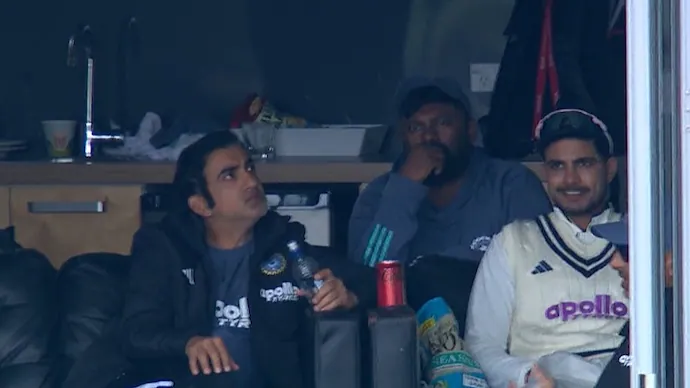
Before India agreed to end the contest, Gill walked over to the Indian dugout to speak with head coach Gautam Gambhir. The discussion focused on whether India had enough time and assistance from the surface to continue pursuing a victory.
New Zealand’s batters had shown determination throughout the final day, making it increasingly difficult for India to create the kind of pressure needed to take the remaining wickets. Gill later explained that the decision was influenced by the condition of the pitch and the physical demands placed on his fast bowlers.
Speaking after the match, the Indian captain said that the team might have continued attacking if the wicket had offered more assistance. However, the bowlers had already completed a substantial workload, and the next Test was only days away.
“If there was a little bit more in the wicket, maybe. But the fast bowlers were tired. They have bowled almost 50 overs in the match, all of them,” Gill said.
He also highlighted the short gap between the two matches and the travel commitments facing the team.
“Also, there is a quick turnaround, with the next match in only three days and travel tomorrow. So we wanted to keep all our bowlers fresh. I didn’t really think having five to 10 extra overs would have helped that much.”
India and New Zealand eventually shook hands with 15 overs remaining, bringing the first Test to an end without a winner.
India’s hopes of victory fade on the final day
India began the final day needing eight wickets to win after setting New Zealand a challenging target. The hosts, however, approached the task with a clear objective: survive the remaining overs and prevent India from completing a series-opening victory.
New Zealand had lost two wickets during the morning session, moving from 132 for 2 to 139 for 4. The quick dismissals briefly raised India’s hopes of triggering a collapse, but the home side responded with a determined effort from its middle order.
Daryl Mitchell and Tom Blundell attempted to stabilise the innings after the early setbacks. Blundell was eventually dismissed for 15, giving India another opportunity to put pressure on the New Zealand batting lineup.
Anshul Kamboj provided the breakthrough, with wicketkeeper Rishabh Pant completing a sharp catch behind the stumps. The dismissal gave India an opening, but the visitors could not turn it into a sustained sequence of wickets.
Mitchell continued to defend patiently, while Glenn Phillips joined him at the crease following Blundell’s departure. The pair focused on preserving their wickets and gradually reduced India’s chances of forcing a result.
As the partnership progressed, the remaining time became an increasingly important factor. India needed wickets quickly, but New Zealand’s resistance ensured that the visitors could not produce the late collapse required to win the match.
Fast bowlers’ workload becomes a key consideration
Gill’s comments made clear that India’s decision was not based solely on the immediate match situation. The captain also had to consider the physical condition of his bowling attack and the demands of the upcoming Test.
The fast bowlers had already delivered almost 50 overs each during the match, and Gill believed that asking them to continue for another five to 10 overs would not necessarily improve India’s chances. With the pitch offering diminishing assistance, the possibility of taking five more wickets in the remaining time appeared limited.
India were also facing a demanding schedule. The team was due to travel the following day, leaving little time to recover and prepare for the second Test in Christchurch, scheduled to begin on November 27.
Managing the bowlers’ workload was therefore an important part of the captain’s decision-making. Rather than extend their spells on a surface that was becoming increasingly favourable to batting, Gill wanted the attack to remain fresh for the next challenge.
The decision reflected the balance captains must maintain between pursuing an immediate result and managing players across a multi-match series. Although India had a strong opportunity to win in Wellington, the conditions and schedule made a continued push less attractive.
India’s dominant batting performance sets up the contest
India’s batting effort had placed them in a commanding position earlier in the match. After dismissing New Zealand for 368 in their first innings, the visitors responded with a massive total of 720 for 9 declared, establishing a lead of 352 runs.
KL Rahul was the leading scorer with 136, producing a substantial innings that helped India build an imposing advantage. Rishabh Pant also made a major contribution, scoring 128 and maintaining pressure on the New Zealand bowlers.
Gill came close to reaching a century himself, finishing with 98. His innings added valuable runs to India’s total, while contributions from Yashasvi Jaiswal, Devdutt Padikkal and Dhruv Jurel further strengthened the visitors’ position.
The declaration gave India a substantial lead and left New Zealand with a difficult task in the second innings. However, the hosts responded with resilience, showing that the pitch had become increasingly suitable for batting as the match progressed.
Despite India’s commanding first-innings advantage, the visitors struggled to find the breakthroughs needed to complete the victory. New Zealand’s ability to occupy the crease for long periods ultimately proved decisive in determining the outcome.
Mitchell and Phillips help New Zealand secure a draw
New Zealand’s second-innings resistance was led by Daryl Mitchell and Glenn Phillips. Mitchell remained unbeaten on 49, while Phillips finished on 26 not out as the hosts reached 239 for 5 before the teams agreed to a draw.
Their partnership prevented India from taking the remaining wickets and ensured that New Zealand could bat out the available time. Mitchell’s patient approach was particularly important as India attempted to create pressure through their bowling attack.
Phillips also played a valuable supporting role, helping New Zealand maintain its resistance during the closing stages. With the pitch offering little assistance and the number of remaining overs decreasing, India found it increasingly difficult to force a result.
The draw came despite India’s considerable advantage with the bat. The visitors had scored 720 for 9 declared, but New Zealand’s second-innings determination ensured that the home side avoided defeat.
India turn attention towards the Christchurch Test
The result leaves India with plenty to consider ahead of the second Test in Christchurch, particularly regarding their bowling performance. Their batting display in Wellington provided a strong platform, but the team was unable to convert that advantage into a victory.
Gill will now look for conditions in Christchurch that offer his bowlers more assistance. A surface that provides greater movement or bounce could give India’s fast bowlers better opportunities to take wickets and put pressure on New Zealand’s batting lineup.
The short turnaround also means that recovery and preparation will be important. India’s decision to stop pushing for a result in Wellington was partly shaped by the need to have a fresh bowling attack for the next match.
With the second Test beginning on November 27, the team will have limited time to address its shortcomings and prepare for another demanding contest. Gill’s priority will be to ensure that the bowlers are ready to deliver when the series resumes.
A calculated decision amid a demanding schedule
India’s draw against New Zealand was a reminder that a dominant batting performance does not always guarantee a Test victory. The visitors built a substantial lead and created opportunities on the final day, but the home side’s resistance and the condition of the pitch prevented them from taking all 10 wickets.
Gill’s explanation showed that the decision to shake hands was influenced by more than the immediate scoreline. The captain considered the limited assistance available from the surface, the workload of his fast bowlers and the short preparation period before the Christchurch Test.
India will now look to turn their strong batting performance into a winning result in the next match. Keeping the bowling attack fresh could prove important as the visitors attempt to take control of the series in Christchurch.
For breaking news and live news updates, like us on Facebook or follow us on Twitter and Instagram. Read more on Latest Cricket on thefoxdaily.com.






COMMENTS 0