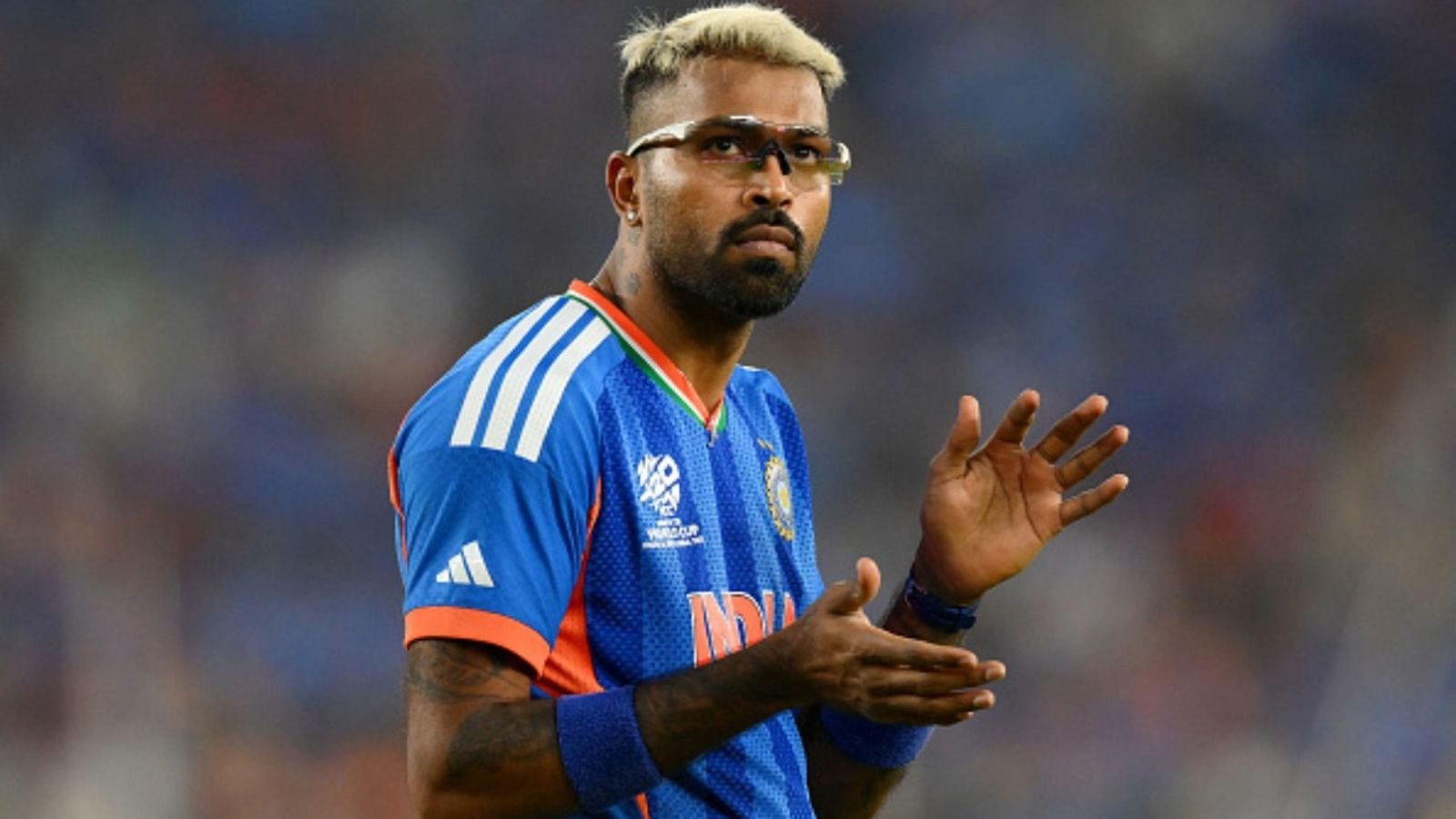
Hardik Pandya India comeback plans have suffered another setback after the all-rounder reportedly developed a leg niggle during his rehabilitation. The latest concern comes at a particularly inconvenient stage, with India preparing for a three-match T20I series against Afghanistan beginning on September 13, 2026.
Pandya has been working through an extended rehabilitation programme at the BCCI Centre of Excellence in Bengaluru after previous fitness setbacks affected his availability. The latest reports suggest that he had been bowling at full intensity without discomfort before being advised to temporarily stop bowling because of discomfort in his leg.
The development does not necessarily mean that Pandya faces another lengthy absence. However, the timing is significant. India’s Afghanistan T20I series is scheduled for September 13, 15 and 17, leaving the selectors with a relatively narrow window to determine whether their premier pace-bowling all-rounder is ready for competitive cricket.
That uncertainty is especially important because Pandya’s value to India goes beyond his batting. His ability to contribute as a seam-bowling all-rounder gives the T20 side additional balance, meaning his fitness can influence the structure of the entire playing XI.
What happened to Hardik Pandya?
According to the report cited in the latest development, Pandya had been operating at full intensity before experiencing discomfort in his leg. He was subsequently advised to pause bowling temporarily.
The available information suggests that there has been no major issue with his batting or general movement. That is an encouraging sign, but bowling places different physical demands on the body, particularly when a player is returning from a rehabilitation programme.
The reported concern is therefore less about whether Pandya can perform basic cricketing movements and more about whether his body can safely tolerate the repeated workload of international-level bowling.
The BCCI’s Centre of Excellence is reportedly monitoring the situation, and the final decision is expected to depend on whether medical and fitness staff are satisfied that he can return without taking an unnecessary risk.
Why bowling is the key to Pandya’s comeback
Hardik Pandya’s role becomes much more valuable when he is capable of bowling his full allocation or contributing meaningful overs.
As a specialist batter, India has several options. But a fit Pandya can potentially occupy the role of a middle-order batter while also providing seam bowling, giving the captain an additional tactical option.
That combination is difficult to replace.
If Pandya returns only as a batter, India may need to select an additional specialist bowler. That can change the balance of the XI and reduce flexibility during a match.
This explains why the latest leg niggle is significant even if his batting remains unaffected. The question surrounding his return is not simply whether he can walk, bat or field. It is whether he can safely handle the workload required from an international all-rounder.
Why the Afghanistan T20I series could be too close
India’s three-match T20I series against Afghanistan is scheduled to begin on September 13 at the Arun Jaitley Stadium in New Delhi, with the second match on September 15 and the third on September 17.
The compact schedule leaves little room for a player returning from injury to build bowling workload gradually.
A player can be medically fit without necessarily being match-ready. Those are two different stages of rehabilitation.
Medical clearance generally addresses whether a player can safely perform the required movements. Match readiness involves a much broader assessment: workload tolerance, intensity, recovery between sessions and confidence in the affected area.
For Pandya, the selectors therefore have to consider not only whether he can bowl today but whether he can recover properly after bowling and repeat the workload a few days later.
Hardik Pandya’s injury timeline has made caution more important
Pandya’s latest issue comes after previous setbacks that disrupted his availability for India’s white-ball plans. The reported history includes a quadriceps strain and back spasms, followed by an extended rehabilitation process.
That history changes the context surrounding the current niggle.
When a player has experienced multiple physical setbacks, the priority is usually not to accelerate a comeback simply because an important series is approaching. The objective is to establish a sustainable return that reduces the likelihood of another interruption.
For India, that can be frustrating. For Pandya, it is essential.
A rushed return followed by another setback could potentially cost him considerably more cricket than missing one short T20I series.
Why India cannot afford to take a careless risk
The Afghanistan series may be important, but India’s broader white-ball calendar makes Pandya’s long-term availability more valuable than his participation in any individual match.
A fully fit Pandya gives India something that few other players can replicate: a proven middle-order batting option combined with genuine seam bowling.
That versatility becomes particularly useful in tournaments, where squad balance can determine how many specialist bowlers or batters a team can select.
Therefore, India’s medical and selection teams have a strong reason to be conservative.
If there is any uncertainty about his ability to bowl consistently, the selectors may prefer to wait rather than risk turning a minor problem into a major absence.
What the latest report actually tells us
It is important not to overstate the situation.
The latest information does not establish that Pandya has suffered a serious new injury. The report indicates that he experienced discomfort and was advised to pause bowling temporarily. It also suggests that he is expected to resume soon.
That means the situation remains fluid.
The biggest uncertainty is whether the remaining rehabilitation period will be enough for the team management to become fully confident in his fitness before the Afghanistan series.
The phrase “too close” is particularly revealing. It suggests that the decision could come down to timing rather than the severity of the issue alone.
Medical fitness versus match fitness
| Stage | What it means for Pandya | Why it matters |
|---|---|---|
| Recovery | Managing the physical issue and restoring normal movement | Provides the foundation for a safe return |
| Bowling workload | Gradually increasing bowling intensity | Tests whether the body can handle repeated stress |
| Training | Combining bowling, batting and fielding | Replicates the demands of cricket more closely |
| Medical clearance | Assessment of physical readiness | Determines whether competitive participation is considered safe |
| Match fitness | Ability to perform repeatedly under competitive conditions | Shows whether the player can sustain international workload |
Who could benefit if Pandya misses the series?
If Pandya is unavailable, India’s selectors would need to rethink the balance of the T20I side.
The obvious challenge is replacing both his batting contribution and his bowling role. A specialist batter can cover some of his runs, while a specialist seamer can cover his overs, but selecting two separate players for those responsibilities can affect the rest of the XI.
India could instead choose another all-round option if one is available and fit. That would preserve some of the flexibility Pandya normally provides.
The final decision would depend on India’s squad composition and the tactical requirements of the Afghanistan series.
Why Pandya’s absence would change India’s T20 strategy
Pandya’s presence allows India to build an XI with greater flexibility.
For example, if he can reliably bowl, India can afford to carry a batting-heavy middle order while still maintaining several bowling options. Without him, the captain may need to choose between an additional batter and an additional bowler.
This is one reason all-rounders are so valuable in T20 cricket.
Their contribution is not simply the sum of their batting and bowling statistics. Their biggest value often comes from allowing the team to construct a different combination of players.
That tactical flexibility is precisely what India could miss if Pandya’s comeback is delayed again.
The Asian Games connection adds another layer
The Afghanistan T20I series is also relevant because it forms part of India’s preparation for the Asian Games cricket event in Japan later in September.
That gives the selection decision greater context.
India needs players to enter a major multi-sport competition with enough preparation and confidence. A player returning directly from rehabilitation cannot simply be judged on name recognition. The team needs evidence that the player can handle the workload.
If Pandya is unable to play against Afghanistan, India may use the series to assess alternative combinations before the Asian Games.
That would be an unfortunate development for Pandya personally, but it could provide useful information to the selectors.
Why India should avoid setting an artificial deadline
One of the biggest dangers in injury management is allowing the calendar to dictate the rehabilitation process.
The Afghanistan series has fixed dates. Pandya’s recovery does not necessarily follow a fixed timetable.
If he is ready, India can select him. If he is not, the sensible decision is to wait.
The temptation to return a major player because an important tournament is approaching can be understandable, but long-term availability should carry greater weight.
For Pandya, the ideal comeback is not merely one in which he survives the first match. It is one in which he can return to a sustained run of international cricket.
Prediction: Pandya’s return may be delayed, but his long-term role remains important
The latest setback makes Pandya’s participation in the Afghanistan T20I series uncertain, particularly because bowling appears to be the area receiving the most attention.
If he resumes bowling soon and completes the required workload without discomfort, he could still remain in contention. But if the medical team believes the window is too narrow, India would have little reason to gamble on his return.
Missing the Afghanistan series would not necessarily indicate a major deterioration in his career. It could instead represent a cautious decision designed to protect his availability for the more important competitions ahead.
The more important question is whether Pandya can eventually establish a stable workload rather than repeatedly moving between rehabilitation and competition.
The bigger issue for Hardik Pandya
Pandya’s career has already demonstrated why India values him so highly. He is capable of changing the balance of a T20 side through his ability to contribute in multiple disciplines.
But that same versatility creates a physical challenge. An all-rounder is effectively carrying the workload of more than one specialist role.
That makes workload management particularly important.
India does not simply need Pandya to be available. It needs him to be available in a condition where he can perform his complete role without compromising his physical health.
Conclusion: India has little reason to rush Hardik Pandya
Hardik Pandya’s India comeback has encountered another uncertain moment after a reported leg niggle forced him to temporarily pause bowling during his rehabilitation.
The development is frustrating because the Afghanistan T20I series begins on September 13, leaving a limited window for Pandya to prove that he is ready for competitive cricket. However, the available information does not suggest that he has suffered a major new injury, and he is reportedly expected to resume soon.
The key issue is bowling readiness. India’s medical team must be convinced that Pandya can handle the intensity and repeated workload required at international level before giving him the all-clear.
If he misses the Afghanistan series, India will have to adjust its T20 combination, but that may be preferable to risking another setback.
Pandya’s importance to India’s white-ball plans is undeniable, yet his most valuable comeback will be the one that lasts. A delayed return may disappoint fans in the short term, but establishing long-term fitness could prove far more important for India and for Pandya himself.
For breaking news and live news updates, like us on Facebook or follow us on Twitter and Instagram. Read more on Latest Cricket on thefoxdaily.com.





COMMENTS 0