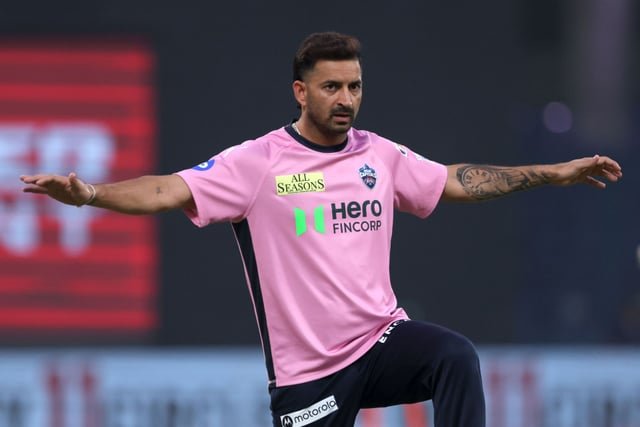
Nitish Kumar Reddy has made a strong return to India’s T20I setup during the Afghanistan series, but former India pacer Mohit Sharma believes comparisons with Hardik Pandya could create unrealistic expectations around the young all-rounder.
The 23-year-old returned to international cricket after receiving fitness clearance and immediately became an important part of India’s team balance. His comeback came after he missed the tours of Ireland, England and Zimbabwe because of injury-related setbacks.
Reddy’s series began poorly with the ball, but he quickly turned things around. After conceding 30 runs in two overs during India’s seven-wicket victory in the opening T20I, he produced a career-best spell in the second match and continued his excellent run in the series finale.
His performances have naturally led to discussions about his role as India looks for an all-rounder capable of contributing in both departments. However, Mohit Sharma has urged people not to judge Reddy against Pandya, arguing that the two players have different styles and should be used according to their individual strengths.
Mohit Sharma explains why Nitish Kumar Reddy should not be compared with Hardik Pandya
Hardik Pandya has been a major part of India’s white-ball setup for years, particularly because of his ability to contribute with both bat and ball. With Pandya recovering from injury, Reddy has increasingly been viewed as one of the players who can help provide balance to India’s playing XI.
That situation has also created comparisons between the two all-rounders. Mohit Sharma believes those comparisons could be unfair to Reddy if they lead supporters to expect him to perform exactly like Pandya.
Speaking on Cricbuzz, Mohit explained that Reddy has a different batting approach and should be assessed according to what he naturally brings to the team.
According to Mohit’s assessment, Reddy is more likely to build an innings before attacking, rather than immediately trying to hit boundaries from the beginning. That difference means India’s expectations should be based on Reddy’s own skill set rather than on Pandya’s established role.
The former pacer also stressed that Reddy should be used according to his talent instead of being placed under the pressure of reproducing another player’s performances.
Nitish Kumar Reddy’s impressive bowling turnaround against Afghanistan
Reddy’s performances in the Afghanistan T20Is have given India an encouraging indication of what he can contribute with the ball.
In the first T20I, his bowling figures were disappointing as he conceded 30 runs from two overs. However, he responded strongly in the second game at the Arun Jaitley Stadium.
Reddy registered career-best figures of 3/24 in that match and was named Player of the Match. The performance represented a significant turnaround from his opening outing.
He then received an even bigger opportunity in the third T20I when he was used as a frontline pacer and was given a chance with the new ball. Reddy responded by taking another three wickets.
As a result, he finished the series as India’s highest wicket-taker, underlining the impact he had after a difficult start.
Reddy’s batting numbers tell a different story
While Reddy made a major impact with the ball, his opportunities with the bat were limited during the series.
He was dismissed for just one run from four deliveries in his only batting appearance. That figure does not reflect his overall importance to India’s batting structure, but it does show why his role needs to be considered across both disciplines rather than judged solely through his recent batting output.
His value comes from the combination of batting depth and bowling options he can provide. For a T20I side, having an additional player capable of bowling meaningful overs can allow the captain and team management greater flexibility when constructing the XI.
Why Mohit Sharma wants expectations to remain realistic
One of Mohit Sharma’s central points is that Indian cricket often expects an all-rounder to perform a very specific role. According to him, teams generally look for a player who contributes more heavily with the ball while also having the ability to provide useful runs down the order.
That framework can be important when understanding Reddy’s development. Rather than expecting him to immediately become a player who dominates both departments, the focus can remain on how effectively he performs the role assigned to him.
Reddy’s recent Afghanistan performances demonstrate that he can make a meaningful contribution with the ball. His batting development, meanwhile, remains an important part of his longer-term value to the side.
This approach also reduces the pressure created by constant references to Pandya. Reddy does not need to replicate another all-rounder’s career path to become an important player for India.
Nitish Kumar Reddy’s injury history remains a concern
Another former India cricketer, Mohammad Kaif, has highlighted a different factor affecting Reddy’s development: his availability.
Reddy has dealt with several injury problems over the past 18 months. His setbacks began with a knee injury during India’s tour of England last year, followed by further fitness issues during the subsequent tour of Australia and after IPL 2026.
These interruptions have limited the amount of uninterrupted cricket Reddy has been able to play.
For a young player trying to establish himself across formats, regular competitive cricket is particularly valuable. It allows a player to develop consistency, understand his role and learn how to handle different match situations.
Kaif believes India’s management has recognised Reddy’s potential and has continued to back him despite his injury problems.
Mohammad Kaif says India are backing Reddy’s talent
Kaif pointed out that Reddy has not been repeatedly dropped from the team. Instead, his absences have largely been connected to injuries.
That distinction is significant because it suggests the team management continues to see long-term value in the all-rounder.
Reddy has already made his Test debut and remains part of India’s plans across formats. His ability to contribute with both bat and ball gives the team an option that can be developed over time.
Kaif also noted that head coach Gautam Gambhir has identified Reddy as a player worth developing. However, the former India batter believes the repeated injuries have interrupted the youngster’s progress.
Reddy’s role after the Afghanistan T20I series
The Afghanistan series could prove useful for Reddy because it gave him a chance to rebuild his bowling confidence after his fitness-related interruptions.
His progression through the three matches was particularly notable. He went from conceding 30 runs in two overs in the opening game to producing 3/24 in the second before taking another three wickets in the third.
That progression also demonstrated his ability to respond after a difficult performance. Instead of allowing the first match to define his series, he produced increasingly influential spells.
His batting, however, remains an area where more opportunities will be needed before drawing broader conclusions about his current level.
What this means for India’s all-rounder options
India’s white-ball setup benefits from having players who can contribute in more than one discipline. Reddy’s presence gives the team another seam-bowling option while also adding batting depth.
That makes his development relevant beyond the immediate Afghanistan series. If he can maintain his fitness and continue improving both areas of his game, he can remain part of India’s plans across formats.
At the same time, his role does not have to mirror Pandya’s. Different all-rounders can provide different combinations of skills, and the team can adjust their usage according to match conditions and the player’s strengths.
Nitish Kumar Reddy and India’s 2027 ODI World Cup plans
Reddy remains part of India’s longer-term plans, with the all-rounder reportedly being considered for the 2027 ODI World Cup.
That gives his development added significance. The ODI format requires players to contribute over a longer period than T20 cricket, making consistency, fitness and tactical adaptability particularly important.
His future role will also be influenced by how quickly he can establish regular availability. Injuries have interrupted his progress in recent periods, so maintaining fitness could be an important part of his development.
At the same time, uncertainty surrounding Hardik Pandya’s recovery and availability continues in the background. That situation may influence how India’s management structures its all-rounder options, but Reddy’s progress should still be evaluated independently.
Key points from Mohit Sharma and Mohammad Kaif
| Topic | Details |
|---|---|
| Mohit Sharma’s view | Reddy should be assessed according to his own abilities rather than compared directly with Hardik Pandya. |
| Batting style | Mohit described Reddy as a batter who can attack after getting set. |
| Afghanistan series | Reddy finished as India’s highest wicket-taker. |
| Best bowling figures | 3/24 in the second T20I. |
| Third T20I | Used as a frontline pacer and given an opportunity with the new ball. |
| Batting in series | Scored one run from four deliveries in his only batting appearance. |
| Kaif’s view | India have recognised Reddy’s talent, but injuries have interrupted his development. |
| Long-term plans | Reddy remains part of India’s plans for the 2027 ODI World Cup. |
Why Reddy’s next phase will be important
The Afghanistan T20Is gave Reddy an opportunity to show that he can influence matches with the ball. His three-wicket performances in the final two games provided a strong response after his difficult start.
The next challenge will be maintaining that progress over a longer period. For a player who has faced repeated injury interruptions, regular cricket could be just as important as individual performances.
His batting development will also remain relevant. Reddy does not need to copy Pandya’s style, as Mohit Sharma pointed out, but India’s management will want him to become increasingly reliable in both departments.
The combination of bowling improvements, batting development and fitness will determine how his role evolves in India’s plans.
Final Verdict
Nitish Kumar Reddy has given India plenty to discuss after an impressive bowling comeback against Afghanistan. His career-best 3/24 in the second T20I and three wickets in the third helped him finish the series as India’s highest wicket-taker.
Mohit Sharma has nevertheless urged fans and pundits to avoid directly comparing Reddy with Hardik Pandya. His argument is that Reddy has his own batting style and should be used according to his individual strengths.
Mohammad Kaif has also highlighted the importance of Reddy’s fitness, noting that injuries have interrupted his development despite continued backing from the Indian team management.
With Reddy remaining in India’s longer-term plans, including the 2027 ODI World Cup, his ability to stay fit and develop consistently across both batting and bowling will be central to the next stage of his international career.
For breaking news and live news updates, like us on Facebook or follow us on Twitter and Instagram. Read more on Latest Cricket on thefoxdaily.com.






COMMENTS 0