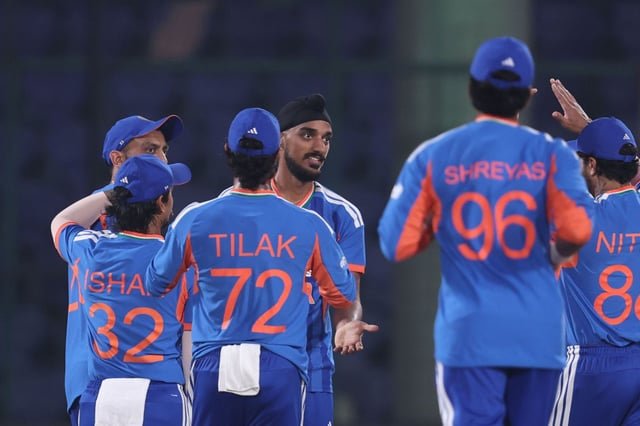
Nitish Kumar Reddy produced the kind of response India would have wanted from a young all-rounder in the second T20I against Afghanistan. After conceding 30 runs without taking a wicket in the series opener, the 23-year-old returned with an impressive 3/24 from three overs in Delhi on Tuesday, September 15.
His improved performance helped India restrict Afghanistan to 159/8 before the hosts chased down the target with seven wickets and 31 balls remaining. The victory gave India an unassailable 2-0 lead in the three-match series ahead of the final T20I.
Former India captain Sunil Gavaskar was particularly impressed by the way Reddy responded to his difficult outing in the opening match. Rather than viewing one expensive spell as a reason to reduce his opportunities, Gavaskar stressed the importance of developing young batting all-rounders and encouraging them when they struggle with the ball.
His comments also placed Reddy alongside other promising Indian all-rounders such as Venkatesh Iyer and Suryansh Shedge, highlighting the importance of giving players in this role enough time to develop both sides of their game.
Nitish Kumar Reddy Responds in Style After First T20I Setback
Reddy’s two performances against Afghanistan offered a clear contrast. In the first T20I, he bowled only two overs and conceded 30 runs without taking a wicket. That made his bowling a potential concern heading into the second match.
Instead of allowing that performance to define his series, Reddy made a significant improvement in Delhi.
He finished with 3/24 from three overs, giving India an important contribution with the ball. Even more notable was the way he started each of his three overs. Reddy picked up a wicket with the first delivery of every over he bowled, immediately putting Afghanistan’s batters under pressure.
The spell demonstrated a more controlled approach compared with the opening game. Reddy was able to create breakthroughs while keeping the scoring rate under control, helping India prevent Afghanistan from building the kind of total that could have made the chase uncomfortable.
From 30 Runs in Two Overs to 3/24
| Match | Overs | Runs | Wickets |
|---|---|---|---|
| 1st T20I | 2 | 30 | 0 |
| 2nd T20I | 3 | 24 | 3 |
The numbers underline the improvement, but Gavaskar focused on something beyond the figures. For him, Reddy’s ability to learn from a difficult performance is an important quality for a developing cricketer.
Sunil Gavaskar Urges India to Back Young All-Rounders
Speaking during the discussion on Sony Sports, Gavaskar emphasized that players such as Reddy need opportunities to develop instead of being judged too quickly after an unsuccessful outing.
He also mentioned Venkatesh Iyer and Suryansh Shedge as examples of promising batting all-rounders who can benefit from patience and continued support.
The former India opener’s broader point was that all-rounders cannot become reliable two-skill players overnight. A young cricketer who enters the team primarily because of his batting may initially view bowling as a secondary responsibility. Developing that part of the game requires regular opportunities, coaching and confidence.
For Reddy, this approach is particularly relevant because his value to India increases significantly if he can consistently contribute useful overs alongside his batting.
Why Bowling Development Matters for Nitish Kumar Reddy
Reddy’s primary reputation has been built around his batting ability. His early IPL performances showed India that he had the technique and temperament to contribute with the bat, while his occasional bowling suggested there could be a bigger all-round role available to him.
Gavaskar recalled that when Reddy first appeared in the IPL, he was viewed more strongly as a batter. His limited bowling opportunities toward the end of that early season, however, offered signs that he could eventually develop into a genuine all-round cricketer.
That distinction is important. There is a major difference between a batter who can occasionally bowl and an all-rounder whom a captain can confidently use for several overs.
India would benefit greatly if Reddy can move toward the second category.
A dependable sixth bowling option can provide a captain with additional flexibility, particularly in T20 cricket. It can also reduce the pressure on specialist bowlers during matches where conditions or opposition batting plans make the main attack less effective.
Gavaskar Wants Reddy to Think Like a Bowler
One of Gavaskar’s key observations was that batting all-rounders can sometimes approach bowling primarily from a batter’s perspective. He believes players such as Reddy need to take their bowling development seriously if they want to become complete all-rounders.
This does not mean abandoning their batting strengths. Instead, it means learning how bowlers think about conditions, match situations, field placements and the strengths of opposing batters.
That cricketing awareness can make a major difference in T20 matches. A bowler who understands what a batter is trying to do can adjust pace, line, length and field settings more effectively.
Reddy’s second T20I spell provided an encouraging example. After an expensive opening match, he returned with wickets and better control. The ability to make adjustments between matches is exactly the type of development India will want to see from a young all-rounder.
Gavaskar Sees a Bright Future for Reddy
Gavaskar’s assessment of Reddy went beyond the Afghanistan series. He pointed toward the youngster’s willingness to improve as one of the reasons he believes Reddy has a strong future.
Natural talent is only one part of becoming an international cricketer. Players also need to recognize weaknesses, respond to setbacks and continue improving their game.
Reddy’s response between the first and second T20Is provided evidence of that process. He went from an expensive outing to a three-wicket spell in the space of a few days.
It would be premature to treat one strong performance as proof that every bowling problem has been solved. However, it does show why continued opportunities can be valuable for a player still developing his all-round game.
Nitish Kumar Reddy’s India T20I Record
Reddy has represented India in only a limited number of T20Is so far, meaning his international career is still in its early stages.
Before the second Afghanistan match, he had played six T20Is, scoring 90 runs at an average of 45.00 and taking six wickets at an average of 20.83.
Those figures illustrate why India continues to view him as more than a specialist batter. His ability to contribute in both departments gives the team another tactical option.
The challenge now is turning flashes of all-round ability into consistent performances. That process can take time, particularly when a player is still learning how to manage the demands of international cricket.
India’s Search for a Reliable All-Rounder
India have regularly looked for players who can strengthen the batting while providing meaningful bowling contributions. The balance is particularly valuable in T20 cricket, where teams often need six or even seven bowling options depending on the match situation.
Reddy’s development could therefore have implications beyond his own statistics.
If he becomes a reliable four-over option while maintaining his batting quality, India would have greater flexibility when selecting its playing XI. Captains could use him according to matchups rather than simply turning to him as an emergency option.
This is also why Gavaskar’s comments about patience are significant. A developing all-rounder may occasionally have a poor bowling performance. Removing confidence or opportunities after every expensive spell can make it harder for the player to develop the consistency expected at international level.
Venkatesh Iyer and Suryansh Shedge Also Mentioned
Gavaskar did not limit his comments to Reddy. He also highlighted Venkatesh Iyer and Suryansh Shedge as promising all-rounders who require opportunities to grow.
Iyer has not represented India since February 2022, while Shedge was not included in the current squad after appearing in T20I series against Ireland, England and Zimbabwe.
Their situations are different from Reddy’s, but Gavaskar’s central argument remains the same: players with genuine all-round potential need enough time and support to develop their secondary skill.
For a young player, an unsuccessful match should ideally become part of the learning process rather than the end of the opportunity.
How Reddy’s Spell Helped India Seal the Series
Reddy’s contribution came at an important point in India’s series campaign. Afghanistan reached 159/8 in the second T20I, giving India a manageable but competitive target.
The Indian batting lineup then chased the total with seven wickets still available and 31 balls remaining. The comfortable margin meant India secured a 2-0 lead and won the three-match series before the final match.
For Reddy personally, the result was also important because it showed that he could respond positively after a difficult opening game.
His spell did not need to be spectacular in isolation. What mattered was that he provided wickets, restricted scoring and gave India another useful bowling option.
What Reddy’s Development Could Mean for India
The next stage of Reddy’s career will involve proving that performances like the second T20I can become more regular.
His batting remains a major part of his value, but his bowling could determine how much responsibility he receives. If India can trust him to bowl two to four overs consistently, his selection becomes easier to justify even on days when he does not score heavily.
That is the ideal development path for a batting all-rounder. Instead of being selected mainly for one discipline, the player gradually becomes someone who can influence matches in multiple ways.
Reddy’s second T20I spell is therefore useful as a snapshot of that progression. It does not establish a finished product, but it provides a positive indication of what he could become with continued opportunities.
AFG vs IND 2nd T20I: Key Numbers
| Statistic | Details |
|---|---|
| Reddy’s bowling figures | 3/24 in 3 overs |
| Wickets at start of overs | One wicket from the first ball of each over |
| Afghanistan total | 159/8 |
| India’s winning margin | 7 wickets |
| Balls remaining | 31 |
| Series score | India led 2-0 |
| Reddy’s T20I wickets before the match | 6 |
| Reddy’s T20I runs before the match | 90 |
The Bigger Lesson From Reddy’s Comeback
The biggest takeaway from Reddy’s two-match sequence is not simply the difference between 30 runs conceded and three wickets taken. It is the way a young player responded to an unsuccessful performance.
International cricket creates constant pressure because players can quickly become defined by their latest score or bowling figures. For developing all-rounders, however, consistency often comes only after they have experienced difficult situations and learned how to respond.
Gavaskar’s comments reflect that reality. His message is essentially about development rather than immediate perfection. Reddy needs to keep improving his bowling without losing the batting qualities that earned him recognition in the first place.
The second T20I was an encouraging step in that direction.
Final Verdict
Nitish Kumar Reddy delivered a timely response in the second T20I against Afghanistan, transforming an expensive first outing into a match-changing three-wicket spell. His 3/24 helped India control Afghanistan’s innings and complete a seven-wicket victory in Delhi.
Sunil Gavaskar’s praise focused on the larger picture. The former India captain believes young batting all-rounders should be developed patiently and encouraged even when their bowling does not go according to plan.
Reddy’s ability to learn from his first-match struggles is particularly encouraging. If he continues improving his bowling while maintaining his batting strengths, India could have a valuable all-round option for future T20I campaigns.
For now, his second T20I performance offers exactly what a developing international cricketer needs: evidence that a difficult game can be followed by a much stronger one.
For breaking news and live news updates, like us on Facebook or follow us on Twitter and Instagram. Read more on Latest Cricket on thefoxdaily.com.






COMMENTS 0