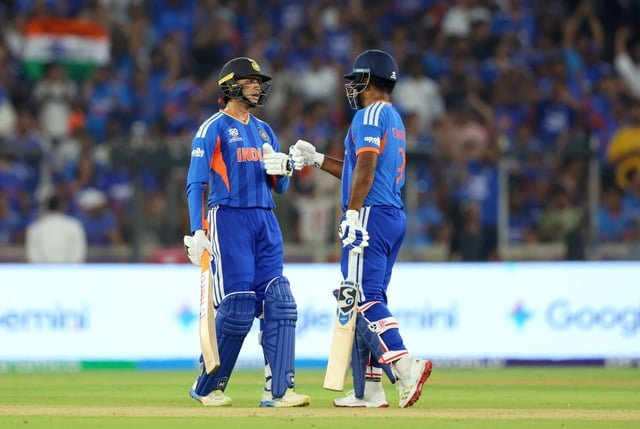
Nitish Kumar Reddy emerged as one of the most encouraging stories from India’s 3-0 T20I series win over Afghanistan, according to former India batter Hanuma Vihari. Despite the attention surrounding the record-breaking batting performances of Abhishek Sharma and Sanju Samson, Vihari identified Reddy’s return to effective bowling as the biggest positive for the Indian team.
The 23-year-old all-rounder had recently returned from an injury layoff and was gradually being brought back into India’s plans. His contribution with the ball became particularly important during the second and third T20Is, when he produced back-to-back three-wicket hauls.
For Vihari, the development could be significant because India are looking for reliable fast-bowling all-rounder options while Hardik Pandya remains unavailable due to fitness and injury concerns. However, Vihari also identified one major question surrounding Reddy’s future: whether he can remain fit and consistently play international cricket.
Nitish Kumar Reddy’s Bowling Comeback Stands Out
Reddy’s Afghanistan series began quietly. In the opening T20I, he bowled two overs and conceded 30 runs as India secured a seven-wicket victory. However, his impact changed dramatically in the following two matches.
In the second T20I, Reddy registered the best bowling figures of his career at that stage, taking 3/24. His performance earned him the Player of the Match award and immediately increased the significance of his role within the side.
He followed that performance with another three-wicket haul in the third T20I. By the end of the series, Reddy had taken six wickets at an average of 13.16 and an economy rate of 8.77, making him India’s highest wicket-taker in the three-match contest.
That improvement with the ball is what caught Vihari’s attention. Rather than focusing only on Reddy’s batting potential, the former India batter pointed to his bowling development as a major reason to be encouraged.
Vihari acknowledged that comparisons with Hardik Pandya will naturally arise because both players can contribute with both bat and ball. However, he stressed that Reddy still has room to improve, particularly in terms of pace, bowling development and physical conditioning.
Hardik Pandya’s Absence Opens a Bigger Opportunity
Hardik has been an important part of India’s white-ball setup because of his ability to provide balance as a pace-bowling all-rounder. His availability has therefore been closely connected with India’s team combination.
With Hardik missing from the Afghanistan series, Reddy had an opportunity to strengthen his case as another option for the role. His six wickets provided an important reminder that his value is not limited to his batting ability.
Vihari believes Reddy could potentially become India’s fast-bowling all-rounder for the 2027 World Cup if Hardik is unable to regain full fitness in time. That possibility makes Reddy’s development particularly important over the next phase of India’s white-ball planning.
However, this is not simply about one successful series. Reddy himself has dealt with fitness setbacks, meaning his ability to stay available will be an important part of his development.
Fitness Could Be the Biggest Test for Reddy
The most important question surrounding Reddy may now be consistency rather than talent. His performances against Afghanistan demonstrated what he can offer when fit, but India will need him to remain available over a sustained period before he can establish himself as a regular first-choice all-rounder.
Vihari specifically highlighted this concern while discussing Reddy’s comeback. He suggested that the youngster can continue improving his pace and bowling, but his body and workload management will also matter.
For an all-rounder, maintaining fitness can be especially demanding because the player contributes in multiple disciplines. Reddy’s future progress will therefore depend not only on his skill development but also on how consistently he can play without further interruptions.
Reddy’s 2027 World Cup Possibility
Vihari also connected Reddy’s recent selection developments with India’s longer-term planning for the 2027 ODI World Cup. According to his assessment, Reddy being withdrawn from the Asian Games 2026 squad and added to the ODI squad for the West Indies series could indicate that the team management wants to develop him as a potential World Cup option.
The decision does not automatically guarantee Reddy a place in India’s eventual World Cup squad. Instead, it provides him with an opportunity to gain experience and demonstrate that he can handle the demands of international cricket across formats.
The next stage will therefore be important. Reddy needs opportunities to develop his bowling, improve his overall consistency and establish that his fitness can withstand a demanding international schedule.
Sanju Samson Makes His Opportunity Count
While Vihari selected Reddy as the biggest positive, he also discussed the performances of India’s top-order batters, particularly Sanju Samson.
Samson returned to the T20I side after missing the previous series against Zimbabwe. With competition for the opening positions increasing, the Afghanistan series represented an important opportunity for the experienced wicketkeeper-batter.
According to Vihari, Samson delivered when he received his chance. He scored 57 off 22 balls in the second T20I before producing another half-century in the final match, making 50 from 35 deliveries.
Those consecutive half-centuries gave Samson valuable momentum and demonstrated his ability to make an impact when given an opportunity at the top of the order.
Vihari described the situation as particularly important for Samson because of the competition surrounding India’s opening slots. The emergence of young batter Vaibhav Suryavanshi has added another layer to the selection picture, while Abhishek Sharma has also strengthened his position after a remarkable series.
Abhishek Sharma Strengthens His Position
Abhishek was arguably the most spectacular batter of the Afghanistan series. The left-hander produced a record-breaking performance in the third T20I, smashing a 30-ball century in New Delhi.
His innings included nine fours and 11 sixes, helping him finish the series with 229 runs from three matches. He averaged 76.33 and recorded an extraordinary strike rate of 269.41.
That performance came after a difficult run of results in his previous seven innings, during which he had scores of 43, 10, 16, 3, 1, 8 and 2. The Afghanistan series therefore represented a significant turnaround for the young opener.
Vihari believes Abhishek has done enough to strengthen his position as an opener. He also pointed to the difference in playing styles between Abhishek and Samson as one factor in the selection debate.
Abhishek’s aggressive approach at the beginning of an innings gives India an attacking option during the powerplay. Samson, meanwhile, brings his own experience and has shown that he can score rapidly when given an extended opportunity.
India’s Opening Combination Faces Strong Competition
The Afghanistan series has made India’s opening selection more interesting rather than simpler. Abhishek’s record-breaking hundred, Samson’s two consecutive half-centuries and the presence of Vaibhav Suryavanshi create a competitive group of options.
For Abhishek, the biggest gain is the consistency of his impact across the three-match series. His final-match century came after useful contributions earlier in the series and helped him finish as the leading run-scorer.
Samson, meanwhile, used his opportunity effectively after being left out of the previous Zimbabwe series. His two half-centuries provide another argument for retaining him in the conversation.
Vihari’s comments suggest that the discussion should not simply be reduced to one player replacing another. Different players offer different qualities, and India’s eventual combination will depend on the balance the team management wants at the top of the order.
What Nitish Kumar Reddy Adds to India’s T20 Setup
Reddy’s biggest advantage is the possibility of contributing in multiple areas. His batting ability gives India additional depth, while his improved bowling provides another seam option.
The Afghanistan series showed how valuable that combination can be. His back-to-back three-wicket hauls meant India were not relying exclusively on their specialist bowlers to take wickets.
There is still plenty of development ahead for Reddy. Increasing his pace, improving his bowling consistency and managing his fitness will all be important. But his latest performances have provided evidence that he can become a useful component of India’s white-ball plans.
The challenge now is to turn a promising series into sustained international performances. For Reddy, that could be the difference between being viewed as a promising all-rounder and becoming an established member of India’s team.
Why the Afghanistan Series Matters for India
India’s 3-0 series victory was significant not only because of the result but also because several players strengthened their cases for future selection.
Abhishek demonstrated his explosive batting ability, Samson responded strongly after receiving another opportunity, and Reddy made a major impact with the ball. These performances give India more options as the team continues preparing for future international assignments.
For the management, having several players competing for places can create selection challenges, but it also provides greater depth. The next objective will be to determine which players can reproduce these performances consistently against stronger opposition and across different conditions.
Final Verdict
Hanuma Vihari’s assessment puts Nitish Kumar Reddy at the centre of India’s biggest takeaway from the Afghanistan T20I series. His six wickets, including consecutive three-wicket hauls, marked an impressive return to bowling and strengthened his case as a fast-bowling all-rounder.
At the same time, Abhishek Sharma and Sanju Samson gave India plenty to consider at the top of the order. Abhishek finished with 229 runs and a record-breaking century, while Samson responded to his recall with back-to-back half-centuries.
Reddy’s next challenge will be maintaining fitness and building consistency. If he can continue developing his bowling while contributing with the bat, his role could become increasingly important in India’s long-term white-ball plans, including their preparations for the 2027 World Cup.
For breaking news and live news updates, like us on Facebook or follow us on Twitter and Instagram. Read more on Latest Cricket on thefoxdaily.com.






COMMENTS 0