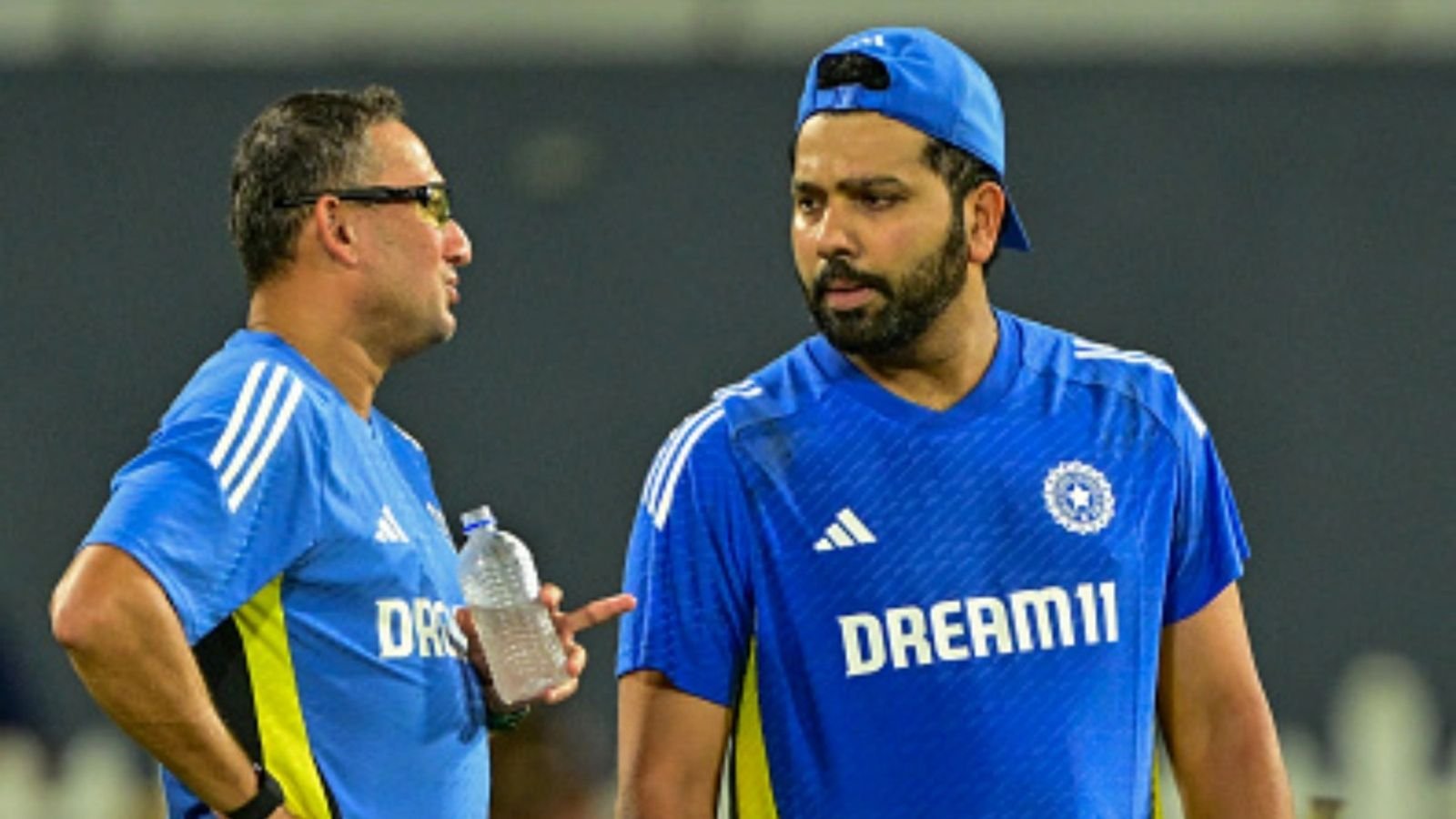
The future of Ajit Agarkar as India’s chief selector has become a major talking point ahead of the Board of Control for Cricket in India (BCCI)’s Annual General Meeting (AGM). While Agarkar’s current contract runs until September 2026, growing speculation suggests that an extension is no longer guaranteed. Reports indicate that former India captain and batting legend VVS Laxman has emerged as the leading candidate if the BCCI decides to make a leadership change.
The debate goes beyond a simple change in personnel. It reflects broader questions about India’s long-term vision in Test cricket, the balance between youth and experience, and whether recent selection strategies have delivered the desired results. With a crucial Test series against Sri Lanka approaching, the outcome could influence one of the most significant decisions in Indian cricket administration.
Why Ajit Agarkar’s Contract Extension Is Under Question
Ajit Agarkar assumed the role of chief selector during a period of transition for Indian cricket. His appointment was expected to bring a modern and fearless selection approach, combining experienced stars with emerging domestic talent.
Although his tenure has featured several memorable achievements, recent developments have reportedly caused the BCCI to reassess the direction of the national selection committee. Discussions surrounding senior player management, squad planning, and long-term red-ball performance have added pressure ahead of the contract renewal period.
The upcoming AGM is expected to review multiple administrative matters, including the future leadership of the senior selection panel.
Why VVS Laxman Is Emerging as the Favourite
Among the names being discussed, VVS Laxman stands out because of his extensive experience working with Indian cricket’s development system.
As the head of the National Cricket Academy’s successor structure, the Centre of Excellence in Bengaluru, Laxman has spent years working closely with India’s emerging talent pool. His responsibilities have included overseeing player development, rehabilitation programs, India A squads, Under-19 pathways, and occasional coaching assignments with the senior national team.
This unique position gives him first-hand knowledge of players progressing through the domestic system.
Supporters believe that such familiarity could improve continuity between domestic cricket and the senior Indian side.
Ajit Agarkar’s Record as Chief Selector
Evaluating Agarkar’s tenure requires separating white-ball success from Test cricket challenges.
| Area | Performance During Agarkar’s Tenure |
|---|---|
| ICC White-ball Events | India enjoyed multiple successful campaigns, including major ICC tournament victories. |
| ODI Team Development | Core squad remained stable while young players gradually entered the setup. |
| T20 Squad Building | Several new talents were successfully introduced. |
| Test Cricket | Results became inconsistent with growing scrutiny over squad selection. |
| Transition Planning | Mixed opinions regarding balancing senior players and emerging cricketers. |
This contrast explains why opinions on Agarkar’s tenure remain divided. While India’s white-ball teams continued producing impressive results, the Test side struggled to maintain the consistency that had previously made India one of the strongest red-ball teams in the world.
Why India’s Test Performances Matter So Much
Test cricket continues to carry enormous significance despite the growing popularity of franchise leagues and T20 tournaments. Strong performances in the longest format are often viewed as the ultimate indicator of a team’s depth, adaptability, and technical excellence.
India’s recent struggles have therefore attracted more attention than they otherwise might have.
Questions have been raised regarding squad balance, pace-bowling combinations, middle-order planning, and opportunities given to domestic performers.
Selection decisions inevitably become part of that conversation because selectors determine which players receive opportunities to shape the team’s future.
The Sri Lanka Test Series Could Become a Defining Moment
The upcoming Test series against Sri Lanka carries importance beyond the immediate results.
Several established players are unavailable due to injuries, creating opportunities for uncapped and emerging cricketers. This forces the selectors to trust domestic performances and invest in the next generation.
If the selected squad performs strongly under difficult circumstances, it could reinforce confidence in Agarkar’s long-term planning.
Conversely, another disappointing series may strengthen calls for administrative change.
The Bigger Challenge: Managing India’s Transition Era
Every successful cricket nation eventually faces a difficult transition when legendary players approach the later stages of their careers.
India is currently navigating exactly such a period.
Replacing experienced stars is never as simple as selecting younger players with impressive domestic records. International cricket demands technical quality, mental resilience, adaptability, and consistency under pressure.
The chief selector must therefore balance several competing priorities:
- Reward outstanding domestic performances.
- Maintain stability within the national squad.
- Prepare future leaders.
- Manage senior players respectfully.
- Build competitive squads for every format.
- Ensure long-term succession planning.
This balancing act often determines how selectors are ultimately judged.
Domestic Cricket Could Play a Bigger Role
One encouraging trend in recent squad announcements has been increased recognition for domestic performers.
India’s domestic structure remains one of the strongest talent pipelines in world cricket. Competitions consistently produce technically sound batters, quality fast bowlers, spinners, and wicketkeepers capable of succeeding internationally.
Whether Agarkar remains or Laxman eventually takes charge, many observers believe domestic performances should continue receiving significant weight during national selection.
How the Chief Selector Shapes Indian Cricket
Many fans focus primarily on the head coach and captain, but the chief selector occupies an equally influential position.
The role extends far beyond naming squads.
- Evaluating domestic performances.
- Planning squad depth.
- Managing player workload.
- Preparing for ICC tournaments.
- Balancing experienced and emerging players.
- Coordinating with coaches and team management.
- Identifying future captains.
Because these responsibilities influence Indian cricket for years, leadership changes are rarely viewed as routine administrative decisions.
Could VVS Laxman Bring a Different Selection Philosophy?
If Laxman eventually becomes chief selector, his experience in player development could shape a slightly different approach.
Having worked extensively with India A and youth squads, he has observed promising players long before their international debuts. This deeper familiarity may allow smoother transitions between domestic cricket and the senior team.
His coaching background could also encourage stronger communication between selectors and team management regarding player readiness, fitness, and long-term development.
However, selecting international squads involves different pressures than coaching young cricketers. Success would still depend on making difficult decisions under intense public scrutiny.
Leadership Stability Remains Essential
Frequent administrative changes can create uncertainty for players, especially during periods of transition.
Whether the BCCI ultimately retains Agarkar or appoints Laxman, consistency in selection philosophy will remain important.
Players perform best when expectations are clear and selection criteria remain transparent over extended periods.
Stable leadership also allows coaches and captains to execute long-term plans without constant strategic shifts.
A Comparison Between Experience and Development
The discussion surrounding Agarkar and Laxman highlights two different strengths rather than a simple choice between success and failure.
| Aspect | Ajit Agarkar | VVS Laxman |
|---|---|---|
| Primary Background | Former international fast bowler and selector | Former Test batting legend and player developer |
| Recent Strength | Senior team selection | Talent development and coaching |
| Experience with Emerging Players | National selection process | Extensive work through India’s development pathway |
| Potential Advantage | Continuity | Long-term talent integration |
Ultimately, the BCCI’s decision will likely depend on which vision it believes best serves Indian cricket over the next several years.
The Hidden Story: India’s Next Generation
Perhaps the most important issue often overlooked in discussions about selectors is the extraordinary depth of India’s talent pool.
Every domestic season introduces new batters capable of scoring heavily across formats, fast bowlers consistently exceeding international standards, and versatile all-rounders prepared for higher levels.
The real challenge is not finding talent—it is identifying which players possess the temperament to succeed against the world’s strongest teams.
Future selection panels will increasingly rely on performance analytics, workload management, fitness monitoring, and data-driven decision-making alongside traditional scouting.
This evolution means the role of chief selector is becoming more sophisticated than ever before.
What Fans Should Watch Over the Coming Weeks
Several developments could influence the final outcome:
- India’s performance in the Sri Lanka Test series.
- The success of newly selected players.
- Injury management and squad depth.
- The discussions held during the BCCI AGM.
- The board’s long-term vision for Indian cricket.
Until an official announcement is made, speculation will continue, but performance on the field is likely to remain the strongest factor.
Conclusion
Ajit Agarkar’s future as India’s chief selector appears more uncertain than previously expected, with reports suggesting that the BCCI could consider a leadership change when his contract expires. At the same time, VVS Laxman’s extensive experience in player development makes him a credible candidate should the board seek a new direction.
Regardless of who eventually leads the selection committee, the larger objective remains unchanged: building an Indian team capable of sustained success across all formats while preparing the next generation of international stars.
The upcoming Sri Lanka Test series may therefore represent much more than another bilateral contest. It could become a defining chapter in India’s evolving cricket strategy, influencing not only immediate team selection but also the long-term leadership responsible for shaping the future of Indian cricket.
For breaking news and live news updates, like us on Facebook or follow us on Twitter and Instagram. Read more on Latest Cricket on thefoxdaily.com.






COMMENTS 0