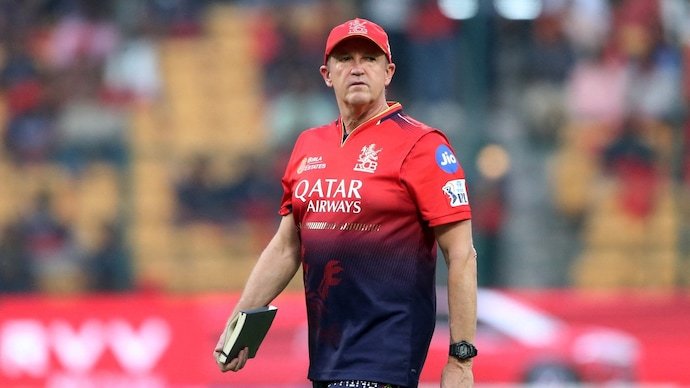
England’s search for a new Test coach has taken a significant turn after Andy Flower officially ruled himself out of contention for the role. The former England head coach, widely viewed as one of the strongest candidates to replace Brendon McCullum, has decided to remain focused on franchise cricket rather than return to the pressures of international management.
The announcement comes at a crucial moment for English cricket. Following the end of the Ben Stokes-Brendon McCullum era, England finds itself entering a period of transition that could shape the future of its Test team for years to come.
Flower’s decision not only impacts England’s coaching search but also highlights a broader trend in modern cricket: elite coaches increasingly view franchise cricket as an attractive long-term career path compared to traditional international roles.
As England prepares for a new chapter ahead of future Ashes battles and major ICC events, the question now becomes: who will lead the Test side after one of the most transformative periods in its history?
Why Andy Flower Turned Down the England Test Coach Job
Andy Flower’s decision was not based on a lack of interest in England cricket. Instead, it reflected satisfaction with his current coaching environment.
Having already experienced the demands and rewards of international coaching, Flower appears to believe that his present roles offer the ideal balance between professional success and personal fulfillment.
Modern coaching has evolved dramatically. International positions remain prestigious, but they also involve relentless schedules, constant scrutiny, and significant pressure from boards, media, and supporters.
Franchise cricket, by contrast, often provides:
- Greater flexibility.
- Shorter tournament cycles.
- Exposure to global talent.
- Competitive financial rewards.
- Opportunities to work across multiple leagues.
For Flower, remaining within that ecosystem appears to be the preferred choice at this stage of his career.
Andy Flower’s Legacy With England
Flower’s reputation as one of England’s most successful coaches explains why he was immediately linked to the vacant position.
His previous tenure helped transform England into one of the strongest teams in world cricket.
Under his leadership, England achieved several landmark accomplishments, including reaching the top of the ICC Test rankings and securing memorable victories both at home and overseas.
Perhaps most importantly, Flower helped build a culture of professionalism and competitiveness that elevated England’s standing in international cricket.
His tenure remains one of the most successful coaching periods in England’s modern cricket history.
| Achievement | Impact During Flower Era |
|---|---|
| ICC Test Ranking | England Reached No. 1 Position |
| Ashes Success | Major Series Victories |
| Overseas Competitiveness | Improved Performance Abroad |
| Team Culture | Professional and Consistent Environment |
| Player Development | Strengthened Core Leadership Group |
The Success Story Behind His Decision
Flower’s choice becomes easier to understand when examining his recent achievements in franchise cricket.
After leaving the international scene, he established himself as one of the most sought-after coaches in T20 leagues around the world.
His ability to manage star players, create winning cultures, and adapt quickly to different environments has made him one of cricket’s most respected coaching figures.
His work with Royal Challengers Bengaluru has particularly strengthened his reputation.
Success in franchise tournaments requires a unique skill set. Coaches must integrate players from different countries, adapt to constantly changing squads, and deliver results within compressed schedules.
Flower has repeatedly demonstrated excellence in those areas.
What His Decision Says About Modern Cricket Coaching
One of the biggest stories hidden beneath this announcement is the changing nature of cricket coaching careers.
For decades, coaching a national team was viewed as the ultimate destination.
Today, that hierarchy is becoming less clear.
The rapid growth of global franchise leagues has created alternative career pathways for elite coaches.
Many now prefer the franchise model because it offers:
- Reduced year-round pressure.
- More control over schedules.
- Higher earning potential.
- Opportunities to work with international stars.
- Less political and administrative complexity.
Flower’s decision reflects this broader shift.
Rather than returning to a demanding national role, he has chosen stability and continuity within a system where he is already thriving.
The End of the McCullum Era Leaves Big Shoes to Fill
England’s coaching search became necessary following the conclusion of Brendon McCullum’s tenure with the Test side.
McCullum’s leadership fundamentally changed England’s approach to Test cricket.
The aggressive philosophy often referred to as “Bazball” redefined how the team approached run-scoring, declarations, and risk-taking.
Regardless of opinions on the strategy, there is little doubt that it reshaped England’s identity.
Replacing a coach associated with such a distinctive era presents a major challenge.
The next appointment will not simply be tasked with winning matches. They must decide whether to continue McCullum’s philosophy, modify it, or pursue an entirely new direction.
England’s Rebuilding Phase Has Already Begun
Flower’s rejection arrives during a period of significant change for English cricket.
Several major developments have forced England into a rebuilding process:
- The departure of Brendon McCullum from the Test setup.
- The retirement of key senior players.
- Questions regarding leadership succession.
- The need to prepare for future Ashes campaigns.
- The challenge of maintaining competitiveness across formats.
Transitions are rarely straightforward.
Successful cricket nations often experience temporary instability when iconic leaders move on.
England now faces the task of ensuring that recent progress is not lost during this transition period.
Who Could Become England’s Next Test Coach?
With Flower no longer available, England’s search is expected to expand.
Several experienced names have been linked with the position.
Stephen Fleming
One of the most respected coaches in world cricket, Fleming has built a remarkable reputation through sustained success in franchise competitions.
His calm leadership style and tactical intelligence make him an intriguing option.
Kumar Sangakkara
The former Sri Lanka captain possesses extensive cricket knowledge, leadership experience, and a strong understanding of modern team management.
His analytical approach could appeal to decision-makers.
Richard Dawson
Having built experience within domestic cricket structures, Dawson offers familiarity with England’s player development pathways and long-term planning systems.
Each candidate would bring a different philosophy and vision for England’s future.
What England Needs From Its Next Coach
The coaching appointment is about more than selecting a famous name.
England must identify a leader capable of addressing several key challenges simultaneously.
The ideal candidate should be able to:
- Develop the next generation of Test players.
- Maintain competitive standards.
- Manage player workloads.
- Navigate the modern franchise-international cricket balance.
- Prepare effectively for Ashes contests.
- Adapt strategies to different conditions worldwide.
The complexity of these responsibilities explains why coaching appointments have become among the most important decisions cricket boards make.
How RCB Benefits From Flower’s Decision
While England may view Flower’s decision as a setback, Royal Challengers Bengaluru will likely see it as excellent news.
Continuity is one of the most valuable assets in professional sport.
Maintaining a successful coaching structure allows teams to preserve culture, long-term planning, and player development strategies.
Flower’s continued involvement provides stability for the franchise and reinforces its ambitions of remaining among the strongest teams in global T20 cricket.
His decision also highlights how influential IPL franchises have become within the wider cricket ecosystem.
A Critical Insight Competitors Are Missing
Most coverage focuses on England losing a preferred coaching candidate.
The deeper story is that Flower’s decision reflects a structural shift occurring across international cricket.
Increasingly, the world’s best coaches are no longer automatically prioritizing national-team roles.
Franchise cricket has evolved into a legitimate alternative career destination, offering opportunities that rival or even surpass traditional international positions.
This trend could significantly affect how national boards recruit coaches in the future.
England’s current search may become an early example of a challenge many cricket boards will face as global leagues continue expanding their influence.
What Happens Next for England?
The ECB now faces a pivotal decision.
Choosing the right coach could determine whether England successfully navigates the post-McCullum era or experiences a period of decline.
With major Test series and future Ashes campaigns on the horizon, the appointment will carry enormous significance.
The board must balance short-term competitiveness with long-term development while ensuring the team continues evolving.
Whoever takes the role will inherit both opportunities and expectations in equal measure.
Conclusion
Andy Flower’s decision to rule himself out of the England Test coaching race closes one of the most obvious succession pathways following Brendon McCullum’s departure. The former England coach remains committed to franchise cricket, where he continues to enjoy considerable success and professional satisfaction.
For England, the search for a new leader now becomes more complicated. The next coach will inherit a team in transition and face the challenge of building on the achievements of one of the most influential periods in modern English cricket.
While Flower’s decision may disappoint many supporters, it also highlights the changing dynamics of the sport. In today’s cricket landscape, franchise coaching has become a powerful and attractive alternative to international management.
As England enters a new era, the outcome of its coaching search could shape the future direction of the Test team for years to come.
For breaking news and live news updates, like us on Facebook or follow us on Twitter and Instagram. Read more on Latest Sports on thefoxdaily.com.






COMMENTS 0