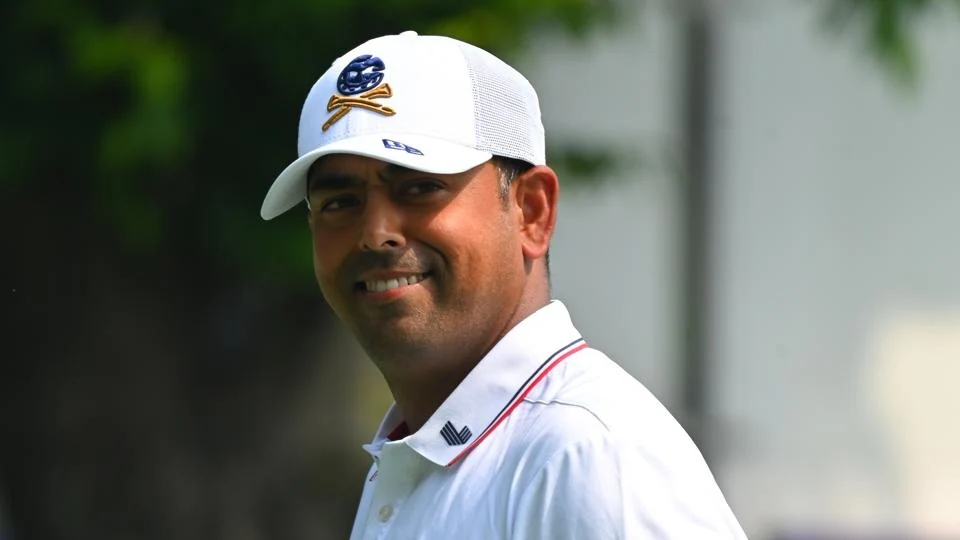
Anirban Lahiri emerged as the best-performing Indian golfer at the DP World India Championship, finishing tied for 23rd at eight-under-par, but the overall performance of the home contingent raised fresh questions about Indian professionals’ ability to capitalise on playing in front of their own fans. Despite having 27 Indians in the field, only six made the cut at Delhi Golf Club, a modest improvement on last year’s total of five.
Before the tournament began, Professional Golf Tour of India (PGTI) president Amandeep Johl had expressed confidence in the home players, predicting that at least half of the Indian contingent would advance to the money rounds. He believed the golfers would be better prepared for the occasion in the championship’s second edition, having overcome the initial pressure and excitement associated with competing against an international field.
However, the results fell well short of those expectations. While Lahiri produced a respectable finish, the limited number of Indians who made the weekend rounds highlighted the challenges facing home professionals at one of the country’s biggest golf events.
Anirban Lahiri Leads the Indian Contingent
Experienced campaigner Anirban Lahiri led the Indian challenge with an eight-under-par total, finishing tied for 23rd. His performance provided a positive note for the home contingent, particularly after a demanding week at Delhi Golf Club, where course conditions and repeated weather interruptions tested the field.
Lahiri delivered a composed final round on Sunday, avoiding mistakes and collecting birdies on the first, eighth, 11th and 14th holes. His steady approach helped him finish among the leading players, even as several Indian professionals struggled to make a significant impact.
The other Indian golfers who made the cut included Yuvraj Sandhu, who finished tied for 34th, followed by Om Prakash Chouhan in tied 42nd, Karandeep Kochhar in tied 49th and Saptak Talwar in tied 55th. Sandhu and Chouhan were listed at four-under-par in the initial standings, Kochhar finished three-under and Talwar one-under.
Although six Indian players progressed to the final rounds, the result represented only a small improvement on the previous edition. For a home tournament featuring 27 Indian professionals, the numbers again raised concerns about how effectively local players were translating their familiarity with the course into results.
Delhi Golf Club Presents a Tough Challenge
Delhi Golf Club proved difficult to master, even for some of the world’s most accomplished golfers. Its narrow fairways, lengthy rough and demanding greens required accuracy and careful course management, leaving little room for mistakes.
The challenge was reflected in the performance of Rory McIlroy, the six-time major champion, who finished tied for 42nd. His result underlined that the course could trouble players with considerable international experience and demonstrated that the difficulties faced by the Indian contingent were not unique to home professionals.
Weather conditions made the tournament even more demanding. A lengthy rain interruption on the opening morning disrupted the schedule, forcing organisers and players to adjust to repeated delays and resumptions. Many golfers played more than 25 holes on each of the final two days, creating a demanding physical and mental test.
Despite the difficult schedule, Eugenio Chacarra handled the circumstances exceptionally well. The eventual champion played 25 holes on Sunday and dropped just one shot, demonstrating the consistency and concentration required to succeed at Delhi Golf Club.
For the Indian players, however, the combination of difficult course conditions, challenging greens and disrupted playing schedules made an already demanding tournament even more complicated.
Lahiri Explains the Difficulties of Playing Delhi Golf Club
Lahiri acknowledged that the course presented a significant challenge, particularly around the greens. Despite his experience at the highest level of professional golf, he felt there was more to learn about the layout and the subtle differences in its putting surfaces.
“It’s been a challenge, honestly. Even walking around today, I was thinking that when I come back next year, I might spend Monday with just a putter, taking an hour on every green and exploring the different sections,” Lahiri said.
He singled out the greens as a particularly difficult aspect of the course, explaining that their contours made it hard to judge the correct lines. The 18th green, in particular, repeatedly caused him problems.
“I’ve really struggled with a few greens in particular. The 18th is one of the hardest to read, and I’ve misread it most of the time. Everything has been cut very tight, including the fairways,” Lahiri added.
The weather also influenced how the course played. According to Lahiri, the rain during the tournament and in the days leading up to it had affected the condition of the grass, leaving some lies unusually sandy. These conditions forced players to adapt their short games and choose clubs differently around the greens.
“With the rain this week and in the build-up, the grass hasn’t quite reached that lush stage of growth. The lies are very sandy, which is why you’re seeing players use hybrids, putters and less-lofted clubs around the greens,” he explained.
Lahiri’s comments highlighted the importance of preparation and course familiarity. Even experienced professionals can find themselves challenged by subtle changes in conditions, particularly when precision around the greens becomes crucial to scoring well.
Yuvraj Sandhu Finds Momentum After a Difficult Start
Yuvraj Sandhu offered another encouraging performance for the Indian contingent, finishing tied for 34th after an eventful week. The 29-year-old showed his scoring ability by producing seven birdies over his final 10 holes to secure his place in the weekend rounds.
Sandhu then maintained his progress, finishing the third round at even par before shooting four-under-par on the final day. He ended the tournament five-under-par overall, according to the final-round account, despite the interruptions that disrupted his rhythm earlier in the week.
The Indian golfer admitted that the changing schedule made it difficult to establish consistency. Rain delays, restarts and resumptions affected the flow of the competition, forcing players to repeatedly adjust their routines and regain concentration.
“It was a rollercoaster week. I started getting more comfortable during the latter part of the first 36 holes. There were rain delays, restarts and resumptions. At times I lost momentum, and at other times I found it again. I’ll take the positives,” Sandhu said.
Despite the challenges, he was encouraged by the quality of his ball-striking and believes he is approaching an important breakthrough in his professional career.
“I’m hitting the ball really well, and honestly, I feel I’m very close to a big week in my career,” he added.
Sandhu, who won the 2025 PGTI Order of Merit, will next head to DP World Tour Qualifying School as he attempts to regain his playing rights on the main tour. His performance in India offered encouragement as he prepares for another opportunity to establish himself at a higher level of professional golf.
DP World Support Offers a Long-Term Opportunity for Indian Golfers
The extension of DP World’s support for the India Championship until 2035 represents a significant opportunity for Indian professionals. The long-term commitment means home players can expect to continue competing against a world-class field on Indian soil, gaining exposure to international standards without having to travel abroad for every opportunity.
Regular participation in a tournament of this stature could help Indian golfers improve their preparation, course management and ability to handle pressure. It also gives them a chance to learn from elite international players and measure their progress against a stronger field.
Delhi Golf Club itself offers an important learning opportunity. The course has proved difficult for Indian players over the past two editions, and repeated exposure could help them better understand its greens, fairways and strategic demands.
Beyond the championship, PGTI has pledged financial support to the top 30 players willing to compete on Challenger tours. The initiative could help reduce some of the financial barriers associated with international competition and create additional pathways for players seeking to progress through professional golf’s developmental circuits.
For golfers prepared to put in the work, these opportunities could prove valuable. Competing internationally can provide experience in unfamiliar conditions, strengthen mental resilience and help players develop the consistency required to succeed at the highest level.
However, access to tournaments and financial assistance alone will not guarantee better results. Indian professionals must also turn those opportunities into stronger performances, particularly when competing on home courses where familiarity should offer an advantage.
Why Are Indian Golfers Struggling to Win at Home?
The limited Indian presence among the weekend contenders has revived a familiar question: why do home professionals continue to struggle to convert their local knowledge into victories at major domestic events?
The concern is not confined to the DP World India Championship. A similar pattern has emerged at the Hero Indian Open, where the last Indian winner came in 2017. The continued absence of a home champion at prominent tournaments has become a source of frustration for players and supporters alike.
Indian golfers are not short of experience at Delhi Golf Club. Many of the 27 Indian participants had played the course numerous times before the championship, making it difficult to attribute the results simply to unfamiliarity with the layout.
Instead, Saptak Talwar believes that pressure may be a significant factor. The PGTI Order of Merit winner argued that Indian Golf has a deep pool of talent and that the problem lies elsewhere.
“It’s not about talent. Trust me, our talent reserves run deeper than they appear,” Talwar said.
Talwar has experience of the challenges involved in progressing through professional golf’s international structure. After spending a season and a half on the HotelPlanner Tour, the DP World Tour’s developmental circuit, he secured his main-tour card by topping the domestic Order of Merit.
His progress illustrates how success on the domestic circuit can open doors to international opportunities. It also gives weight to his argument that Indian golf has capable players who can compete at a higher level when they find the right combination of form, confidence and preparation.
Saptak Talwar Says Pressure Is a Major Factor
Talwar pointed out that the Indian players competing in the championship were already familiar with Delhi Golf Club, having played there on numerous occasions. In his view, the challenge was not simply about understanding the course but managing the expectations associated with representing India at home.
“Everybody in the Indian contingent has played on the DGC numerous times,” he said.
He believes the pressure of playing in front of home supporters can become an additional burden, particularly when players feel they must deliver a strong result at a prestigious domestic event.
“However, there’s a lot of pressure and responsibility that comes with playing at home, and no one puts you under more pressure than yourself. We have had winners before and there will be winners in the future as well,” Talwar said.
He acknowledged that Indian professionals have struggled to deal with those expectations in recent years but remained optimistic about the future.
“I don’t think we have been able to deal with pressure in recent years. A big breakthrough win will come soon,” he added.
Talwar’s assessment suggests that mental preparation could be just as important as technical ability. At a demanding venue such as Delhi Golf Club, even small errors can have a significant impact on a player’s score. When the added expectations of a home tournament enter the equation, maintaining composure becomes even more important.
Indian Golf Needs to Turn Opportunity Into Results
The DP World India Championship provides Indian professionals with a valuable platform, bringing an international field to a course they know well. The tournament’s extended future and PGTI’s financial support initiatives offer further reasons for optimism about the development of Indian golf.
Lahiri’s tied-23rd finish and Sandhu’s late surge showed that Indian players can produce competitive golf under difficult conditions. Yet the small number of home professionals who made the cut also demonstrated how much work remains to be done if India is to produce a regular winner at major domestic events.
Improved international exposure, better preparation and greater experience of high-pressure competition could all contribute to future success. Players will also need to learn how to manage the expectations that come with competing at home, rather than allowing those expectations to affect their performance.
The long-term support behind the championship gives Indian golfers more opportunities to test themselves against elite opposition. The next step is to turn those opportunities into consistent results and, ultimately, a home victory that matches the depth of talent Talwar believes the country possesses.
For now, however, the outcome remains familiar. Lahiri led the Indian contingent, a handful of other home professionals showed promise, and the majority failed to make the cut. Once again, the Indians missed their own party.
For breaking news and live news updates, like us on Facebook or follow us on Twitter and Instagram. Read more on Latest Sports on thefoxdaily.com.






COMMENTS 0