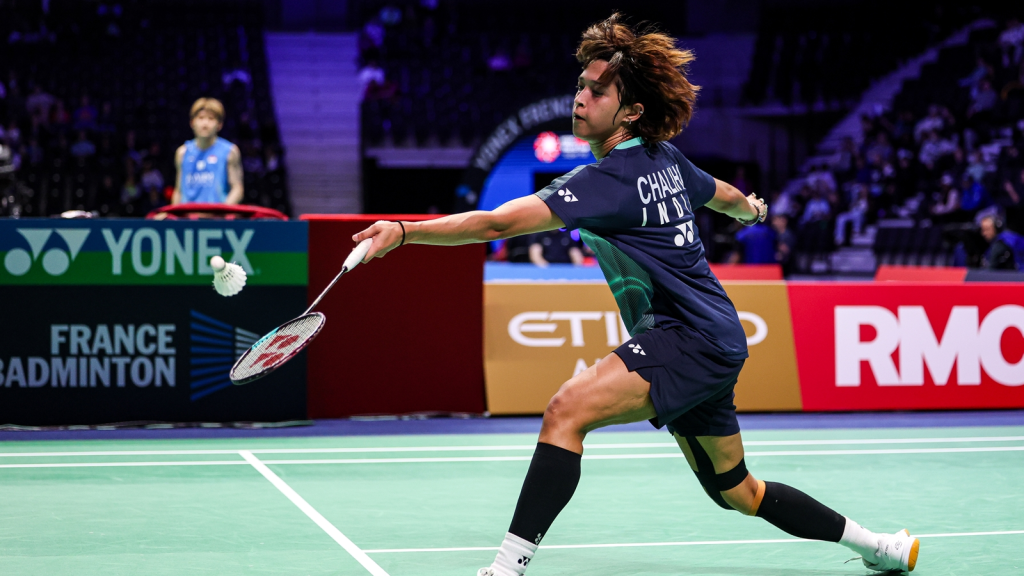
Indian Badminton player Ashmita Chaliha faces another major test at the French Open as she prepares to take on former world champion Nozomi Okuhara after producing one of the biggest wins of her career. The Indian, currently ranked World No. 36, defeated Japan’s World No. 2 Akane Yamaguchi to reach the next stage, giving herself an opportunity to move closer to a maiden semifinal appearance at a BWF Super 750 tournament.
Chaliha’s victory over Yamaguchi demonstrated not only the effectiveness of her attacking game but also a growing willingness to remain patient under pressure. That quality could prove decisive against Okuhara, a renowned defensive player who has worked her way back towards the top level after a difficult period.
The upcoming contest presents a different tactical challenge from the one Chaliha overcame against Yamaguchi. While her powerful left-handed smashes can put opponents under immediate pressure, Okuhara is known for her ability to retrieve difficult shots, extend rallies and force attacking players to create openings rather than rush their finishes.
For Chaliha, the objective will be to maintain the confidence generated by her upset victory while recognising that the Japanese veteran may offer fewer easy opportunities. A disciplined approach, combined with the ability to vary her attack, could determine whether the Indian takes another significant step forward at the French Open.
Ashmita Chaliha’s breakthrough victory over Akane Yamaguchi
Chaliha’s win over Yamaguchi was an important moment in her campaign. Defeating a player ranked second in the world requires more than a brief burst of good form. It demands concentration, tactical clarity and the ability to make the most of crucial points against an opponent accustomed to competing at the highest level.
The Japanese star entered the match with an impressive reputation, having established herself among the leading players in women’s singles. However, the source account noted that Yamaguchi’s movement did not appear to be at full intensity during Thursday’s contest. That context is worth acknowledging, although Chaliha still had to execute her own game plan and capitalise on the opportunities available to her.
The Indian’s left-handed smashes have been an important weapon in her recent performances. An attacking player who can generate steep angles and put pace on the shuttle can force opponents into defensive positions, making it more difficult for them to control the rally.
Chaliha’s performance also reflected a more measured approach to constructing points. Rather than relying exclusively on aggressive shot-making, she said she focused on remaining composed, being patient and taking her chances when they arrived.
Speaking to the Badminton Association of India after the victory, Chaliha explained that she had faced Yamaguchi the previous week at the Denmark Open. That earlier meeting gave her useful information about the Japanese player’s game, allowing her to prepare without becoming overly concerned about the result.
Her approach offers an important insight into how players can learn from defeats. A previous loss can reveal weaknesses in positioning, shot selection or rally management. If a player studies those lessons and makes adjustments, the next meeting becomes an opportunity to apply that experience rather than simply repeat the same contest.
Why Nozomi Okuhara presents a different challenge
Okuhara is the second Japanese opponent Chaliha has encountered in succession, but the former world champion brings a different set of strengths. The Japanese shuttler has built much of her reputation on speed, defensive resilience and an ability to keep rallies alive when opponents believe they have created a winning opportunity.
At the time described in the source, Okuhara was ranked World No. 9 and stood sixth in the season’s rankings. Those positions underline her continued competitiveness and suggest that she has been producing consistent results during the current campaign.
Okuhara’s style can be particularly uncomfortable for an aggressive player. When an opponent repeatedly retrieves smashes and returns shots from difficult positions, the attacker must decide whether to increase the pace, change direction or patiently build the rally until a clear opening appears.
Trying to finish every point too quickly can lead to unforced errors. A smash that would beat a less mobile opponent might be returned by Okuhara, leaving the attacker out of position for the next shot. The Japanese player can then use the extra time to recover her defensive shape and turn the rally into a longer exchange.
This is why Chaliha’s newfound patience could become one of the most important factors in the match. Her attacking instincts remain valuable, but she will need to recognise when to press for a winner and when to maintain control of the rally.
Okuhara’s defensive ability also means Chaliha may have to use more than power. Changes in pace, placement and shuttle direction can make it harder for a defender to settle into a rhythm. By moving Okuhara around the court and forcing her to cover different areas, Chaliha could create opportunities to finish points with her strongest attacking shots.
Can Chaliha’s left-handed attack break through Okuhara’s defence?
Chaliha’s attacking game gives her a potential route to victory, particularly if she can combine her left-handed smashes with accurate placement. Powerful attacking shots are most effective when they are used to exploit an opponent’s position rather than played repeatedly without considering the response.
Against a strong defender, the first smash does not always need to produce a direct winner. It can instead force a weak return, allowing the attacker to move forward and finish the point with a controlled shot. This approach reduces the pressure to find an immediate winner and can make the attack more sustainable over a long match.
Chaliha will also need to avoid becoming predictable. If she repeatedly targets the same area, Okuhara may begin anticipating the direction of her smashes. Mixing straight and cross-court attacks, using drops when appropriate and changing the pace of rallies could make her offensive game more difficult to read.
At the same time, patience should not become passivity. Chaliha earned her victory over Yamaguchi by trusting her game and taking opportunities when they appeared. Against Okuhara, she will need to preserve that confidence while choosing the right moments to accelerate.
The tactical challenge is therefore one of balance: attack decisively when the opening is available, but do not allow frustration to dictate shot selection when Okuhara produces another defensive return.
Okuhara’s comeback adds another dimension to the contest
Okuhara’s position among the leading players in the season’s rankings suggests that she has been rebuilding her consistency. Although she is no longer necessarily the same exceptionally quick version of herself that dominated earlier stages of her career, she remains an experienced opponent with the technical and tactical skills to trouble ambitious challengers.
Her experience at major tournaments is another factor that could influence the match. Former world champions are familiar with the pressure of playing in decisive rounds, where a small number of points can determine whether a tournament campaign continues or ends.
That experience can be particularly useful when facing an opponent coming off a major upset. Okuhara will have an incentive to extend rallies, test Chaliha’s concentration and see whether the Indian can maintain the same level of composure after her emotionally significant win.
However, experience alone does not guarantee victory. Chaliha has momentum, confidence and an attacking style that can trouble higher-ranked opponents. If she maintains her discipline and executes her plans effectively, she has an opportunity to challenge Okuhara rather than simply react to the Japanese player’s strengths.
The source account also describes Okuhara as a less speedy version of her former self. If Chaliha can exploit that change through careful placement and sustained movement, she may be able to open up the court. The key will be to do so without sacrificing accuracy or giving away cheap points.
Managing the emotional high after beating a world No. 2
One of Chaliha’s biggest challenges may not be technical but psychological. Beating a player of Yamaguchi’s standing can produce a surge of confidence and relief, particularly for an athlete who has recently experienced a difficult period. The next match requires her to move beyond the achievement and concentrate on a new opponent with a different style.
Chaliha admitted that the victory felt unreal. In comments to the Badminton Association of India, she said she was still trying to absorb the result and described beating a player with Yamaguchi’s achievements as a special feeling.
She also explained that the win meant a great deal after a difficult phase and gave her confidence that her hard work was beginning to pay off. Her comments revealed the personal significance of the result, rather than simply the value of advancing in the tournament.
That emotional boost can be useful, but it also needs to be managed. Players sometimes struggle to reproduce their best performance immediately after a major upset because the emotional energy of the previous match can make it harder to reset. Alternatively, the confidence gained from defeating a leading opponent can help a player approach the next challenge with greater belief.
Chaliha’s comments suggest that she understands the importance of concentration. She said she had tried to remain focused throughout the match against Yamaguchi, trusting her game and executing her plans instead of switching off at crucial moments.
Applying the same discipline against Okuhara will be essential. The Japanese player’s ability to prolong rallies means that Chaliha could be required to stay mentally engaged for extended periods. A single loose shot or lapse in concentration may give Okuhara an opportunity to regain control.
The French Open’s coaching arrangements put greater responsibility on players
Another distinctive element of the French Open campaign is the reported absence of players’ regular coaches courtside. The arrangement makes independent decision-making especially important, as shuttlers must assess changing conditions and adjust their strategies without relying on the usual coaching support during matches.
Badminton is a sport in which small tactical adjustments can make a substantial difference. A player might need to change the direction of an attack, target a particular area or alter the pace of rallies after noticing that an opponent is reading the initial plan.
Without regular coaching input during the match, those decisions must come from the player. The ability to recognise patterns and respond calmly can become as important as physical ability and shot-making quality.
For Chaliha, the contest against Okuhara will test her capacity to solve problems independently. If her initial attacking strategy fails to produce enough openings, she will need to make adjustments while keeping her emotions under control.
Her previous meeting with Yamaguchi at the Denmark Open provided an example of learning from experience before a match. Against Okuhara, the challenge is to apply that same thoughtful approach in real time, recognising when a tactic is working and when a different option is required.
A maiden Super 750 semifinal is within reach
A victory over Okuhara would give Chaliha a chance to reach her maiden semifinal at a BWF Super 750 tournament, marking another significant step in her career. The opportunity is important because success at this level can strengthen a player’s confidence and provide valuable experience against established international opponents.
Chaliha’s ranking of World No. 36 means she entered the tournament outside the very top group, while Okuhara’s World No. 9 position reflects her standing among the more highly ranked players. Yet rankings offer only a broad picture of ability. They do not determine the outcome of an individual match, especially when one player has built momentum through a major upset.
The win over Yamaguchi has already demonstrated that Chaliha can compete effectively against a leading opponent. The next task is to show that the performance was not an isolated result and that she can adapt her game to a different tactical challenge.
To do so, she will need to combine her attacking strengths with patience, maintain her concentration and avoid allowing Okuhara’s defence to dictate the pace of the match. If she can force the Japanese player to move repeatedly and capitalise on weaker returns, the Indian could create a genuine opportunity.
Conclusion: Patience could decide Ashmita Chaliha’s French Open challenge
Ashmita Chaliha’s victory over Akane Yamaguchi has given her a major confidence boost and placed her within reach of a maiden BWF Super 750 semifinal. But Nozomi Okuhara represents a different challenge, one built around defensive resilience, rally construction and the ability to make attacking players work for every point.
Chaliha’s left-handed smashes remain a key weapon, yet power alone may not be enough against a player who can retrieve difficult shots and extend exchanges. The Indian will need to vary her attack, choose her moments carefully and maintain the composure she displayed against Yamaguchi.
Okuhara’s experience and current season’s consistency make her a formidable opponent, although Chaliha’s recent performance suggests that she has the ability to challenge higher-ranked players. The outcome may depend on whether the Indian can preserve her attacking intent without becoming impatient.
After the excitement of defeating the world No. 2, Chaliha must now reset and focus on the next match. If she can turn her newfound patience into a consistent tactical advantage, she will have a valuable opportunity to extend her French Open run and achieve another milestone in her badminton career.
For breaking news and live news updates, like us on Facebook or follow us on Twitter and Instagram. Read more on Latest Sports on thefoxdaily.com.





COMMENTS 0