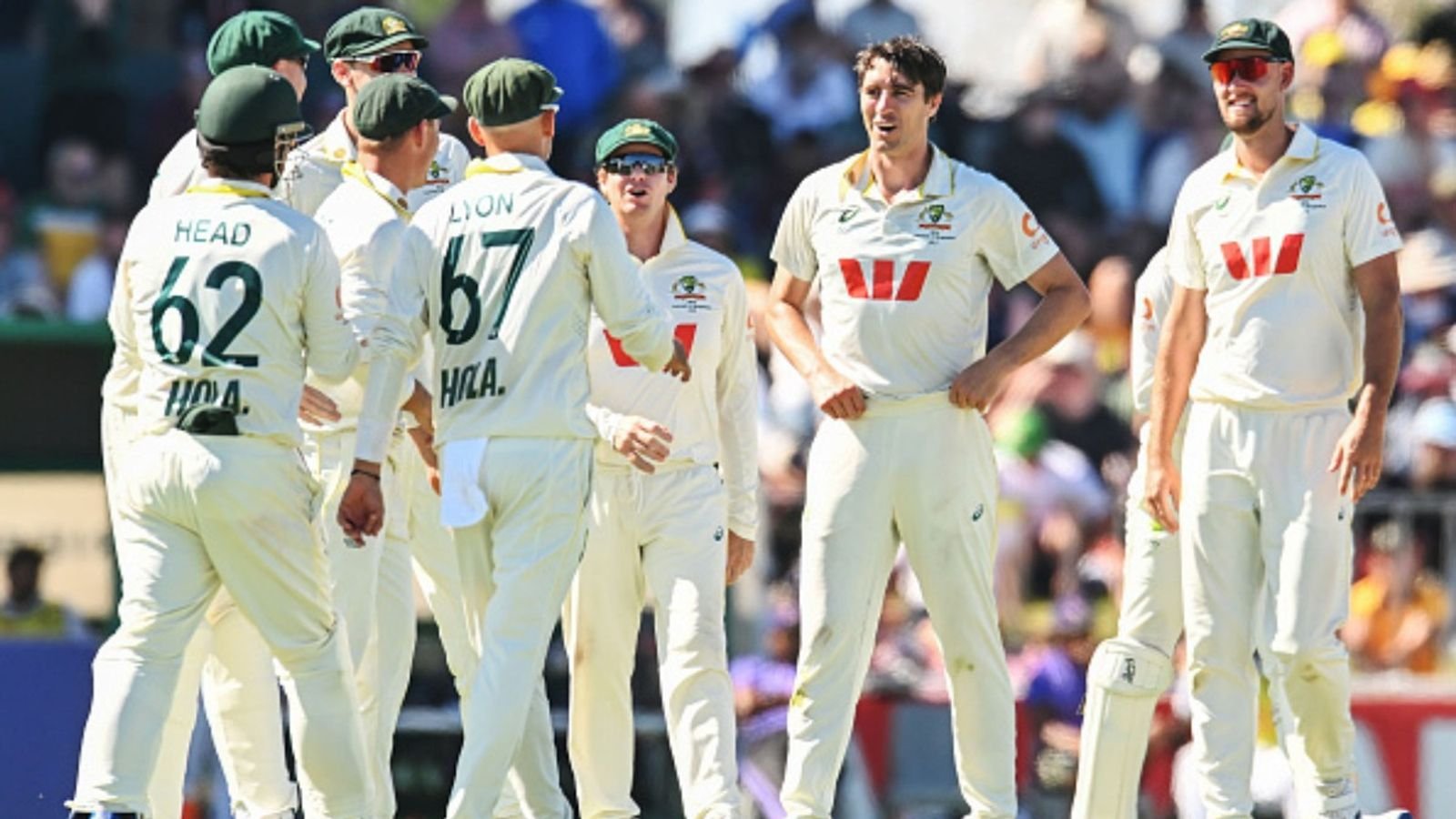
Australia Test squad for South Africa series has been announced, with the selectors largely maintaining the core of the team that recently faced Bangladesh while introducing three additional options for the red-ball campaign.
Pat Cummins will continue as captain as Australia prepares for a three-Test series beginning on October 9, 2026. The tour represents an important stage in the World Test Championship cycle, with Australia currently occupying top position in the standings and South Africa also firmly in contention.
The biggest selection talking point is the inclusion of Marnus Labuschagne. The number-three batter has endured an extended period without a Test century, yet the selectors have decided that his experience and previous performances are enough to earn another opportunity.
Australia’s 16-Man Squad for South Africa
Australia have selected a blend of established Test performers, experienced reserve options and players who could strengthen the squad’s versatility across three matches.
- Pat Cummins (captain)
- Scott Boland
- Alex Carey
- Cooper Connolly
- Cameron Green
- Josh Hazlewood
- Travis Head
- Josh Inglis
- Matthew Kuhnemann
- Marnus Labuschagne
- Nathan Lyon
- Michael Neser
- Matthew Renshaw
- Steve Smith
- Mitchell Starc
- Beau Webster
The squad contains considerable experience, particularly in the bowling department. Cummins, Starc, Hazlewood and Lyon form the backbone of an attack that has already operated successfully in Test cricket around the world.
Marnus Labuschagne Gets Another Test Opportunity
Labuschagne’s selection is the most debated part of the squad.
The batter has not scored a Test century since July 2023, and his recent performances have done little to silence questions about his place in Australia’s middle order. He also missed Australia’s six limited-overs matches in Zimbabwe and South Africa before the Test series.
Despite that omission, the selectors have brought him back for the red-ball campaign.
The decision suggests Australia still value Labuschagne’s ability to contribute in Test cricket. His previous success at number three, experience against high-quality bowling and familiarity with the demands of long-form cricket remain important factors.
However, the South Africa series could become a significant examination of his position. A difficult run in another challenging overseas campaign would inevitably increase the pressure surrounding his place in the XI.
Why Labuschagne’s Number Three Role Matters
Number three is one of the most demanding positions in a Test batting order. The player can arrive at the crease after an early wicket, sometimes within the opening overs, and must immediately deal with the new ball.
That makes experience particularly valuable.
Labuschagne has spent years occupying the role for Australia and understands the tactical demands involved. He can be asked to rebuild after an early collapse or accelerate when the opening pair has provided a strong platform.
The question is whether his current form allows him to perform those responsibilities consistently.
Australia’s decision to retain him indicates that the selectors believe a return to form remains possible. South Africa will provide a difficult environment in which to prove that judgment correct.
Australia Adds Three New Options to the Squad
The squad includes Cooper Connolly, Michael Neser and Matthew Kuhnemann as additional options compared with the recent group.
Connolly provides all-round ability and gives the selectors another option when constructing the balance of the XI. His inclusion also reflects Australia’s interest in maintaining flexibility within the squad.
Neser adds experience and seam-bowling depth. With three Tests scheduled in South Africa, having another reliable pace option can become important when workloads need to be managed.
Kuhnemann provides a left-arm spin option alongside Nathan Lyon. His presence could become particularly relevant depending on pitch conditions and Australia’s preferred combination for each venue.
Australia’s Pace Attack Could Be a Major Strength
Australia’s fast-bowling resources remain one of the most imposing features of the squad.
Captain Pat Cummins is joined by Mitchell Starc, Josh Hazlewood and Scott Boland, giving the selectors several experienced options for the South African conditions.
Starc brings left-arm pace and the ability to create different angles for batters. Hazlewood offers accuracy and consistency, while Cummins provides leadership and a combination of pace, movement and control.
Boland’s selection further strengthens the group because his disciplined approach can be valuable when a Test requires sustained pressure rather than constant attacking spells.
The presence of Michael Neser means Australia can also manage workloads across a three-match series without relying exclusively on the same bowling combination.
Nathan Lyon Remains Australia’s Spin Anchor
Nathan Lyon continues to provide Australia’s primary specialist spin option.
Although South African conditions are often associated with fast bowling, spin can still become important as matches progress and surfaces change. Lyon’s extensive Test experience gives Australia a proven option capable of operating for long spells.
Matthew Kuhnemann’s inclusion adds a contrasting left-arm option. Having two different styles of spin available gives the selectors greater tactical flexibility.
The final decision will depend heavily on the conditions at each venue and the balance Australia wants between pace and spin.
Steve Smith Provides Vital Experience
Steve Smith remains one of the most experienced members of Australia’s batting group and is among the few players in the squad with previous Test experience in South Africa.
That experience could prove especially valuable for a team containing players who have never played a Test match in the country.
Smith’s ability to adapt to different bowling conditions has been a major part of his international career. His role will also extend beyond his own run-scoring because younger members of the batting group can benefit from his understanding of overseas Test cricket.
Travis Head Could Be Crucial to Australia’s Approach
Travis Head offers Australia a contrasting batting style. His aggressive approach can change the tempo of a Test match and put pressure back on the opposition.
In an overseas series, that ability can be particularly valuable. Australia will need to balance traditional Test patience with opportunities to score quickly when conditions allow.
Head’s position in the middle order also means he can influence the match after either a strong opening partnership or an early collapse.
Alongside Smith, Cameron Green, Labuschagne and Beau Webster, Australia have several players capable of contributing in different match situations.
Alex Carey and Josh Inglis Give Australia Wicketkeeping Depth
Alex Carey and Josh Inglis are both included in the squad, providing Australia with two wicketkeeping options.
Carey’s experience gives him an obvious advantage when Australia select the first-choice XI, particularly given his familiarity with the team’s bowling attack.
Inglis, meanwhile, adds competition and further batting depth. Having two capable wicketkeepers also gives Australia greater flexibility across a long tour.
The final selection will depend on form, conditions and the balance the selectors want to achieve in the batting order.
Australia’s South Africa Tour Schedule
The three-Test series is scheduled to begin in Durban on October 9, followed by matches in Gqeberha and Johannesburg.
| Test | Venue | Dates |
|---|---|---|
| 1st Test | Durban | October 9–13, 2026 |
| 2nd Test | Gqeberha | October 18–22, 2026 |
| 3rd Test | Johannesburg | October 27–31, 2026 |
The series is particularly notable because it is Australia’s first Test contest in South Africa since 2018. That makes the tour an important opportunity for players with limited or no experience of Test cricket in the country.
Why the World Test Championship Makes the Series Important
The series carries significance within the World Test Championship cycle. Australia currently sit at the top of the table, while South Africa are close behind.
That positioning means the three matches could have consequences beyond the bilateral rivalry.
Every Test offers an opportunity to strengthen a team’s position in the championship standings, making overseas victories especially valuable. Australia will therefore have strong motivation to field its best available combination throughout the series.
For South Africa, playing at home provides an opportunity to challenge the current leaders and strengthen their own position.
Limited-Overs Exclusion Did Not End Labuschagne’s Test Chances
Labuschagne’s recent selection history makes his inclusion particularly interesting.
He was omitted from Australia’s squads for the three ODIs in Zimbabwe and the subsequent three ODIs in South Africa. That indicated that the selectors were willing to look at alternatives in the limited-overs setup.
His Test selection shows that the selectors are treating red-ball cricket differently.
That distinction is logical because a player’s suitability can vary considerably between formats. A batter who is struggling to justify a place in an ODI side can still possess qualities that make him valuable in Test cricket.
Labuschagne now has the opportunity to demonstrate exactly that.
Players With South African Test Experience Are Limited
Only a small group of players in Australia’s 16-man squad have previously played Test cricket in South Africa.
Cummins, Starc, Hazlewood, Lyon, Smith and Matthew Renshaw are the members identified as having that experience.
This is an important factor because overseas conditions can require adjustments that cannot always be replicated during preparation at home.
Players who have already experienced South African pitches, weather and bowling conditions can help the less experienced members understand what to expect.
Potential Selection Questions Before the First Test
The squad appears strong on paper, but several selection decisions will remain open before the first Test.
- Labuschagne’s position: His selection in the squad does not guarantee a starting place, making his form during preparation important.
- Bowling combination: Australia have several high-quality fast bowlers and may need to decide how best to manage workloads.
- Spin option: Lyon is the established choice, but Kuhnemann offers a different style if conditions favour it.
- All-round balance: Connolly, Green and Webster give selectors several ways to structure the lower middle order.
- Wicketkeeper: Carey remains an experienced option, while Inglis provides strong squad depth.
What Australia Needs From the South Africa Series
Australia’s priorities will extend beyond simply winning the series.
The tour provides an opportunity to test the depth of the squad, assess players in unfamiliar conditions and strengthen the team’s position in the World Test Championship.
For established players, the challenge is maintaining consistency. For newer members, the objective will be to demonstrate that they can handle the intensity of overseas Test cricket.
For Labuschagne in particular, the series could represent a crucial chance to change the conversation surrounding his form.
Conclusion: Labuschagne Gets Another Chance as Australia Target South Africa
Australia’s 16-man Test squad combines an experienced core with several additional options ahead of the three-Test series against South Africa.
Pat Cummins will lead a group featuring established stars such as Steve Smith, Travis Head, Mitchell Starc, Josh Hazlewood and Nathan Lyon, while Cooper Connolly, Michael Neser and Matthew Kuhnemann add further depth.
The biggest individual storyline will surround Marnus Labuschagne. His prolonged wait for a Test century has placed him under pressure, but Australia’s selectors have decided that he deserves another opportunity in the format.
With the first Test beginning in Durban on October 9, the South Africa series could become an important examination of both Australia’s championship ambitions and the future shape of its Test batting order.
For breaking news and live news updates, like us on Facebook or follow us on Twitter and Instagram. Read more on Latest Cricket on thefoxdaily.com.






COMMENTS 0