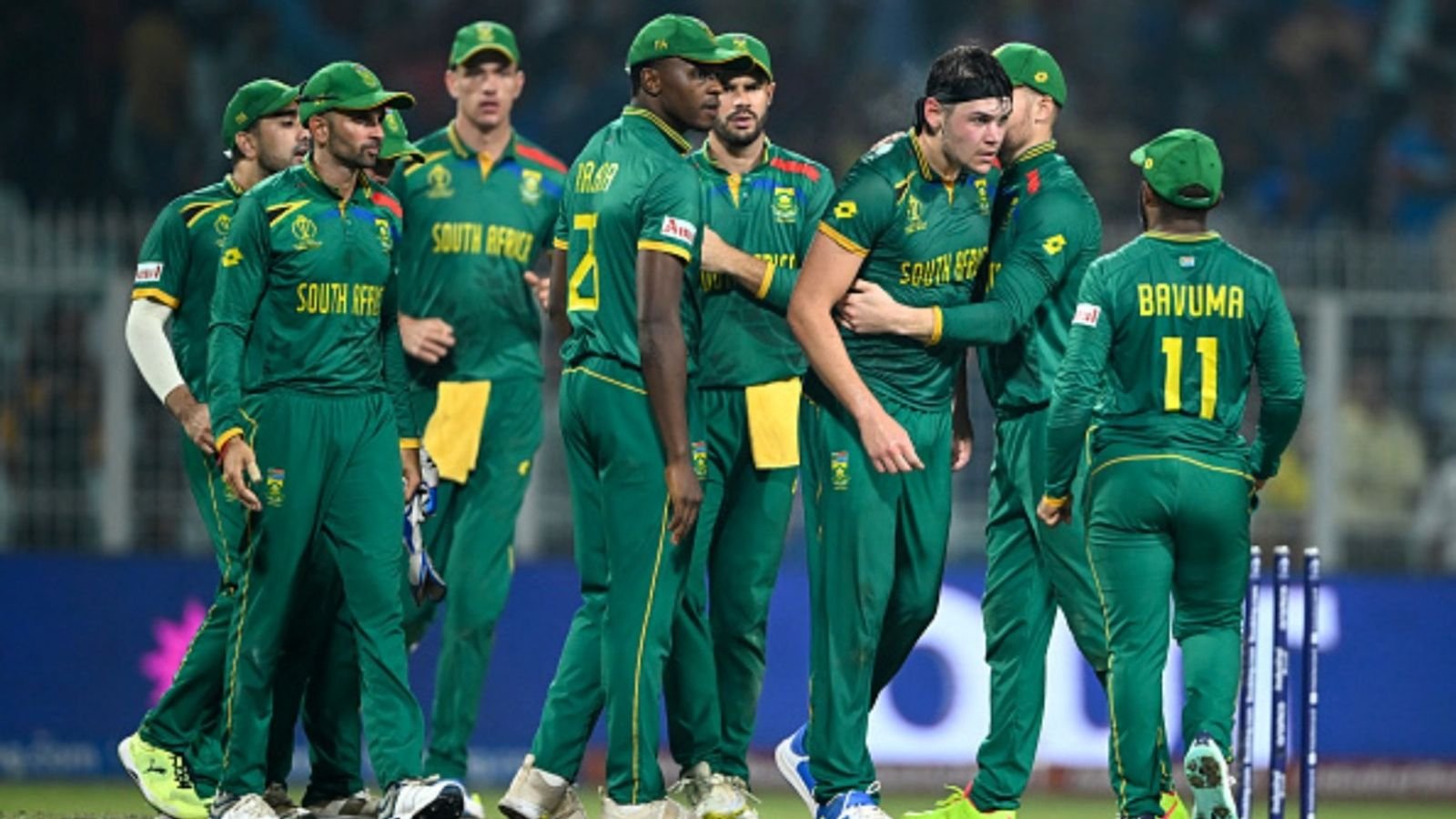
South Africa’s ODI squad for the Australia series has been announced, with Cricket South Africa selecting an experienced group as preparations intensify for next year’s ODI World Cup on home soil. Temba Bavuma returns to lead the side, while established names including Aiden Markram, David Miller and Quinton de Kock are included.
The biggest setback is the absence of Kagiso Rabada, who is being monitored because of an injury. His omission creates an important opportunity for Gerald Coetzee, with the 25-year-old fast bowler returning to the ODI setup after his previous appearance in the format came during the 2023 ODI World Cup in India.
The three-match series against defending ODI champions Australia begins on September 24. Beyond the immediate contest, the selection provides a useful indication of how South Africa are shaping their squad for the 2027 World Cup, which will be played on home soil.
South Africa’s ODI squad for Australia series
South Africa have combined experienced campaigners with players who remain central to their longer-term planning. The squad features specialists across the batting, pace-bowling and spin departments, giving head coach Shukri Conrad several tactical options against Australia.
| Player | Role |
|---|---|
| Temba Bavuma (c) | Captain / Batter |
| Ottneil Baartman | Fast Bowler |
| Corbin Bosch | All-rounder |
| Matthew Breetzke | Batter |
| Gerald Coetzee | Fast Bowler |
| Quinton de Kock | Wicketkeeper-Batter |
| Tony de Zorzi | Batter |
| Bjorn Fortuin | Spinner |
| Marco Jansen | All-rounder |
| Keshav Maharaj | Spinner |
| Kwena Maphaka | Fast Bowler |
| Aiden Markram | All-rounder / Batter |
| David Miller | Batter |
| Lungi Ngidi | Fast Bowler |
| Ryan Rickelton | Wicketkeeper-Batter |
| Tristan Stubbs | Batter |
The composition suggests that South Africa are not treating the Australia series merely as an isolated bilateral assignment. Several players appear to be part of a broader core that could be developed over the next year as the team moves towards the World Cup.
Gerald Coetzee returns after nearly three years
Gerald Coetzee’s recall is one of the most notable developments in the squad. The 25-year-old last played an ODI during the 2023 World Cup in India, meaning the Australia series represents a significant return to the format.
Coetzee made a strong impression during the 2023 tournament, particularly with his ability to generate pace and attack batters. His return gives South Africa another high-energy option in the fast-bowling department at a time when Rabada is unavailable.
Conrad welcomed the bowler back into the group, saying that Coetzee had been bowling nicely and quickly. That pace could be particularly valuable against Australia, where South Africa may need bowlers capable of creating breakthroughs rather than simply controlling the scoring rate.
The recall is also an opportunity for Coetzee to re-establish himself in South Africa’s limited-overs plans. A strong series could put him firmly back into the conversation for the 2027 World Cup.
Why Kagiso Rabada is missing
Kagiso Rabada has been left out because of injury, creating the biggest selection concern for South Africa. However, the situation is not being presented as a long-term exclusion from the team.
Conrad indicated that Rabada continues to be monitored and has not been ruled out of the three-Test series. That distinction is important because South Africa have major commitments across formats, and managing the workload of a senior fast bowler will be crucial.
Rather than rushing Rabada back for the ODIs, the selectors have opted for a different combination. It gives the medical team additional time while allowing another fast bowler to make a case for a permanent role.
For South Africa, the ideal outcome would be for Rabada to recover fully without compromising his availability for the longer Test assignment. His absence from the ODI series therefore needs to be viewed through the wider lens of workload and fitness management.
Anrich Nortje misses out again
Another major talking point is the absence of Anrich Nortje. Despite his reputation and experience at international level, Nortje was not selected ahead of Coetzee.
Conrad explained that Nortje had not done enough recently to earn selection for the Australia ODIs. However, the coach also left the door open for a comeback, indicating that supporters should not be surprised if the fast bowler returns for the Bangladesh series later in the year.
This is an important message from the South African management. Selection is being presented as performance-driven rather than based solely on reputation.
For Nortje, the situation is therefore less about being permanently discarded and more about producing enough cricket in the coming period to force his way back into the squad.
Quinton de Kock remains part of World Cup plans
Quinton de Kock’s inclusion is another significant selection decision. South Africa are clearly looking beyond the immediate Australia series, with Conrad confirming that the experienced wicketkeeper-batter remains part of the plans for next year’s ODI World Cup.
Conrad has indicated that de Kock is expected to play the ODIs when required and described the format as particularly suited to him. That makes his continued availability an important component of South Africa’s World Cup preparation.
For a team planning a home World Cup, retaining proven match-winners can provide stability. De Kock brings considerable international experience, left-handed batting and wicketkeeping flexibility, qualities that can be valuable in a tournament environment.
His selection also demonstrates that South Africa are balancing youth development with the experience needed for a major global event.
David Miller gets Australia series before ILT20 commitment
David Miller is also included for the Australia series, although his schedule later in the year means his availability will change. Conrad indicated that Miller is expected to play against Australia before potentially missing the Bangladesh assignment because of his ILT20 commitments.
That makes the Australia series particularly useful for South Africa. Miller remains an experienced middle-order batter capable of changing the tempo of an innings, and his presence strengthens a batting unit that also contains Markram, Stubbs and Breetzke.
From a planning perspective, however, South Africa will need to prepare for periods without Miller. The Australia series can therefore serve two purposes: competing against a strong opponent and evaluating alternatives around the middle order.
Why Dewald Brevis is not in the squad
Dewald Brevis is one of the most notable exclusions from the South African ODI squad. His omission may surprise supporters familiar with his reputation as one of the country’s exciting young batting talents.
However, Conrad provided a clear explanation. Brevis is competing for middle-order positions alongside Matthew Breetzke, Tristan Stubbs and Miller. With limited places available, the selectors have chosen other combinations for the Australia series.
Importantly, Brevis has not been removed from South Africa’s wider plans. Instead, he is expected to focus on first-class cricket as he prepares for the red-ball series.
That decision reflects a broader development strategy. Rather than attempting to push a young player into every format simultaneously, South Africa can use domestic first-class cricket to develop his longer-format skills before considering another ODI opportunity.
Conrad also suggested that Brevis could return for the Bangladesh ODI series later in the year. His exclusion therefore looks more like a selection-window decision than a definitive judgement on his international future.
South Africa’s middle-order competition is becoming intense
The Brevis situation highlights one of the more interesting aspects of this squad: South Africa have several players competing for a relatively small number of batting positions.
Miller provides experience and power, Stubbs has emerged as an important modern middle-order option, while Breetzke is also in the mix. Markram adds another layer because of his ability to contribute with both bat and ball.
That competition can benefit South Africa if managed correctly. Players know that performances matter, while the coaching staff have alternatives if a particular combination fails.
At the same time, excessive rotation can create uncertainty. With the 2027 World Cup approaching, South Africa will eventually need to establish a settled batting order and give the preferred players enough opportunities to develop partnerships and understand their roles.
Australia bring a formidable squad
The challenge facing South Africa is substantial because Australia arrive with a strong ODI group. The Australian squad includes Mitchell Marsh, Pat Cummins, Travis Head, Josh Inglis, Alex Carey, Josh Hazlewood, Mitchell Starc and Adam Zampa.
The presence of several established international players means South Africa will face a high-quality examination in every department. Australia’s combination of experienced fast bowlers, aggressive batters and multi-skilled players gives them the depth expected from a defending World Cup champion.
South Africa’s decision to select a largely experienced squad therefore makes sense. Young players can benefit from exposure, but matches against Australia also require enough established performers to handle pressure.
Australia ODI squad for South Africa series
Australia have named the following players for the ODI series:
- Mitchell Marsh
- Pat Cummins
- Xavier Bartlett
- Alex Carey
- Cooper Connolly
- Joel Davies
- Nathan Ellis
- Cameron Green
- Josh Hazlewood
- Travis Head
- Josh Inglis
- Spencer Johnson
- Oliver Peake
- Matthew Renshaw
- Billy Stanlake
- Mitchell Starc
- Adam Zampa
What the Australia series means for South Africa
The three ODIs beginning on September 24 should provide South Africa with more than an opportunity to beat a major rival. The matches can help the management answer several important questions before the 2027 World Cup.
First, the team needs to determine how its pace attack functions without Rabada. Coetzee’s return gives the selectors a chance to test whether his pace and wicket-taking ability can become a central part of the attack.
Second, the middle order requires clarity. Miller, Markram, Stubbs and Breetzke offer different skill sets, but South Africa will eventually need to establish the best combination for different match situations.
Third, the team must balance experience with long-term planning. De Kock and Miller offer proven quality, while players such as Breetzke, Stubbs and Coetzee represent the next phase of the squad.
South Africa’s biggest selection question: experience or evolution?
The squad suggests that South Africa are attempting to avoid choosing between experience and youth. Instead, the selectors appear to be building a group in which established players provide stability while younger options compete for permanent positions.
The decision on Brevis illustrates this perfectly. Rather than selecting every highly rated young player simply because of potential, the management has chosen a specific development route for him through first-class cricket.
Likewise, Coetzee’s recall shows that age alone is not the deciding factor. His previous international experience and current pace have earned him another opportunity.
The next year will reveal whether this approach produces a settled World Cup squad or leaves South Africa still searching for their best combination.
Final outlook
South Africa’s ODI squad for the Australia series is a strong indication of their wider World Cup planning. Rabada’s injury is an obvious setback, but Coetzee’s return provides an intriguing alternative in the pace attack.
Bavuma will lead a group containing experienced figures such as Markram, Miller and de Kock, while players including Breetzke, Stubbs and Coetzee have opportunities to strengthen their claims for the future.
Nortje’s omission shows that reputation alone will not guarantee selection, while Brevis’ absence reflects the intense competition for middle-order places rather than the end of his ODI ambitions.
Against defending champions Australia, South Africa will receive a demanding test of their current balance. The result of the series will matter, but the bigger prize for the hosts is clarity: identifying the players and combinations capable of carrying them into the 2027 ODI World Cup with a settled, competitive side.
For breaking news and live news updates, like us on Facebook or follow us on Twitter and Instagram. Read more on Latest Cricket on thefoxdaily.com.






COMMENTS 0