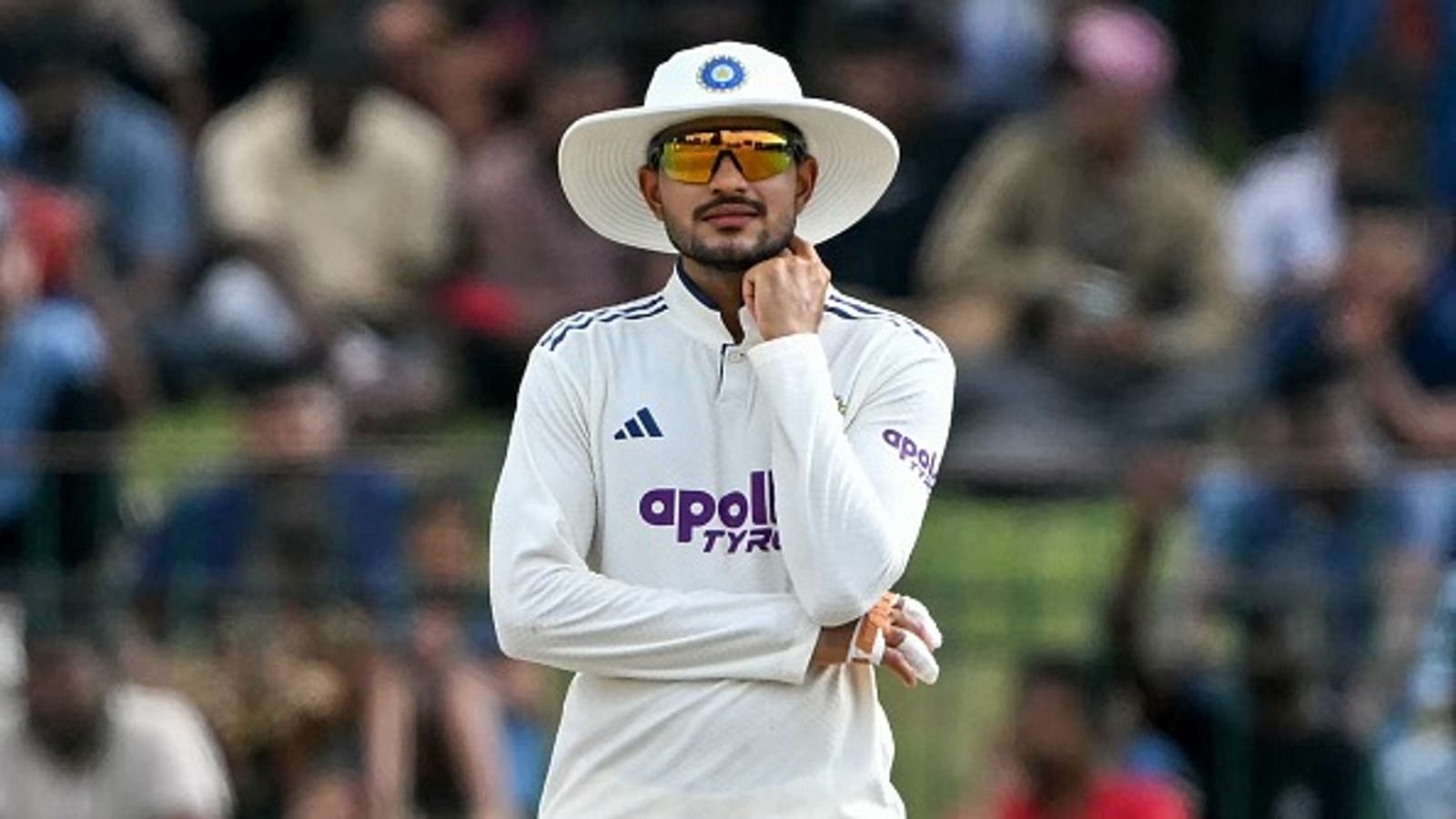
The BCCI’s proposed changes to the next Future Tours Programme (FTP) could mark an important shift in how India’s international cricket calendar is planned. Instead of simply fitting the maximum possible number of matches into every available window, the board is looking to create more breathing space between major assignments.
The move comes amid growing concerns over player fatigue, injuries, inadequate preparation and the difficulty of maintaining peak performance across all three formats. India’s schedule during the upcoming 2027–31 cycle is expected to feature major ICC tournaments alongside bilateral series and World Test Championship commitments.
According to the proposed scheduling approach, the BCCI wants dedicated recovery periods between tours while also ensuring that players receive sufficient preparation before difficult overseas assignments. The emphasis is particularly strong on tours of South Africa, England, New Zealand and Australia, where conditions can demand significant technical and physical adaptation.
Why the BCCI Wants to Change India’s FTP Planning
Cricket’s international calendar has become increasingly complicated. Teams must navigate bilateral commitments, ICC tournaments, domestic competitions, franchise leagues and player workload requirements at the same time.
For India, the challenge is even greater because its players frequently compete across formats. A player involved in Tests, ODIs and T20Is can potentially move from one competition to another with little time for recovery or meaningful preparation.
The BCCI’s latest scheduling thinking appears to recognise that more cricket does not automatically mean better cricket. If players arrive at an important overseas series exhausted or without adequate acclimatization, the number of matches played beforehand can become less valuable.
The proposed FTP strategy therefore focuses on balancing three requirements: competitive cricket, player recovery and preparation for high-priority assignments.
What Is the Future Tours Programme?
The Future Tours Programme is the framework used to organise international cricket involving the major cricket-playing nations. It helps boards plan bilateral series and coordinate their schedules around ICC events and other international commitments.
Because multiple countries must fit their bilateral programmes around global tournaments, creating an effective FTP is a complex exercise. One team’s home series can affect another team’s availability, while Test commitments have to be considered alongside limited-overs competitions.
For India, the next FTP cycle is especially important because the 2027–31 period contains several major ICC events and significant Test commitments.
| Priority | BCCI’s Proposed Approach |
|---|---|
| Player recovery | Create wider gaps between demanding international assignments |
| Overseas preparation | Add suitable warm-up and build-up matches before major SENA tours |
| Workload management | Reduce the pressure created by consecutive international commitments |
| Performance preparation | Allow players time to adapt to local conditions before major series |
September ICC Scheduling Workshop Could Shape the Next Cycle
A significant step in the planning process is expected during an ICC FTP scheduling workshop in Dubai on September 22 and 23. Representatives and operations officials from full-member cricket boards are expected to participate in discussions aimed at coordinating the international calendar.
Such meetings are important because no major cricket board can design its international programme entirely independently. Bilateral series require agreement between two boards, while ICC tournaments occupy fixed windows that influence the space available for other commitments.
The BCCI’s scheduling representatives will therefore need to negotiate not only India’s series but also the recovery and preparation windows the board wants to protect.
The biggest challenge will be ensuring that these breaks survive the negotiation process. Every additional rest period for India potentially affects another country’s bilateral schedule, venue availability and commercial planning.
Greater Focus on SENA Tours
One of the most significant elements of the proposed strategy is the focus on SENA countries — South Africa, England, New Zealand and Australia.
These tours have traditionally been among the most demanding assignments for visiting teams. Differences in pitch behaviour, weather, ball movement, bounce and playing conditions can require substantial preparation.
A player who arrives shortly before a Test series may need to adapt to conditions while simultaneously performing at international level. The BCCI’s preference for additional preparation matches is intended to reduce that problem.
Warm-up games can provide batsmen with opportunities to adjust to bounce and movement, while bowlers can work on lengths and variations that suit local conditions.
However, preparation matches are useful only when they are placed intelligently. Adding more fixtures without providing recovery time would simply create another form of workload.
Why Acclimatization Matters in Overseas Cricket
Overseas preparation is about more than simply practising cricket. Players also have to adjust to different weather, time zones, travel demands and playing surfaces.
For example, English conditions can reward disciplined seam bowling and movement through the air, while Australian pitches can present a different combination of bounce and pace. South Africa and New Zealand also offer conditions that can challenge visiting batting line-ups.
Giving players time to experience those conditions before the first competitive match can improve preparation without necessarily requiring a long series.
This is where the BCCI’s proposed model could be more effective than simply increasing the number of bilateral matches. Quality preparation may matter more than quantity.
Lessons From India’s Recent UK Challenges
The board’s thinking has also been influenced by India’s recent difficulties during the United Kingdom leg of its schedule. The team faced challenges associated with limited preparation and acclimatization before demanding assignments.
That experience highlights a broader issue in international cricket: even a highly talented team can struggle when preparation does not match the difficulty of the conditions.
For a side expected to compete for ICC trophies and maintain a strong position in Test cricket, preparation cannot be treated as an optional extra.
The proposed FTP changes could therefore be viewed as an attempt to make preparation part of the calendar rather than something squeezed into whatever time remains available.
The 2027–31 Cycle Will Be Extremely Demanding
India’s next four-year international period is expected to contain a combination of major ICC tournaments, bilateral series and World Test Championship fixtures.
The white-ball calendar alone creates substantial pressure. The 2028 T20 World Cup is scheduled to be hosted by Australia and New Zealand, while India is set to host the 2029 Champions Trophy. The 2030 T20 World Cup is planned for England, Scotland and Ireland, followed by the 2031 ODI World Cup, which India will co-host with Bangladesh.
Alongside these events, India will continue to have Test commitments under the World Test Championship framework.
This creates a scheduling puzzle for the BCCI. A player may be required to prepare for a Test tour one month and then switch to a white-ball tournament soon afterward.
| Period | Major Calendar Challenge |
|---|---|
| 2027–28 | Balancing bilateral cricket with preparations for the 2028 T20 World Cup |
| 2028–29 | Managing post-World Cup workload and preparation for the 2029 Champions Trophy |
| 2029–30 | Balancing bilateral commitments with the next T20 World Cup cycle |
| 2030–31 | Preparing for the 2031 ODI World Cup while maintaining Test commitments |
Why Rest Could Actually Improve India’s Performance
Rest is sometimes misunderstood as lost cricket time. In reality, recovery can be an important part of high-performance sport.
Fast bowlers are particularly vulnerable to workload-related problems because repeated high-intensity spells place significant stress on the body. But fatigue can affect every player, including batsmen, wicketkeepers and fielders.
A congested calendar can also reduce training quality. When players are constantly travelling and playing matches, there may be less time for technical adjustments, tactical planning and physical conditioning.
More structured breaks could allow India’s management team to plan training cycles more effectively.
The objective should not necessarily be to make players play fewer matches across the board. Instead, the smarter approach would be to ensure that players are physically prepared for the matches that matter most.
The Biggest Challenge: Balancing International and Franchise Cricket
One of the biggest complications for workload management is the growing importance of franchise cricket.
India’s international calendar cannot be considered in isolation from the domestic and franchise schedule. The Indian Premier League occupies a major portion of the annual cricket calendar, and several Indian players also participate in other competitions.
Consequently, an international break does not always mean a complete break from cricket.
This makes workload monitoring increasingly important. Boards and team managements may need to identify periods where individual players require additional recovery, even if the broader team remains active.
A successful FTP could therefore provide the framework, while player-specific workload management would determine how that framework is used.
Could India Use Different Players Across Formats?
The proposed scheduling philosophy could also encourage greater format specialisation.
Instead of expecting the same group of players to appear in every assignment, India could increasingly use separate squads depending on the format and importance of a series.
This approach would have two potential benefits. Senior players could receive targeted rest, while younger players would gain meaningful international experience.
It could also help India build stronger backup options before major tournaments. A team with depth is better equipped to handle injuries when its first-choice players are unavailable.
Comparison: Packed Calendar vs Planned Calendar
| Factor | Packed Schedule | Planned Recovery Model |
|---|---|---|
| Player fatigue | Higher risk | Better controlled |
| Overseas preparation | Can be limited | More structured |
| Injury management | Reactive | More proactive |
| Young-player opportunities | Often dependent on emergencies | Can be planned |
| Major tournament preparation | Potentially compressed | More targeted |
The Real Test Will Be Implementation
The proposal is promising, but creating a good calendar on paper will not automatically solve India’s workload problems.
The BCCI will have to protect the proposed gaps when bilateral negotiations begin. It will also need to ensure that preparation games are genuinely useful rather than merely additional fixtures.
Another challenge will be the unpredictable nature of injuries. Even the best-planned calendar cannot eliminate injuries completely. The objective is to reduce avoidable workload pressure and provide players with better opportunities to recover.
Communication between selectors, coaches, medical staff and players will therefore remain crucial.
What This Could Mean for Shubman Gill and India’s Next Generation
India’s leadership group will have to manage an increasingly complex transition between formats and generations. With Shubman Gill leading the current setup, workload planning could become an important part of building a sustainable team.
For younger players, a carefully designed schedule could provide opportunities to enter international cricket gradually instead of being thrown into the side only when injuries occur.
That could create a healthier pipeline of players capable of handling different formats and overseas conditions.
A Smarter FTP Could Become India’s Competitive Advantage
The most interesting aspect of the BCCI’s proposed strategy is that it treats scheduling as a performance tool.
Traditionally, calendars have largely been viewed as administrative arrangements. But modern international sport increasingly shows that preparation, recovery and workload management can influence results almost as much as talent.
If India manages to create a calendar that gives its players enough time to recover while still providing high-quality preparation, the team could arrive at major overseas series fresher and better prepared.
The advantage would become especially significant during multi-format seasons, when other teams may also be dealing with fatigue and injuries.
What to Watch During the Next FTP Discussions
- Recovery windows: Whether the BCCI can secure meaningful gaps between major international assignments.
- Warm-up matches: Whether overseas tours receive dedicated preparation games before major series.
- ICC tournament clashes: How the 2027–31 global event calendar affects India’s bilateral commitments.
- Test workload: How the World Test Championship schedule is balanced with white-ball cricket.
- Player rotation: Whether India increasingly separates squads according to format and workload.
- Franchise commitments: How international scheduling is coordinated with India’s major domestic competitions.
Conclusion: India Wants Breathing Room, Not Less Ambition
The BCCI’s proposed changes to the next FTP are less about reducing India’s international ambitions and more about making those ambitions sustainable.
The 2027–31 cycle could bring an extraordinary combination of ICC tournaments, overseas tours, bilateral series and Test cricket. Trying to fit everything together without adequate recovery could increase fatigue and injury risks.
By introducing more deliberate rest windows and preparation opportunities, the BCCI is attempting to shift India’s scheduling philosophy from maximum match volume to maximum competitive readiness.
The proposal will ultimately be judged by its execution. If the board can protect recovery periods, arrange meaningful overseas preparation and manage players according to their individual workloads, India’s future international calendar could become considerably more efficient.
The deeper lesson is simple: in modern cricket, preparation time is not empty space in the calendar. It is part of performance.
For breaking news and live news updates, like us on Facebook or follow us on Twitter and Instagram. Read more on Latest Cricket on thefoxdaily.com.






COMMENTS 0