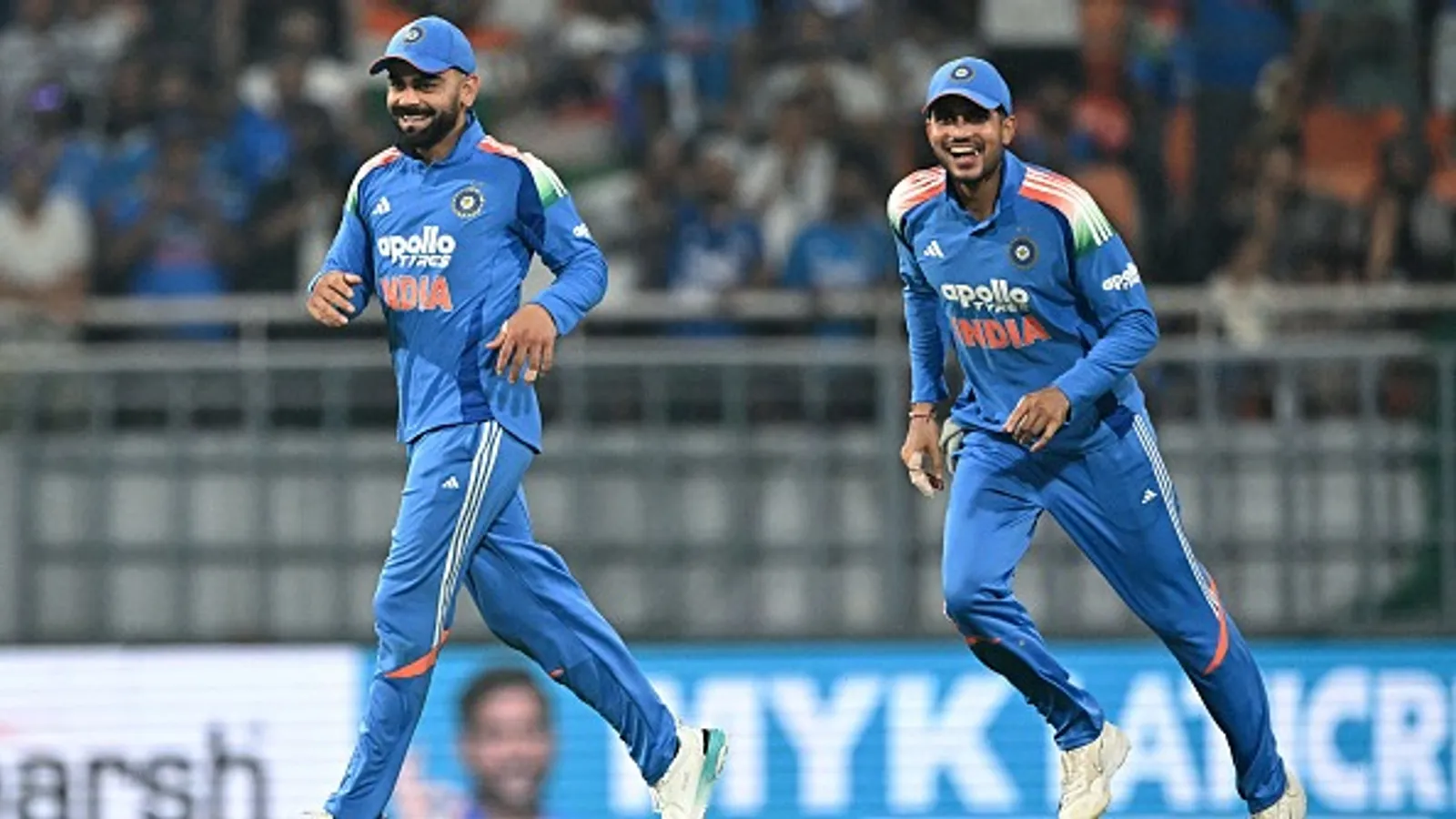
The Board of Control for Cricket in India (BCCI) has announced India’s ODI and Test squads for the upcoming tour of New Zealand, with Shubman Gill set to lead the team in the first three ODIs before Shreyas Iyer takes over the captaincy for the final two matches. The squad announcement has attracted attention because of the continued absence of all-rounder Hardik Pandya and fast bowler Mohammed Shami from the ODI selection.
The selection committee has opted for a split-squad approach for the five-match ODI series, making changes to the team as the tour progresses. The decision provides opportunities for different players while allowing the management to consider workload, fitness and preparation across formats.
Experienced batters Rohit Sharma and Virat Kohli feature in both ODI squads, while players such as Nitish Kumar Reddy, Tilak Varma, Anshul Kamboj and Kumar Kushagra are also included. The Test squad, meanwhile, will be led by Gill, with KL Rahul named vice-captain and a combination of experienced campaigners and emerging players selected for the red-ball challenge.
Ravindra Jadeja’s selection in the Test squad, despite his absence from the announced ODI squads, is another notable detail. The selections underline the different requirements of India’s white-ball and red-ball teams as they prepare for an overseas assignment.
India’s Split ODI Squads for New Zealand Tour Announced
One of the biggest talking points from the BCCI announcement is the decision to divide leadership responsibilities across the five-match ODI series. Shubman Gill will captain India in the first three matches, while Shreyas Iyer will lead the side in the fourth and fifth ODIs.
Gill’s leadership role in the opening matches gives him an opportunity to guide the team at the start of the series. However, the selection panel has chosen Iyer to take charge for the final two fixtures, creating another leadership opportunity for the experienced batter.
Iyer has previously held leadership responsibilities in domestic cricket and franchise competitions. His appointment as captain for the final two ODIs will give him another chance to demonstrate his tactical understanding and ability to manage a team at the international level.
The split-squad arrangement also introduces changes to India’s personnel as the series progresses. While several senior players remain in both groups, the final two matches feature adjustments in the batting, wicketkeeping and pace-bowling departments.
Rohit Sharma and Virat Kohli continue to provide experience in the ODI setup. KL Rahul is included as a wicketkeeper-batter in the first three-match squad, while Ishan Kishan features in both groups. The selection of players such as Tilak Varma, Naman Dhir, Ruturaj Gaikwad and Nitish Kumar Reddy gives India additional options in the batting and all-round departments.
The bowling groups include established international performers and emerging options. Mohammed Siraj, Arshdeep Singh and Kuldeep Yadav feature in the ODI selections, while the final two matches also include Yash Thakur and Auqib Nabi.
Overall, the split squads provide India with an opportunity to assess different combinations during the series. The arrangement also places additional responsibility on Iyer, who will need to manage the team during the closing matches while maintaining India’s competitiveness.
India’s ODI Squad for the First Three Matches
Shubman Gill will lead India’s squad for the opening three ODIs against New Zealand. The group features senior batters, wicketkeeping options, all-rounders and a varied bowling attack.
- Shubman Gill (Captain)
- Rohit Sharma
- Virat Kohli
- Shreyas Iyer (Vice-captain)
- KL Rahul (Wicketkeeper)
- Nitish Kumar Reddy
- Axar Patel
- Naman Dhir
- Anshul Kamboj
- Gurnoor Brar
- Ruturaj Gaikwad
- Arshdeep Singh
- Ishan Kishan (Wicketkeeper)
- Mohammed Siraj
- Prasidh Krishna (Subject to fitness clearance)
- Kuldeep Yadav
The first squad combines the experience of Rohit Sharma and Virat Kohli with the leadership of Gill and Iyer. KL Rahul and Ishan Kishan provide wicketkeeping options, while Axar Patel and Nitish Kumar Reddy offer additional flexibility in the team’s combination.
The pace attack includes Siraj, Arshdeep Singh, Prasidh Krishna, Anshul Kamboj and Gurnoor Brar. Kuldeep Yadav adds a specialist spin option, giving the team another potential source of wickets during the middle overs.
India’s ODI Squad for the Fourth and Fifth Matches
Shreyas Iyer will captain India in the final two ODIs, with Ishan Kishan named vice-captain. The squad includes several familiar faces alongside changes designed to provide opportunities to additional players.
- Shreyas Iyer (Captain)
- Rohit Sharma
- Virat Kohli
- Tilak Varma
- Ishan Kishan (Wicketkeeper and vice-captain)
- Nitish Kumar Reddy
- Axar Patel
- Naman Dhir
- Auqib Nabi
- Gurnoor Brar
- Ruturaj Gaikwad
- Arshdeep Singh
- Kumar Kushagra (Wicketkeeper)
- Mohammed Siraj
- Yash Thakur
- Kuldeep Yadav
The final two-match squad features Tilak Varma and Kumar Kushagra, while Auqib Nabi and Yash Thakur are included among the bowling options. The changes give India an opportunity to evaluate additional players within the ODI setup.
Rohit Sharma and Virat Kohli remain important members of the batting group, while Iyer will have the responsibility of leading the side during the final stage of the series. Ishan Kishan’s appointment as vice-captain adds another leadership dimension to the squad.
The selection of two different ODI groups suggests that India are keen to explore their available options while managing the demands of a multi-format tour. The performances across the five matches could help the team management assess players competing for positions in future ODI assignments.
Hardik Pandya’s Continued Absence Remains a Major Talking Point
The continued absence of Hardik Pandya from the announced ODI squads is one of the most significant talking points for Indian cricket supporters. Pandya has traditionally played an important role in India’s white-ball combination, offering a combination of aggressive batting, finishing ability and seam bowling.
His ability to contribute with both bat and ball has made him a valuable option in limited-overs cricket. As a middle-order batter, Pandya can accelerate the scoring rate during the closing overs, while his medium-pace bowling provides the captain with an additional option when managing the attack.
Without Pandya, the team management must consider alternative combinations to balance the batting order and bowling resources. Players who can contribute in more than one discipline become especially important when selecting an XI for overseas conditions.
Nitish Kumar Reddy is among the players included in both ODI squads who can offer all-round skills. His presence gives India another option as the management evaluates ways to maintain balance without one of its established all-rounders.
However, replacing Pandya’s overall contribution is not straightforward. His value comes from the combination of power-hitting, bowling flexibility and experience in high-pressure international matches.
The supplied squad announcement does not specify an official reason for Pandya’s absence. Therefore, it would be premature to attribute the omission solely to injury, fitness concerns or a selection decision without further confirmation from the BCCI or team management.
His continued absence nevertheless means India will have to work with alternative combinations for the New Zealand ODIs. The performances of the selected all-rounders and specialist players will be important as the team seeks to maintain its balance across the series.
Mohammed Shami Misses Out on ODI Selection
Veteran fast bowler Mohammed Shami is another notable omission from India’s announced ODI squads. His absence comes despite attention surrounding his potential return to international cricket and his performances in domestic competition.
Shami has been one of India’s most effective fast bowlers, renowned for his seam position, ability to generate movement and capacity to take wickets in different phases of an innings. His experience has been especially valuable in major international tournaments and demanding overseas conditions.
However, Shami has experienced periods away from competitive cricket because of injuries. His return to the international setup has consequently remained a subject of interest among supporters and analysts.
India’s selected pace options for the ODI series include Mohammed Siraj and Arshdeep Singh, alongside Prasidh Krishna, Anshul Kamboj, Gurnoor Brar, Auqib Nabi and Yash Thakur across the two squads.
The selections provide opportunities for the management to assess its available pace-bowling depth. Siraj brings international experience, while Arshdeep offers a left-arm option and the other selected bowlers can compete for opportunities as the series progresses.
Shami’s omission does not, by itself, establish that the selectors have made a permanent decision about his future. Without an official explanation, it is important to distinguish between the squad announced for this tour and any longer-term plans for India’s bowling attack.
With the 2027 ODI World Cup approaching in the broader international calendar, India’s pace-bowling depth will remain an important consideration. The team management must balance experience, current form, fitness and the development of players who could contribute to future campaigns.
Ravindra Jadeja Included in the Test Squad but Absent From the ODI Groups
Ravindra Jadeja’s selection in India’s Test squad, alongside his absence from both announced ODI groups, is another significant aspect of the squad announcement.
Jadeja has been an influential figure in Test cricket because of his left-arm spin, lower-order batting and athletic fielding. His ability to contribute across all three disciplines gives India additional flexibility in the longer format, particularly when conditions favour spin bowling.
His inclusion in the red-ball squad provides the team with an experienced all-round option for the challenges of Test cricket in New Zealand. At the same time, his absence from the ODI squads means India will need to rely on other combinations for the limited-overs leg.
Axar Patel features in both ODI squads and provides a left-arm spin option alongside batting depth. Kuldeep Yadav is also selected for both groups, giving India another specialist spinner capable of creating wicket-taking opportunities.
The difference between the selections illustrates how the requirements of Test and ODI cricket can influence squad composition. A player may be considered important for one format while the selectors explore different options in another.
India’s Test Squad for the New Zealand Tour
Alongside the ODI selections, the BCCI has announced India’s Test squad for the New Zealand assignment. Shubman Gill will captain the side, while KL Rahul has been named vice-captain.
The squad combines established international players with younger batters and bowlers. Yashasvi Jaiswal and KL Rahul provide top-order options, while Sai Sudharsan and Devdutt Padikkal add batting depth. Rishabh Pant and Dhruv Jurel are included as wicketkeeping options.
The all-round and spin departments feature Ravindra Jadeja, Washington Sundar and Kuldeep Yadav. India’s pace attack includes Jasprit Bumrah, Mohammed Siraj, Prasidh Krishna, Akash Deep and Anshul Kamboj.
The combination gives the selectors several options to consider as India prepares for the demands of overseas Test cricket. New Zealand conditions can present challenges for visiting batters and bowlers, making adaptability and discipline important throughout the series.
Full India Test Squad
- Shubman Gill (Captain)
- Yashasvi Jaiswal
- KL Rahul (Vice-captain)
- Devdutt Padikkal
- Rishabh Pant (Wicketkeeper; subject to fitness clearance)
- Dhruv Jurel (Wicketkeeper)
- Ravindra Jadeja
- Anshul Kamboj
- Jasprit Bumrah
- Prasidh Krishna
- Akash Deep
- Sai Sudharsan
- Nitish Kumar Reddy
- Washington Sundar
- Kuldeep Yadav
- Mohammed Siraj
Fitness note: Rishabh Pant’s selection is subject to fitness clearance, according to the supplied squad announcement.
Shubman Gill’s Leadership Across Formats
Shubman Gill’s appointment as captain for the opening three ODIs and the Test series places him at the centre of India’s plans for the New Zealand tour.
Leading an overseas side presents a different set of challenges from playing at home. Captains must adapt to local conditions, manage their bowling resources and make tactical decisions that reflect the surface, weather and opposition.
In the ODI series, Gill will lead the team through the opening matches before handing over responsibility to Iyer. The change creates an opportunity for another player to gain captaincy experience while allowing India to evaluate different leadership combinations.
In Test cricket, Gill will have a broader responsibility as captain of a squad featuring a mixture of experienced players and younger prospects. His decisions around batting order, bowling rotations and field placements will be important as India attempts to compete in challenging overseas conditions.
KL Rahul’s appointment as Test vice-captain provides an experienced leadership partner. Rahul’s international experience and batting versatility could prove valuable as the team navigates the demands of the red-ball format.
New Zealand Tour: Opportunities for Emerging Players
The squad announcement provides opportunities for several players seeking to establish themselves more firmly in India’s international setup. Nitish Kumar Reddy features in both ODI groups and the Test squad, giving him a place in the plans across formats.
Reddy’s all-round skills could be useful as India evaluates combinations that offer batting depth alongside additional bowling options. His inclusion across formats also gives the selectors an opportunity to assess his suitability for different match situations.
Anshul Kamboj is another player included in both the ODI and Test squads. His selection provides an opportunity to develop his role within India’s pace-bowling resources, while players such as Gurnoor Brar, Auqib Nabi and Yash Thakur are included in the ODI groups.
Tilak Varma and Kumar Kushagra feature in the squad for the final two ODIs, adding further options in the batting and wicketkeeping departments. Their inclusion gives the team management an opportunity to assess additional combinations during the series.
The presence of younger players alongside senior figures such as Rohit Sharma, Virat Kohli, KL Rahul and Jadeja creates a balance between experience and development. Performances during the tour could help the selectors make more informed decisions about future squad combinations.
What the Squad Announcement Means for India’s ODI Plans
The split ODI squads indicate that India’s selection committee is considering the demands of the tour while keeping future assignments in mind. Rather than selecting an unchanged group for all five matches, the selectors have introduced changes that create opportunities for additional players.
Leadership is another important element of the decision. Gill will captain the first three ODIs, while Iyer will lead the final two, allowing both players to take responsibility for the team’s performance during different stages of the series.
The selection of Rohit Sharma and Virat Kohli across the ODI squads provides continuity in the batting department. Their experience could be valuable as India attempts to adapt to New Zealand conditions and build strong partnerships at the top and in the middle order.
At the same time, the absence of Hardik Pandya means the team must assess how best to distribute the all-round responsibilities. The selected players will need to contribute effectively in their respective roles if India is to maintain a balanced playing XI.
The exclusion of Mohammed Shami is another major talking point, although the announcement alone does not reveal the selectors’ complete reasoning. India’s pace attack will rely on the players selected for the tour, with the management expected to evaluate combinations based on conditions and performances.
Key Takeaways From India’s New Zealand Squad Announcement
- Shubman Gill will captain the first three ODIs: Gill will lead India at the start of the five-match series.
- Shreyas Iyer takes charge for the final two ODIs: Iyer has been named captain for the fourth and fifth matches.
- Hardik Pandya remains absent: The all-rounder has not been included in either announced ODI squad.
- Mohammed Shami misses ODI selection: The veteran fast bowler is absent from the announced ODI groups.
- Ravindra Jadeja returns to the Test plans: Jadeja is included in the red-ball squad but not the ODI groups.
- Gill will also captain the Test side: KL Rahul has been named vice-captain for the red-ball assignment.
- Rishabh Pant’s selection depends on fitness clearance: The wicketkeeper-batter is included in the Test squad subject to approval.
- Several emerging players feature across the squads: Nitish Kumar Reddy and Anshul Kamboj are among those selected across multiple formats.
Conclusion
The BCCI’s announcement of India’s ODI and Test squads for the New Zealand tour has provided several important talking points, from the split captaincy arrangement to the continued absence of Hardik Pandya and Mohammed Shami from the ODI selections.
Shubman Gill will lead India in the opening three ODIs and captain the Test side, while Shreyas Iyer will take over leadership duties for the final two 50-over matches. Rohit Sharma and Virat Kohli remain part of the ODI plans, and the squads also include several players looking to strengthen their positions in Indian cricket.
Ravindra Jadeja’s inclusion in the Test squad adds experience and all-round ability to the red-ball team, while the pace attack features Jasprit Bumrah, Mohammed Siraj and other selected seamers. Rishabh Pant’s availability for the Test assignment remains subject to fitness clearance.
With experienced internationals and emerging players included across the squads, the New Zealand tour will provide India with an important opportunity to evaluate combinations and prepare for future challenges. The performances of the selected players, together with the team’s tactical decisions under Gill and Iyer, will be among the main storylines to follow throughout the series.
For breaking news and live news updates, like us on Facebook or follow us on Twitter and Instagram. Read more on Latest Cricket on thefoxdaily.com.



COMMENTS 0