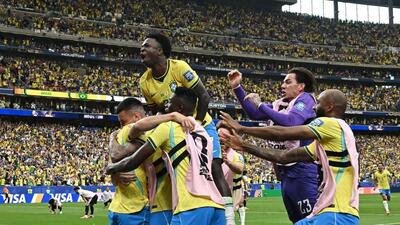
Brazil vs Japan World Cup 2026 became a major tactical battle rather than just a contest between two footballing nations. Brazil eventually secured a dramatic 2-1 comeback victory, but the biggest story was how Carlo Ancelotti changed the approach after Japan successfully neutralised Brazil’s attacking strengths.
The match showed a different side of Brazil. Instead of relying only on individual brilliance, the Selecao had to find solutions against one of the most organised defensive teams in the tournament.
Japan’s structure created serious problems in the first half, limiting Brazil’s attacking freedom and reducing the influence of key players. However, Ancelotti’s tactical adjustment after the break helped Brazil unlock the game and move into the FIFA World Cup 2026 knockout stage.
Japan’s defensive masterclass frustrated Brazil in first half
Japan entered the match with a clear strategy: reduce space, stay compact and prevent Brazil’s attackers from receiving the ball in dangerous areas.
Their defensive system made life extremely difficult for Brazil’s forwards. Japan operated with a narrow defensive shape, often creating a wall between midfield and defence.
- Brazil struggled to break through central areas.
- Vinicius Jr was closely monitored by multiple defenders.
- Japan forced Brazil to circulate possession without creating enough danger.
Brazil controlled the ball but lacked penetration. Their attacks became predictable, allowing Japan to remain comfortable for long periods.
The biggest example was Vinicius Jr. Normally one of Brazil’s most dangerous weapons, the forward found limited space because Japan constantly doubled up against him.
Japan punished Brazil’s mistakes with counter-attacking threat
While Brazil dominated possession, Japan showed they were dangerous whenever they won the ball.
The breakthrough came after Brazil lost possession during buildup. A mistake allowed Japan to launch a quick attack, and Kaishu Sano produced a powerful finish from outside the penalty area to give Japan the lead.
The goal exposed one of Brazil’s biggest concerns: their attacking approach left spaces behind when possession was lost.
| Team | First Half Approach | Impact |
|---|---|---|
| Brazil | Possession and width-based attacks | Controlled the ball but lacked penetration |
| Japan | Compact defence and quick counters | Limited chances and created danger |
Japan’s goal changed the pressure level, forcing Brazil to find a new attacking solution.
Carlo Ancelotti’s second-half tactical change changed the match
The turning point came when Carlo Ancelotti introduced Endrick after the interval.
The change helped Brazil move into a more effective 4-2-3-1 structure, giving them more direct attacking options.
Instead of patiently trying to break Japan’s defensive wall, Brazil started attacking spaces behind the defence and delivering the ball into dangerous areas much earlier.
“We changed at the interval to try to penetrate their area a little more. We crossed some balls and got forward better,” Ancelotti explained.
This adjustment forced Japan to defend different situations. Suddenly, they had to deal with:
- Faster forward movements
- More crosses into the box
- Additional runners attacking space
- Greater physical pressure near goal
Why Endrick’s introduction gave Brazil a new dimension
Endrick’s presence changed the way Brazil attacked.
The young forward provided direct running and forced Japan’s defenders to retreat deeper. This created more room for midfield players and allowed Brazil to attack with greater variety.
Instead of only trying to create perfect openings, Brazil started creating chaos inside Japan’s penalty area.
This was important because Japan’s defensive organisation was strongest when they had time to position themselves.
By increasing the speed of attacks, Brazil removed Japan’s biggest advantage.
Brazil’s equaliser came from identifying Japan’s weakness
Brazil’s first-half approach was focused on finding gaps between Japan’s defensive lines. However, those spaces rarely appeared.
After the tactical change, Brazil shifted attention towards aerial deliveries and physical battles inside the penalty area.
The equaliser arrived when Gabriel Magalhaes delivered the ball into the box and Casemiro attacked the space effectively to head the ball into the net.
The goal reflected Brazil’s tactical evolution. They stopped asking Japan to defend in the areas they wanted and forced them into uncomfortable situations.
Vinicius Jr returned to influence as Japan’s defence tired
As the match progressed, Japan’s defensive discipline started becoming harder to maintain.
Their players were spending more time inside their own defensive third, making counter-attacks increasingly difficult.
This created opportunities for Vinicius Jr to become more involved.
With more space available, his acceleration and creativity became more dangerous. A chipped effort that hit the post showed how Brazil were gradually finding better attacking positions.
Martinelli’s late winner completes Brazil comeback
The winning moment arrived in stoppage time when Brazil finally attacked Japan before their defensive shape was fully restored.
After Japan lost possession under pressure, Brazil quickly moved the ball forward. Bruno Guimaraes provided the final pass, and Gabriel Martinelli finished from close range to complete the comeback.
The goal was significant because it represented the exact problem Japan had avoided for most of the match: defending while unbalanced.
| Key Moment | Importance |
|---|---|
| Japan’s opening goal | Exposed Brazil’s defensive transition problems |
| Endrick introduction | Added direct attacking threat |
| Casemiro equaliser | Changed momentum completely |
| Martinelli winner | Rewarded Brazil’s tactical adjustment |
What Brazil learned from Japan challenge
This match could become valuable for Brazil’s World Cup journey because it tested their ability to adapt.
In previous tournaments, Brazil have often been criticised for depending too much on attacking talent. Against Japan, they showed patience and tactical flexibility.
The victory proved that winning a World Cup requires more than having star players. Teams must solve different problems throughout the tournament.
Brazil’s World Cup 2026 outlook after Japan win
Brazil are still searching for the perfect balance between creativity and control, but the win against Japan provided an important confidence boost.
Carlo Ancelotti’s experience in managing high-pressure matches could become one of Brazil’s biggest advantages as the tournament progresses.
The ability to change tactics during a match may prove crucial against stronger knockout opponents.
Conclusion: Brazil’s comeback shows signs of a mature World Cup contender
Brazil did not beat Japan simply by increasing attacking pressure. They won because they changed their approach.
Against one of the tournament’s most disciplined defensive teams, Ancelotti found a different route to goal and helped Brazil escape a difficult situation.
The five-time champions still have improvements to make, but their ability to suffer, adjust and respond could be exactly what is needed in the search for a sixth World Cup title.
For breaking news and live news updates, like us on Facebook or follow us on Twitter and Instagram. Read more on Latest Sports on thefoxdaily.com.






COMMENTS 0