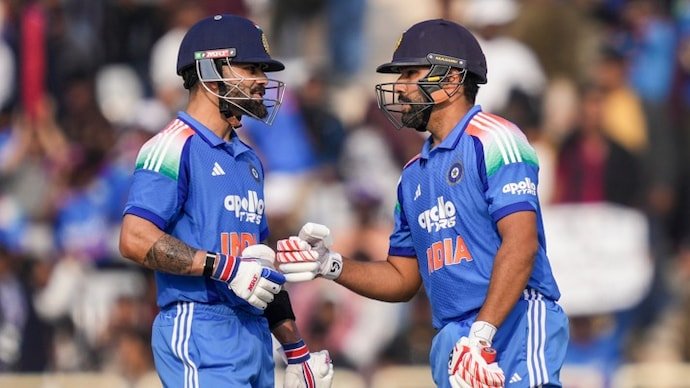
Few partnerships have defined modern cricket quite like Rohit Sharma and Virat Kohli. For more than a decade, the two batting icons have carried Indian cricket through multiple eras, ICC tournaments, overseas tours, and record-breaking campaigns.
Now, as discussions surrounding Rohit Sharma’s ODI future gain momentum, a new question has emerged: what happens if one legend leaves before the other?
That debate intensified after former Pakistan batter Basit Ali suggested that forcing Rohit Sharma toward retirement could have unintended consequences, including influencing Virat Kohli’s own career decisions.
While there is no indication that either player has announced plans to retire, the comments have reignited conversations about succession planning, the value of experienced players, and how Indian cricket should handle the eventual transition from one of its greatest generations.
With India preparing for the ODI series decider against England at Lord’s, the focus extends far beyond a single match. It has become a discussion about legacy, leadership, and the future direction of Indian cricket.
Why Rohit Sharma’s Future Has Become a Major Talking Point
Rohit Sharma’s future has become one of the most closely watched stories in Indian cricket largely because of his age and the natural evolution of the team.
At 39, Rohit remains one of the most accomplished white-ball cricketers in history. However, modern cricket is increasingly focused on long-term planning, leading to regular discussions about when senior players should make way for the next generation.
Recent performances in England have further intensified scrutiny.
Whenever an experienced player experiences a temporary dip in form, retirement conversations tend to follow, regardless of the player’s overall record or long-term contribution.
Yet judging a career solely through a handful of innings can be misleading, particularly when evaluating one of the most successful batters of the modern era.
Rohit Sharma’s Legacy Goes Beyond Recent Scores
The debate surrounding Rohit’s future often overlooks the scale of his achievements.
Over the years, he has transformed himself from a talented middle-order batter into one of the most dominant opening batters the sport has ever seen.
His contributions include:
- Multiple ICC tournament successes.
- Record-breaking ODI performances.
- Leadership across formats.
- Consistent performances in major tournaments.
- A crucial role in shaping India’s white-ball identity.
Players with such accomplishments are rarely evaluated solely on short-term form.
Instead, selectors must balance immediate results with the broader value that experience and leadership bring to the dressing room.
Why Basit Ali Linked Rohit Sharma and Virat Kohli
Basit Ali’s comments generated attention because they highlighted a reality many cricket followers recognize.
Rohit Sharma and Virat Kohli are more than teammates. They represent an era.
Throughout the past decade, both have shared responsibility for many of India’s biggest victories. Their careers have evolved in parallel, and their influence extends beyond statistics.
The suggestion that pressure on one could affect the other is rooted in the emotional and professional bonds that often develop between long-serving teammates.
When legendary players see colleagues nearing retirement, they frequently reassess their own ambitions and timelines.
That does not mean retirement is imminent. It simply means career decisions are often interconnected in ways that outsiders do not always appreciate.
The Virat Kohli Factor: Why His Future Remains a Hot Topic
Virat Kohli continues to be one of the most recognizable figures in world cricket.
Even after stepping away from Test cricket, he remains a vital component of India’s ODI plans.
His performances continue to demonstrate that he remains capable of influencing major matches.
The retirement of one format has naturally led supporters to wonder how long he intends to continue in others.
However, there is a significant difference between managing workload and preparing for retirement.
Many elite athletes choose to focus on selected formats later in their careers to extend longevity and maximize effectiveness.
Kohli’s continued importance to India suggests that any decisions regarding his future will likely be made carefully rather than reactively.
The Challenge of Replacing Modern Legends
One reason retirement discussions generate so much attention is because replacing players like Rohit and Kohli is extraordinarily difficult.
Cricket history repeatedly shows that finding successors for all-time greats takes time.
Talent can replace runs.
It cannot instantly replace experience, leadership, composure under pressure, and the ability to perform on the biggest stages.
| Attribute | Experienced Veterans | Emerging Players |
|---|---|---|
| Big Match Experience | Extensive | Developing |
| Leadership Influence | High | Growing |
| Pressure Handling | Proven | Still Being Tested |
| Consistency | Established | Evolving |
| Team Stability | Significant | Potential Future Asset |
This explains why selectors often approach transitions carefully rather than making abrupt decisions.
Should Form Alone Determine Retirement?
One of the most debated questions in sport is whether retirement decisions should be based purely on form.
There are arguments on both sides.
Supporters of early transitions believe teams must constantly prepare for the future. Others argue that proven performers deserve the opportunity to decide their own exit when they continue contributing.
History suggests the answer lies somewhere in the middle.
Successful teams typically balance renewal with continuity, ensuring experienced players remain involved while gradually integrating younger talent.
That strategy minimizes disruption and creates smoother transitions.
The Emotional Importance of a Proper Farewell
Basit Ali’s comments also touched on another important topic: player farewells.
In cricket, farewell matches carry symbolic significance.
Supporters invest years emotionally supporting their favorite players. As a result, there is often a desire to see legends receive recognition in front of home crowds.
Some of cricket’s most memorable moments have come not from victories or records but from emotional goodbyes that celebrate extraordinary careers.
The debate highlights a broader question facing every sporting nation: how should icons be honored when their careers eventually conclude?
India’s Transition Era Is Already Underway
Regardless of when Rohit and Kohli decide to retire, Indian cricket has already begun planning for the future.
Several younger players have emerged as key figures across formats.
The challenge for selectors is ensuring that transition occurs without weakening the team’s competitiveness.
Successful succession planning typically involves:
- Gradual integration of younger players.
- Maintaining experienced leadership.
- Providing opportunities without forcing change.
- Balancing present success with future preparation.
India’s management appears committed to that approach rather than pursuing immediate large-scale changes.
How Other Cricket Nations Managed Similar Situations
Cricket history offers numerous examples of teams navigating the departure of legendary players.
Australia faced challenges after the retirements of players such as Shane Warne, Glenn McGrath, and Ricky Ponting.
South Africa encountered similar situations following the exits of Jacques Kallis, AB de Villiers, and Graeme Smith.
England, Sri Lanka, and New Zealand have all experienced periods of adjustment after losing iconic figures.
In nearly every case, the transition proved more complicated than replacing statistics alone.
The emotional and leadership vacuum created by legendary players often takes years to fill.
What Makes Rohit and Kohli Unique?
The significance of the current discussion stems from the unique impact both players have had on Indian cricket.
Together, they have helped define an era characterized by:
- Consistent ICC tournament contention.
- Global commercial growth.
- Strong leadership cultures.
- Record-breaking batting achievements.
- Worldwide popularity.
Very few teams in cricket history have enjoyed two batting icons operating at elite levels simultaneously for such an extended period.
That reality makes eventual retirement discussions particularly sensitive.
The Lord’s ODI Adds Another Layer of Intrigue
The timing of these discussions is noteworthy because they coincide with a high-stakes series decider at Lord’s.
India’s immediate focus remains winning the ODI series against England.
Strong performances from senior players could quickly shift attention away from retirement speculation and back toward cricketing achievements.
At the same time, major matches often become moments of reflection for players nearing the latter stages of their careers.
This naturally fuels media interest and public debate.
A Key Insight Most Coverage Is Missing
Much of the conversation focuses on whether Rohit Sharma or Virat Kohli should retire.
The more important issue may be whether Indian cricket can maximize the remaining years of both players while simultaneously preparing for the future.
Retirement is not simply about age.
It is about performance, fitness, motivation, and the needs of the team.
The strongest cricketing systems are those capable of benefiting from experienced players while developing successors in parallel.
Rather than viewing the situation as a choice between the present and the future, India may be best served by pursuing both simultaneously.
What Happens Next?
At present, there has been no official announcement regarding Rohit Sharma’s retirement plans.
Similarly, there is no indication that Virat Kohli is preparing to leave ODI cricket.
Speculation will likely continue until clarity emerges from the players themselves.
Until then, performances on the field remain the most important factor.
For India, the immediate objective is straightforward: win the ODI series and continue building toward future international tournaments.
Conclusion
Basit Ali’s suggestion that pressure on Rohit Sharma could influence Virat Kohli’s future has sparked a fascinating debate about leadership, legacy, and succession planning in Indian cricket.
While retirement speculation is inevitable whenever legendary players approach the latter stages of their careers, the reality remains that both Rohit and Kohli continue to play significant roles for India.
Their contributions extend far beyond runs and records. They provide experience, stability, and leadership that younger generations are still developing.
Whether retirement comes in the near future or several years from now, Indian cricket faces the challenge of managing one of the most important transitions in its modern history. For now, however, the focus remains on performance, competition, and ensuring that two of the game’s greatest players continue contributing on their own terms.
For breaking news and live news updates, like us on Facebook or follow us on Twitter and Instagram. Read more on Latest Sports on thefoxdaily.com.






COMMENTS 0