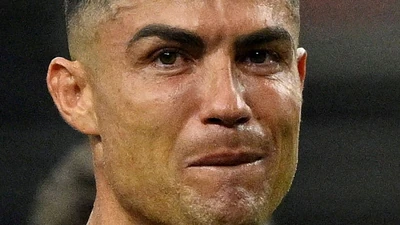
Cristiano Ronaldo has officially confirmed that his FIFA World Cup journey has come to an end. Following Portugal’s Round of 16 exit against Spain at the 2026 FIFA World Cup, the legendary forward acknowledged that he has played his final match in football’s biggest tournament. While he stopped short of announcing retirement from international football altogether, his statement marked the conclusion of one of the most extraordinary World Cup careers in modern sports history.
The announcement carries enormous significance not only for Portugal but for world football. For two decades, Ronaldo represented ambition, consistency, longevity, and relentless competitiveness. He conquered club football, shattered international records, and inspired generations. Yet despite all those achievements, the FIFA World Cup remained the one trophy that never found its way into his collection.
The story is larger than a single defeat. It is the story of a footballer who spent twenty years chasing the sport’s ultimate dream and came closer than most athletes ever do to achieving complete greatness.
The End of Cristiano Ronaldo’s World Cup Era
Every great sporting career eventually reaches a defining conclusion. For Ronaldo, that moment arrived after Portugal’s elimination from the 2026 FIFA World Cup.
At 41 years old, Ronaldo entered the tournament aware that it would likely be his final appearance on football’s biggest stage. Age may have reduced some of the explosive athleticism that once terrified defenders, but it never diminished his desire to compete.
His emotional reaction after Portugal’s defeat reflected more than disappointment over a single result. It represented the realization that a lifelong pursuit had reached its final chapter.
Few athletes have remained relevant at the highest level for as long as Ronaldo. From his first World Cup appearance in 2006 to his final one in 2026, he remained one of football’s most recognizable and influential figures.
Cristiano Ronaldo’s World Cup Journey: A Timeline of Six Tournaments
| World Cup | Age | Portugal’s Result | Key Highlight |
|---|---|---|---|
| 2006 | 21 | Fourth Place | Introduced himself as football’s next superstar |
| 2010 | 25 | Round of 16 | Became Portugal’s central attacking figure |
| 2014 | 29 | Group Stage | Injuries and team struggles limited impact |
| 2018 | 33 | Round of 16 | Historic hat-trick against Spain |
| 2022 | 37 | Quarterfinals | Emotional defeat to Morocco |
| 2026 | 41 | Round of 16 | Final World Cup appearance |
Across six World Cups, Ronaldo experienced nearly every emotion imaginable. Hope, triumph, heartbreak, redemption, and disappointment all became part of his footballing narrative.
Why the World Cup Meant So Much to Ronaldo
For many footballers, winning league titles or continental competitions is enough to secure legendary status. Ronaldo achieved those goals repeatedly.
He won league championships in multiple countries, dominated the UEFA Champions League, claimed individual awards, and became international football’s all-time leading scorer. Yet the World Cup remained uniquely important.
The FIFA World Cup occupies a special place in football because it transcends club loyalties. It is the tournament where players represent their nations, cultures, and millions of supporters.
For Ronaldo, winning a World Cup would have completed perhaps the most comprehensive football résumé ever assembled.
That dream remained alive across six tournaments, surviving injuries, managerial changes, squad transitions, and evolving football tactics.
Portugal’s Transformation During the Ronaldo Era
One of the most overlooked aspects of Ronaldo’s legacy is how dramatically Portugal changed during his international career.
Before Ronaldo emerged as a global superstar, Portugal was respected but rarely viewed as a consistent championship contender. The nation had talented players throughout its history, but major international trophies remained elusive.
That perception shifted during the Ronaldo years.
Portugal evolved into a team expected to compete for titles at every major tournament. Youth development improved, international confidence grew, and the country’s football identity strengthened.
Perhaps most importantly, Portugal achieved milestones that previous generations could only dream about.
- European Championship victory
- UEFA Nations League triumphs
- Regular appearances in major tournaments
- Global recognition as a football powerhouse
- Development of a new generation of elite talent
While football is always a team sport, Ronaldo became the face of that transformation.
The Achievement Many Fans Forget
Conversations about Ronaldo often focus on goals, records, and trophies. However, one achievement deserves greater attention.
Longevity at the highest level may ultimately be his most extraordinary accomplishment.
Football has become faster, more physical, and more demanding than ever. Maintaining elite performance for even ten years is difficult. Remaining relevant for over two decades is almost unprecedented.
Ronaldo competed against multiple generations of players.
- He faced legends from the early 2000s.
- He battled stars of the 2010s.
- He remained active against emerging talents of the 2020s.
Very few athletes in any sport can claim a similar span of excellence.
Why Portugal’s Exit Signals a Generational Shift
Portugal’s elimination is significant beyond Ronaldo’s personal story.
It symbolizes the gradual transition from one football era to another.
For nearly twenty years, international football narratives frequently revolved around a handful of iconic players. Ronaldo, Neymar, Lionel Messi, Luka Modrić, and others defined an unforgettable generation.
As these stars move toward retirement, football is entering a new phase.
Younger talents are increasingly taking center stage, bringing different styles, personalities, and expectations.
Portugal now faces a challenge familiar to many successful national teams: preserving competitiveness after the departure of a transformational figure.
How Ronaldo Changed International Football
Statistics tell only part of the story.
Ronaldo’s influence extends far beyond goals and appearances.
He helped redefine what athletes could achieve through discipline, fitness, and preparation. His commitment to physical conditioning became a model copied across professional sports.
Young footballers around the world began treating recovery, nutrition, and training with greater seriousness because of examples set by players like Ronaldo.
His influence can be seen in:
- Modern athlete fitness standards
- Professional training culture
- Sports marketing and global branding
- International football popularity
- Youth player development philosophies
Even players who never watched his early career have benefited from standards he helped establish.
The Missing Trophy Debate: Does It Affect Ronaldo’s Legacy?
One question inevitably emerges whenever Ronaldo’s career is discussed: Does failing to win a World Cup diminish his legacy?
The answer depends largely on how greatness is defined.
If greatness is measured exclusively by World Cup victories, then the missing trophy remains a notable gap.
However, modern football analysis increasingly evaluates players using broader criteria.
Ronaldo’s career includes:
- Record-breaking international goals
- Success across multiple leagues
- Major international trophies
- Longevity at elite level
- Global cultural impact
- Leadership across generations
Viewed through that lens, his place among football’s all-time greats remains secure.
The World Cup may be the missing jewel, but the crown itself remains extraordinary.
A Comparison With Other Football Legends
History shows that not every football icon wins a World Cup.
Several legendary players retired without lifting the trophy despite remarkable careers.
This reality highlights an important truth: football is ultimately a team sport. Individual brilliance can elevate a nation, but winning the World Cup requires collective excellence, favorable circumstances, tactical execution, and often a measure of luck.
Ronaldo’s inability to win the tournament does not place him outside football’s highest tier. Instead, it reinforces how difficult the competition truly is.
The Emotional Weight of an Unfinished Dream
Perhaps the most compelling aspect of Ronaldo’s final World Cup is its emotional dimension.
Fans often view elite athletes as superhuman figures immune to disappointment. Moments like these reveal the opposite.
Even after countless victories and accolades, Ronaldo still cared deeply about representing Portugal and achieving something greater than personal success.
The visible emotion after defeat reflected genuine investment in a dream that had motivated him for decades.
That vulnerability may become one of the defining images of his international career.
What Happens Next for Cristiano Ronaldo?
Although Ronaldo confirmed the end of his World Cup career, he has not announced retirement from international football.
This distinction matters.
Portugal could still benefit from his leadership, experience, and influence in future competitions. Whether he continues playing internationally or eventually steps away entirely will depend on personal reflection and discussions with the national team.
Regardless of that decision, his role within Portuguese football history is already established.
Future generations will study his achievements, learn from his professionalism, and measure themselves against standards he helped create.
A Unique Perspective: Why Ronaldo’s Story May Become More Powerful Over Time
Ironically, the absence of a World Cup title may make Ronaldo’s story even more relatable.
Most people never achieve every goal they pursue. Careers, businesses, and personal ambitions often include dreams that remain just beyond reach.
Ronaldo’s journey demonstrates that success is not defined solely by completing every objective.
It is also defined by persistence, resilience, and the willingness to continue striving despite setbacks.
That lesson may resonate long after debates about trophies and records fade.
Conclusion: The End of a World Cup Career, Not the End of a Legacy
Cristiano Ronaldo’s final FIFA World Cup ended in disappointment, but his overall journey remains one of football’s greatest stories.
Across six tournaments and two decades, he carried the hopes of a nation, inspired millions of supporters, and elevated Portugal into a global football force. While the World Cup trophy remained elusive, his influence on the sport extends far beyond a single competition.
The 2026 tournament closes an important chapter, but it does not define his career. Instead, it serves as a reminder that even the greatest athletes can leave one dream unfinished.
Ronaldo departs the World Cup without the prize he pursued for twenty years, yet with something equally rare: a legacy that will endure long after the final whistle of his last tournament.
For breaking news and live news updates, like us on Facebook or follow us on Twitter and Instagram. Read more on Latest Sports on thefoxdaily.com.






COMMENTS 0