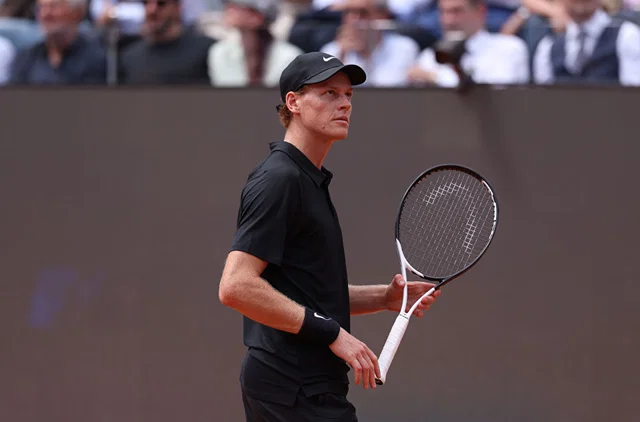
Jannik Sinner‘s doping case has returned to the spotlight after American tennis player Jessica Eudovic received a two-year suspension for testing positive for clostebol, the same prohibited substance involved in the Italian star’s case. The International Tennis Integrity Agency (ITIA) announced Eudovic’s punishment on November 19, reigniting debate among tennis fans over whether anti-doping rules are being applied consistently.
Eudovic’s suspension is scheduled to end on November 20, 2027. Although an independent tribunal accepted that her violation was unintentional, it concluded that there was insufficient evidence to establish how the substance entered her body. That decision has drawn comparisons with Sinner, whose explanation involving contamination through his physiotherapist was accepted by an independent tribunal before the World Anti-Doping Agency (WADA) appealed the original decision.
Fans quickly took to X to question the difference between the two cases. Some argued that Sinner received significantly more favourable treatment, while others described the contrast as an example of double standards in professional tennis. However, the two cases involved different evidence, and those differences played an important role in determining the sanctions.
Jessica Eudovic receives two-year suspension for clostebol violation
The ITIA announced on November 19 that Jessica Eudovic had been handed a two-year suspension following a positive test for clostebol. The case was considered by an independent tribunal after a two-day hearing in October.
During the proceedings, the tribunal accepted that Eudovic’s anti-doping violation was not intentional. It considered several factors, including the very low concentration of clostebol detected in her sample, the circumstances surrounding the case and the evidence she presented.
However, accepting that a violation was unintentional did not automatically establish how the prohibited substance entered her body. The tribunal rejected Eudovic’s explanation of the possible source of contamination, leaving the player unable to demonstrate a specific route of exposure.
Eudovic had also used the ITIA’s product-testing fund to investigate potential sources of contamination. Despite those efforts, she could not identify a product or other source that explained the positive test.
That lack of evidence proved significant. Under the applicable anti-doping rules, the tribunal could not grant an additional reduction in the suspension without sufficient proof supporting her account. Her two-year punishment was therefore imposed, with the ban due to expire on November 20, 2027.
The case has attracted attention because clostebol was also central to Sinner’s doping controversy in 2024. However, the evidence available in the two proceedings was not identical, which is a key part of understanding why their outcomes differed.
How Jannik Sinner’s clostebol case was resolved
Sinner’s case began after two samples collected in March 2024 showed trace amounts of clostebol metabolites. The findings triggered an anti-doping investigation and raised questions about how the prohibited substance had entered the Italian player’s system.
An independent tribunal examined the circumstances and cleared Sinner of fault or negligence in August 2024. The tribunal accepted his explanation that the contamination had occurred through his physiotherapist, who had used a clostebol-containing spray on a cut on his own finger before providing treatment that involved massaging Sinner.
That explanation was central to the original decision. Unlike Eudovic, Sinner was able to identify a specific product and a mechanism through which the substance could have been transferred. The tribunal accepted the account when assessing his level of responsibility for the positive tests.
However, the case did not end with the independent tribunal’s ruling. The World Anti-Doping Agency appealed the decision, challenging the outcome and bringing further scrutiny to the sanction imposed on the Italian player.
Sinner ultimately agreed to serve a three-month suspension from February to May 2025. The relatively short period became a major talking point among tennis followers, particularly after Eudovic received a two-year ban for a violation involving the same substance.
Fans question alleged double standards between the two cases
The announcement of Eudovic’s suspension quickly generated reactions on social media. Fans compared her two-year punishment with Sinner’s three-month suspension and questioned why the outcomes were so different.
Some users argued that the difference in sanctions undermined confidence in the consistency of tennis’s anti-doping system. Others focused on the fact that Sinner did not miss a Grand Slam tournament during his suspension period, expressing frustration over what they considered unequal treatment.
One fan questioned whether Sinner had become the public face of the clostebol controversy, writing:
“So Sinner is the face of clostebol now?”
Another directly compared the length of the two suspensions and demanded an explanation:
“TWO YEARS Jessica, SINNER 3 months. WHY? wake up,”
One particularly critical reaction called for a much longer punishment for Sinner and his team:
“Jannik Sinner should have been banned until 2029. His team should have been banned for life. Just my opinion,”
Other fans focused on the fact that Sinner did not miss any Grand Slam tournaments because of the suspension:
“Still angry he missed zero grand slams after testing POSITIVE,”
Another user questioned the fairness of the difference between the two outcomes:
“And this is fair how?”
Several other reactions were similarly brief but critical. One fan described the situation as:
“The differential treatment,”
Another user wrote:
“Sinner ‘cheated’ and should have been banned too,”
These comments reflect the frustration among some sections of the tennis community. However, they represent fans’ opinions rather than a legal determination that the two players’ cases should have resulted in identical punishments.
Why were the suspensions different?
Although both cases involved clostebol, the evidence presented to the independent tribunals differed significantly. That distinction provides the legal explanation for the difference between Eudovic’s two-year suspension and Sinner’s three-month ban.
In Eudovic’s case, the tribunal accepted that the violation was unintentional but did not accept her explanation of how the substance entered her body. Her investigation into possible contamination sources did not identify a specific product or mechanism that could support a further reduction under the rules.
In Sinner’s case, the tribunal accepted a specific contamination explanation involving his physiotherapist and a clostebol spray used on a cut on the physiotherapist’s finger. The tribunal consequently cleared him of fault or negligence in its August 2024 decision.
The two-year sanction imposed on Eudovic was itself a reduced punishment for a non-intentional violation. The standard suspension period is four years, but the applicable rules allow a reduction when the required conditions are met. The inability to establish the source of contamination prevented an additional reduction in her case.
The distinction is therefore not simply that one player tested positive for clostebol and another did the same. The circumstances, evidence and findings about each player’s responsibility were central to the respective decisions.
Nevertheless, the difference between the punishments has reopened a wider discussion about transparency, consistency and public confidence in tennis’s anti-doping procedures. Fans may compare the headline figures, but the legal assessment of each case depends on the evidence presented and the rules applied by the relevant authorities.
Jannik Sinner’s Australian Open 2027 participation in doubt
While the doping debate has returned to public attention, Sinner is also facing uncertainty over his physical condition. The Italian has not played since July 12, when he defeated Alexander Zverev in four sets to defend his Wimbledon title and claim the fifth Grand Slam trophy of his career.
Following his Wimbledon triumph, Sinner initially withdrew from the Canadian Open because of a knee injury. At that stage, fans expected him to recover in time for the remaining North American hard-court tournaments. However, his condition did not improve sufficiently for a return, and he subsequently withdrew from the US Open.
He eventually decided to end his 2026 season early rather than continue trying to compete while dealing with the problem. The extended absence has raised questions about his preparation for the next campaign, particularly with the Australian Open approaching in January 2027.
Sinner has reportedly been undergoing regular medical evaluations as he attempts to understand and manage the knee problem. His initial hope was to return in time for the Australian Open, but recent reports from Italian outlets have raised further concerns.
According to those reports, the pain has persisted, with a lateral meniscus problem suspected. Surgery has reportedly not been ruled out, although no definitive outcome has been established in the information provided. Whether or not an operation becomes necessary, Sinner is not rushing the recovery process.
Missing the Australian Open would be a significant setback for the Italian, who has enjoyed considerable success at Melbourne Park over the last few years. It would also leave one of the leading title contenders out of the opening Grand Slam tournament of the season.
Sinner’s Australian Open record makes possible absence significant
The Australian Open has been an important tournament in Sinner’s career. He won his first Grand Slam title at Melbourne Park in 2024 after producing a remarkable comeback against Daniil Medvedev in the final.
Medvedev won the opening two sets 6-3, 6-3, putting Sinner under considerable pressure. However, the Italian responded by taking the next three sets 6-4, 6-4, 6-3 to secure his first major championship.
Sinner successfully defended his Australian Open title in 2025, defeating Alexander Zverev in the final. His performances across the two editions established him as a leading contender at the tournament.
However, his two-year reign came to an end when Novak Djokovic defeated him in an epic five-set semifinal encounter. Djokovic’s victory prevented Sinner from reaching another final and brought his consecutive Australian Open title run to a close.
If Sinner is unable to compete in 2027, the tournament draw would open up for the other players competing for the title. His absence would remove a two-time champion and one of the established contenders from the field, potentially changing the competitive landscape of the men’s singles event.
What comes next for Sinner and the doping debate?
The latest controversy surrounding Eudovic’s suspension has once again placed Sinner’s 2024 doping case under public scrutiny. The reaction from fans demonstrates that the difference between a three-month suspension and a two-year ban remains a sensitive issue within the tennis community.
However, the two cases were assessed on their individual evidence. Eudovic’s tribunal accepted that her violation was unintentional but did not accept her explanation for the source of contamination. Sinner’s tribunal, meanwhile, accepted the account involving his physiotherapist and the spray, leading to a different assessment of his responsibility.
At the same time, Sinner’s immediate priority is his recovery from the knee problem that has kept him away from competition since July. With reports raising the possibility of a lateral meniscus issue and surgery not ruled out, his participation in the Australian Open 2027 remains uncertain.
For now, there is no confirmed decision that Sinner will miss the tournament. His medical evaluations and recovery will determine when he can return to competitive tennis. Until then, both his fitness and the continuing debate over the different clostebol sanctions are likely to remain major talking points among tennis fans.
For breaking news and live news updates, like us on Facebook or follow us on Twitter and Instagram. Read more on Latest Sports on thefoxdaily.com.






COMMENTS 0