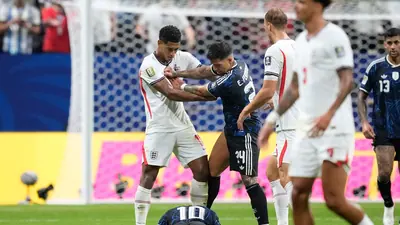
The FIFA World Cup has always produced dramatic rivalries, but few fixtures in international football carry the emotional, political, and historical weight of England versus Argentina. Their latest meeting in the FIFA World Cup 2026 semi-final delivered everything supporters expected—high-quality football, late drama, emotional confrontations, and controversy.
Argentina’s dramatic 2-1 comeback victory secured another World Cup final appearance, but the result was only one chapter in a much larger story. The contest was marked by relentless physical battles, heated exchanges between players, emotional confrontations after the final whistle, and a post-match incident that could potentially attract FIFA scrutiny.
For many observers, this was not merely a football match. It was another chapter in one of sport’s most emotionally charged rivalries, where history, national identity, and competitive intensity often collide.
England vs Argentina: Why This Rivalry Is Different
Football has countless famous rivalries, but England versus Argentina occupies a unique place in the sport’s history.
Unlike traditional rivalries built solely on sporting competition, this fixture carries political and historical dimensions that continue to influence public perception decades later.
The relationship between the two nations became particularly sensitive following the 1982 Falklands War, a conflict fought over the Falkland Islands, known in Argentina as the Islas Malvinas. Although the war lasted just 74 days, its emotional and political significance remains deeply embedded in both countries.
Whenever England and Argentina meet on the football field, memories of past encounters inevitably resurface. The result is often an atmosphere unlike any other international fixture.
The Historical Moments That Shaped the Rivalry
The rivalry’s global reputation was largely forged through a series of unforgettable World Cup encounters.
| Year | Tournament | Key Moment | Result |
|---|---|---|---|
| 1986 | World Cup Quarter-final | Maradona’s “Hand of God” and “Goal of the Century” | Argentina 2-1 England |
| 1998 | World Cup Round of 16 | David Beckham’s controversial red card | Argentina won on penalties |
| 2002 | World Cup Group Stage | Beckham’s redemption penalty | England 1-0 Argentina |
| 2026 | World Cup Semi-final | Late Argentina comeback amid multiple controversies | Argentina 2-1 England |
Each meeting has added new layers to the rivalry. The 2026 semi-final continued that tradition, but this time the controversy extended beyond footballing incidents.
Why the FIFA World Cup 2026 Semi-final Became So Physical
The statistics alone reveal how intense the contest became.
Twenty-six fouls were committed during the match, making it one of the most physical games of the tournament. Players challenged aggressively from the opening whistle, and several confrontations interrupted the flow of play.
The reason was not difficult to understand.
Both teams entered the match knowing that a place in the World Cup final was at stake. Add decades of rivalry, enormous national expectations, and the emotional significance attached to the fixture, and the result was an environment where every challenge carried extra meaning.
Neither side appeared willing to concede even the smallest psychological advantage.
As a result, routine midfield duels frequently escalated into confrontations involving multiple players.
The Early Flashpoints Set the Tone
The first ten minutes offered a preview of what was to come.
Challenges arrived hard and fast, with players from both teams attempting to impose themselves physically.
Several confrontations required intervention from the referee as emotions quickly threatened to boil over.
What made the situation particularly notable was that both managers had publicly attempted to reduce tensions before the match. Yet once the game began, the intensity of the occasion proved impossible to contain.
The semi-final quickly evolved into a battle not only of tactics and talent but also of temperament.
Jude Bellingham Becomes the Face of England’s Frustration
No player embodied England’s emotional investment more than Jude Bellingham.
The midfielder has developed a reputation as one of football’s fiercest competitors, and throughout the semi-final he was heavily involved in the game’s biggest moments.
Bellingham frequently engaged opponents after challenges, voiced his frustrations to officials, and attempted to inspire teammates through his energy and intensity.
As Argentina gradually gained momentum during the second half, that competitive edge became increasingly visible.
Following England’s heartbreaking late collapse, emotions spilled over after the final whistle. Television footage captured further exchanges involving players from both sides, highlighting just how much the result meant.
For England’s players, the defeat represented another painful missed opportunity on football’s biggest stage.
Argentina’s Psychological Edge Once Again Emerges
One of the defining characteristics of modern Argentina teams has been their ability to remain composed during moments of adversity.
Even after falling behind, Lionel Scaloni’s side never abandoned their tactical structure.
Instead, they gradually increased pressure, dominated territory, and forced England deeper into their own half.
The comeback demonstrated a psychological resilience that has become a trademark of Argentina’s recent tournament success.
While England appeared increasingly anxious as the match progressed, Argentina grew stronger.
This mental strength often separates champions from contenders.
How Lionel Messi Influenced the Match Without Dominating It
England largely succeeded in restricting Lionel Messi for long periods.
However, elite players rarely need complete control of a match to influence its outcome.
Messi’s genius lies in identifying decisive moments.
When opportunities appeared late in the game, he delivered two crucial assists that changed everything.
The first created space for Enzo Fernandez’s equaliser.
The second produced the stoppage-time winner scored by Lautaro Martinez.
Even when operating below his usual standards for much of the contest, Messi ultimately proved decisive.
That ability remains one of the defining characteristics of his legendary career.
The Political Controversy That Followed the Final Whistle
While the football itself generated headlines, the most controversial moment arguably arrived after the match.
During Argentina’s celebrations, players displayed a banner referencing the Malvinas, the Argentine name for the Falkland Islands.
The gesture immediately sparked debate because FIFA traditionally prohibits political messages during official competitions.
The incident highlighted how the historical dimensions of the England-Argentina rivalry remain relevant today.
For some supporters, the banner represented national pride. For others, it crossed the line into political messaging during a sporting event.
The controversy quickly became one of the biggest talking points following the semi-final.
Could FIFA Take Action?
FIFA has long maintained strict rules regarding political statements at tournaments.
The governing body generally seeks to ensure that football events remain focused on sport rather than political disputes.
Potential disciplinary measures can vary depending on the circumstances, including:
- Formal warnings.
- Financial penalties.
- Investigations into conduct.
- Other disciplinary actions deemed appropriate.
Any review would inevitably attract global attention given the timing, with Argentina preparing for the World Cup final.
Whether sanctions ultimately occur or not, the incident demonstrates how political symbolism can quickly become intertwined with major sporting events.
Why This Match Reflects Modern Football’s Biggest Challenge
The England-Argentina semi-final also highlighted a broader issue facing football.
Modern tournaments are increasingly global spectacles watched by billions of people. As a result, players and teams often become symbols that represent far more than sporting performance.
National identity, political narratives, historical grievances, and cultural pride frequently intersect with football.
Governing bodies must constantly balance freedom of expression with efforts to keep competitions politically neutral.
The events surrounding this semi-final illustrate just how difficult that balance can be.
How Argentina Managed to Win Despite the Chaos
Lost amid the controversy was a simple reality: Argentina produced a remarkable football comeback.
After falling behind, they:
- Increased pressing intensity.
- Controlled possession.
- Forced England into defensive mistakes.
- Created sustained pressure.
- Maintained belief until the final whistle.
Championship teams often display an ability to remain focused regardless of external distractions.
Argentina did exactly that.
While emotions raged around them, their tactical discipline never disappeared.
That quality may ultimately prove crucial in the final.
What This Means for England Moving Forward
For England, the defeat raises familiar questions.
The team possesses world-class talent and regularly reaches the latter stages of major tournaments. Yet converting those opportunities into trophies remains a challenge.
The semi-final showed both England’s strengths and weaknesses.
They successfully frustrated Argentina for long periods and executed their initial game plan effectively.
However, once momentum shifted, they struggled to regain control.
Learning how to manage those critical moments could determine whether future tournaments end differently.
The Bigger Legacy of the 2026 Semi-final
Years from now, football fans will likely remember this match for more than the scoreline.
They will remember:
- Argentina’s dramatic comeback.
- Lionel Messi’s decisive influence.
- The physical confrontations.
- The emotional scenes after the final whistle.
- The political controversy that followed.
In many ways, the match captured everything that makes international football unique.
It was not always pretty.
It was not always comfortable.
But it was undeniably compelling.
Conclusion: A Football Match That Became Something Bigger
Argentina’s 2-1 victory over England secured a place in the FIFA World Cup 2026 final, but the result tells only part of the story.
The semi-final became a powerful reminder that some football rivalries extend far beyond the pitch. Historical memories, national pride, political symbolism, and sporting ambition combined to create one of the tournament’s most intense spectacles.
With 26 fouls, multiple confrontations, emotional exchanges, and post-match controversy, the game added another unforgettable chapter to one of football’s most famous rivalries.
For Argentina, the focus now shifts to the World Cup final and the opportunity to defend their crown. For England, the search for answers continues.
For football fans, however, the 2026 semi-final will stand as a vivid example of how sport can simultaneously entertain, inspire, divide, and provoke debate—often all within the space of 90 minutes.
For breaking news and live news updates, like us on Facebook or follow us on Twitter and Instagram. Read more on Latest Sports on thefoxdaily.com.






COMMENTS 0