For more than an hour, England appeared to be executing a near-perfect plan. Thomas Tuchel’s side had limited Lionel Messi’s influence, controlled key phases of possession, and taken a deserved lead through Anthony Gordon. With a place in the FIFA World Cup 2026 final within touching distance, England looked comfortable.
Then everything changed.
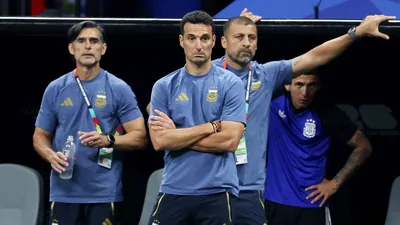
Argentina’s 2-1 comeback victory was not simply the result of individual quality. While Messi once again delivered decisive moments with two assists, the foundation of the turnaround was built by head coach Lionel Scaloni. Through intelligent tactical tweaks, relentless pressing, superior game management, and an understanding of momentum, Scaloni gradually shifted the balance of power until England could no longer resist.
The match offered a fascinating lesson in modern football tactics and demonstrated why Argentina remain one of the most difficult teams in world football to defeat.
Why the Lionel Scaloni Tactical Masterclass Matters
Football history often remembers goalscorers, match-winning moments, and superstar performances. Coaches rarely receive the same level of attention unless their decisions dramatically alter a contest.
Against England, Scaloni produced exactly that type of performance.
Argentina did not dominate from the opening whistle. They faced a disciplined opponent with a clear defensive structure and struggled to create meaningful opportunities during long stretches of the game.
Many managers would have responded with emotional changes or aggressive substitutions. Scaloni instead chose calculated adjustments that targeted England’s weaknesses while preserving Argentina’s tactical identity.
The result was a comeback that highlighted coaching intelligence as much as player quality.
How England Initially Won the Tactical Battle
To understand Argentina’s comeback, it is important to first examine why England looked so strong early in the match.
Thomas Tuchel’s strategy revolved around three key objectives:
- Limit Messi’s central influence.
- Maintain defensive compactness.
- Attack quickly through transitions.
For much of the match, England executed these objectives effectively.
Whenever Messi drifted into central areas, England closed passing lanes and reduced the space available between the lines. Their midfield worked tirelessly to prevent Argentina from creating overloads, while the defensive unit remained organized.
England’s opening goal reflected the effectiveness of their approach. They transitioned quickly, exploited space, and punished Argentina with a direct attacking move.
At that stage, the momentum belonged entirely to England.
The Turning Point: Argentina Increased the Pressing Intensity
The most important tactical adjustment came immediately after England took the lead.
Rather than retreating or becoming desperate, Argentina increased the intensity of their pressing game.
Modern football increasingly revolves around controlling space rather than simply controlling possession. Scaloni understood that England were becoming uncomfortable when forced to play under pressure.
Argentina began pressing higher up the pitch and committed more players to winning second balls.
The objective was simple:
- Prevent England from building attacks.
- Force rushed clearances.
- Keep the ball in England’s half.
- Create sustained attacking pressure.
Once Argentina established territorial dominance, England found it increasingly difficult to escape.
Every clearance returned quickly. Every defensive action invited another wave of pressure.
This relentless cycle gradually shifted the emotional and tactical momentum toward Argentina.
Why High Pressing Is So Effective in Modern Football
Argentina’s comeback also highlighted a broader trend in elite football.
The world’s best teams increasingly use coordinated pressing systems to regain possession immediately after losing it. The goal is not merely defensive recovery. It is to attack while the opponent is disorganized.
When a team successfully presses:
- The opposition spends more energy defending.
- Midfield control increases.
- Dangerous turnovers occur closer to goal.
- Attacking players receive more opportunities.
Argentina executed these principles brilliantly.
Instead of allowing England to settle into a defensive rhythm, they transformed every possession into a battle.
Messi’s Role Was Different—but Equally Dangerous
One of the most fascinating aspects of the match was Messi’s positioning.
England largely succeeded in limiting his traditional influence between the lines. However, Scaloni adjusted by allowing Messi greater freedom in wider areas.
This created several advantages.
First, Messi avoided England’s central defensive congestion.
Second, he gained more time on the ball.
Third, wider positioning opened passing angles that England struggled to anticipate.
At 39 years old, Messi no longer relies primarily on pace. His greatest weapon is decision-making.
Give him an extra second to think, and he can still decide matches.
That is exactly what happened.
Rather than forcing risky dribbles, Messi acted as Argentina’s chief creator. His vision and awareness became increasingly influential as England sank deeper.
England’s Biggest Mistake: Defending Too Deep
One of the most debated aspects of the semi-final was England’s response after taking the lead.
Leading in a World Cup knockout match naturally encourages caution. However, there is a critical difference between protecting a lead and surrendering initiative.
England gradually retreated toward their own penalty area.
This created several problems:
- Midfield control disappeared.
- Passing options became limited.
- Counterattacks became less frequent.
- Argentina gained confidence.
The deeper England defended, the more difficult it became to regain possession and relieve pressure.
Eventually, Argentina’s attacks became constant.
Even the best defensive teams struggle when forced to defend continuously for extended periods.
The Equalizer Explained: More Than Individual Brilliance
Enzo Fernandez’s stunning strike will feature in highlight reels for years.
However, the goal represented more than a spectacular finish.
It showcased Argentina’s tactical patience.
England expected another delivery into the box. Their defensive shape was designed to defend crosses and aerial threats.
Instead, Messi recognized the space outside the penalty area and found Fernandez in a dangerous shooting position.
The move demonstrated several qualities:
- Intelligent positioning.
- Awareness of defensive weaknesses.
- Patience under pressure.
- Excellent decision-making.
The goal was not accidental. It was the product of sustained pressure and intelligent attacking structure.
Lautaro Martinez Changed the Dynamic
Another key decision from Scaloni involved personnel.
The introduction of Lautaro Martinez gave Argentina a different attacking profile.
Until that point, many Argentine attacks relied on movement, technical combinations, and positional rotations.
Martinez added something England had not faced consistently throughout the match:
- A genuine aerial threat.
- A penalty-box specialist.
- A physical focal point.
- A target for crosses and cutbacks.
This subtle shift forced England’s defenders to make different decisions.
Instead of simply tracking movement, they now had to monitor a traditional striker capable of attacking crosses.
That adjustment ultimately proved decisive when Martinez scored the winning goal.
What Makes Argentina Different From Other Elite Teams?
Many talented teams possess world-class players.
What separates Argentina is their ability to combine tactical discipline with emotional resilience.
| Key Strength | Argentina’s Advantage |
|---|---|
| Tactical Flexibility | Can adapt during matches without losing structure |
| Pressing System | Regains possession quickly after turnovers |
| Leadership | Strong guidance from Messi and senior players |
| Mentality | Remain calm under pressure and adversity |
| Squad Depth | Impact substitutes can change games |
| Game Management | Understand momentum shifts better than most opponents |
These qualities explain why Argentina continue to thrive in major tournaments.
The Psychological Side of Argentina’s Comeback
Tactics alone do not explain what happened.
Elite football is also heavily influenced by psychology.
Once Argentina began dominating territory and possession, belief started to grow.
Conversely, anxiety appeared to affect England.
Players began clearing the ball rather than retaining possession. Defensive actions became reactive rather than proactive.
The crowd sensed the momentum shift. Argentina sensed it too.
Championship-winning teams often recognize these moments before their opponents do.
Argentina’s experience in major tournaments became a significant advantage.
Scaloni’s Growing Legacy in World Football
Lionel Scaloni’s achievements are becoming impossible to ignore.
When he first took charge of Argentina, expectations were relatively modest. Few predicted he would guide the nation into one of its most successful modern eras.
Since then, he has transformed Argentina into a team capable of winning matches in multiple ways.
His greatest strength may be his pragmatism.
Unlike coaches who rigidly follow a single philosophy, Scaloni adapts according to circumstances while maintaining clear tactical principles.
The England comeback served as another example of his ability to read matches and make decisive interventions.
What This Means for the World Cup Final
Argentina’s victory sends an important message to their final opponents.
The defending champions are no longer solely dependent on moments of Messi magic.
They possess:
- A sophisticated pressing structure.
- Multiple attacking threats.
- Tactical flexibility.
- Championship experience.
Perhaps most importantly, they have repeatedly demonstrated an ability to survive difficult moments.
Teams that consistently come from behind often develop a belief that no situation is beyond recovery.
That mentality can be as valuable as any tactical system.
Conclusion: Argentina Won the Tactical War Before They Won the Match
Lionel Messi will rightly receive much of the attention after Argentina’s dramatic 2-1 victory over England. His two assists once again proved why he remains one of football’s greatest game-changers.
Yet focusing solely on Messi risks overlooking the deeper story.
The comeback was built on Lionel Scaloni’s tactical intelligence, Argentina’s relentless pressing, intelligent substitutions, and their ability to recognize momentum shifts before England could respond.
For 55 minutes, England looked destined for the FIFA World Cup 2026 final. For the final stages, Argentina demonstrated why they remain one of international football’s most complete teams.
Scaloni did not need a tactical revolution. He needed a few smart adjustments, perfect timing, and a squad capable of executing his vision.
By the time Lautaro Martinez scored the winner, the tactical battle had already been decided. Argentina had gradually tightened their grip on the game, and England simply could not escape it.
That is the true story behind Argentina’s latest World Cup comeback—and perhaps the clearest example yet of Lionel Scaloni’s coaching brilliance.
For breaking news and live news updates, like us on Facebook or follow us on Twitter and Instagram. Read more on Latest Sports on thefoxdaily.com.






COMMENTS 0