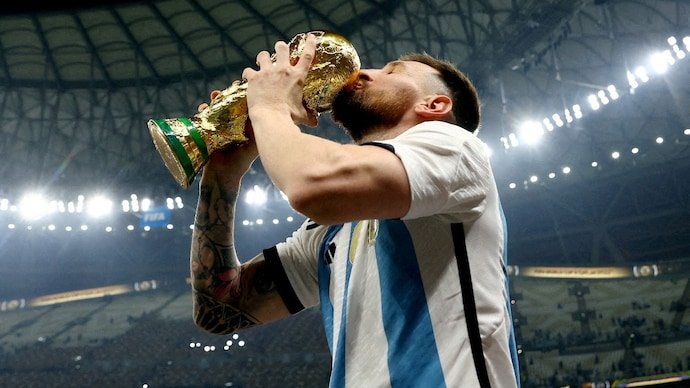
The wait is over for Argentina fans.
World champions Argentina have officially confirmed their final squad for the FIFA World Cup 2026, and all eyes are once again on Lionel Messi, WHO is now set to make an unprecedented sixth World Cup appearance at the age of 38.
For football supporters across the globe, the announcement carries enormous emotional and sporting significance. Four years after lifting the trophy in Qatar and completing the one major achievement missing from his legendary career, Messi now returns with the opportunity to accomplish something even rarer: defend the World Cup title.
No nation has successfully defended the FIFA World Cup since Brazil in 1962.
Argentina now believe they possess the perfect blend of experience, chemistry, tactical maturity, and youthful energy to attempt exactly that.
Head coach Lionel Scaloni has largely trusted the core group that delivered glory in Qatar, signalling stability rather than revolution. At the same time, several emerging talents have been integrated into the squad to prepare Argentina for a future beyond Messi.
The message from Scaloni is clear: this is both a title defence and the beginning of Argentina’s next footballing era.
Lionel Messi’s Sixth World Cup: A Record That May Never Be Broken
Messi’s inclusion immediately places him into football history once again.
The Argentine captain will now become one of the very few players ever to appear in six FIFA World Cups, extending a remarkable international journey that began in Germany in 2006.
| World Cup | Host Nation | Messi’s Performance |
|---|---|---|
| 2006 | Germany | Young breakthrough talent |
| 2010 | South Africa | Quarter-final exit |
| 2014 | Brazil | Runner-up |
| 2018 | Russia | Round of 16 exit |
| 2022 | Qatar | World Cup winner |
| 2026 | USA/Canada/Mexico | Defending champion |
What makes the achievement extraordinary is not simply longevity, but relevance.
Most footballers struggle to remain elite into their mid-thirties. Messi, however, continues to shape games at the highest level through intelligence, positioning, passing, and control of tempo.
Even as physical intensity declines naturally with age, Messi’s influence over matches remains enormous.
Argentina’s system itself has evolved to maximise that influence.
Why Argentina Still Revolves Around Messi
Unlike earlier stages of his international career, Messi no longer carries Argentina alone.
That may actually make this version of Argentina more dangerous.
During the 2014 World Cup, Argentina often depended heavily on moments of individual brilliance from Messi. By contrast, Scaloni has built a far more balanced and collective side.
The modern Argentina team presses aggressively, defends compactly, and transitions quickly through midfield.
Messi now operates less as a player expected to sprint constantly and more as:
- A creative controller
- A tactical organiser
- A decisive final-third playmaker
- An emotional leader
This evolution has extended his effectiveness dramatically.
Argentina’s younger players also appear psychologically liberated by having already won the World Cup with him rather than chasing the burden of expectation that haunted previous generations.
Scaloni’s Biggest Strength: Continuity
One of Argentina’s greatest advantages entering the 2026 tournament is continuity.
Seventeen players from the 2022 World Cup-winning squad are returning.
That level of squad stability is rare in international football, where coaching changes and generational turnover often disrupt momentum.
Key returning figures include:
- Emiliano Martinez
- Cristian Romero
- Nicolas Otamendi
- Rodrigo De Paul
- Alexis Mac Allister
- Enzo Fernandez
- Julian Alvarez
- Lautaro Martinez
These players already understand Scaloni’s tactical system, tournament pressures, and dressing-room dynamics.
That chemistry could prove invaluable during difficult knockout-stage matches.
Emiliano Martinez Remains Argentina’s Emotional Warrior
Few players symbolise modern Argentina more emotionally than goalkeeper Emiliano Martinez.
His performances in Qatar transformed him into a national icon.
Martinez combines elite reflexes with psychological intimidation, particularly during penalty shootouts.
His confidence often spreads across the entire defensive unit.
For Argentina, having an experienced goalkeeper with proven World Cup nerve remains one of the squad’s biggest advantages.
The Midfield Engine Could Decide Argentina’s Fate
Argentina’s midfield may once again become the foundation of their campaign.
The trio of Rodrigo De Paul, Alexis Mac Allister, and Enzo Fernandez provides balance between:
- Defensive work rate
- Creativity
- Press resistance
- Ball progression
- Tactical discipline
De Paul, in particular, remains central to Messi’s effectiveness.
His relentless pressing and covering work allow Messi to conserve energy for decisive attacking moments.
Meanwhile, Mac Allister’s composure and Enzo Fernandez’s distribution give Argentina technical control in midfield battles.
In modern tournament football, midfield balance often determines champions more than attacking flair alone.
Argentina’s Attack Looks More Dangerous Than in Qatar
One major difference from the 2022 squad is the growth of Argentina’s attacking depth.
Julian Alvarez has matured significantly since Qatar, while Lautaro Martinez arrives with greater confidence and consistency.
Young attacking talents like Thiago Almada and Nicolas Paz add unpredictability and energy.
This gives Scaloni far more tactical flexibility than many rival nations possess.
Argentina can now:
- Play possession football
- Counterattack rapidly
- Use pressing systems
- Switch attacking structures mid-game
That adaptability could become crucial during knockout matches against elite European opposition.
The Emotional Absence of Angel Di Maria
One of the biggest emotional changes in the squad is the absence of Angel Di Maria.
After retiring from international football following the 2024 Copa America, Di Maria leaves behind one of the most important tournament legacies in Argentine history.
His goals in major finals became legendary:
- Copa America 2021
- Finalissima 2022
- World Cup Final 2022
Replacing his experience and clutch performances will not be easy.
However, his departure also accelerates Argentina’s generational transition.
The Giovani Lo Celso Redemption Story
One of the squad’s most emotional inclusions is Giovani Lo Celso.
In 2022, injury heartbreakingly ruled him out just before the World Cup despite being one of Scaloni’s key tactical players.
Many within Argentina’s camp believed his absence significantly altered their midfield structure during the early stages of that tournament.
Now, Lo Celso finally gets another opportunity on football’s biggest stage.
His technical quality and creativity could provide Argentina with an additional layer of midfield control.
The Next Generation Has Officially Arrived
While Messi understandably dominates attention, this tournament may quietly introduce the future stars of Argentine football.
Young players such as:
- Valentin Barco
- Giuliano Simeone
- Nicolas Paz
- Thiago Almada
represent the next phase of Argentina’s football evolution.
Scaloni appears determined to avoid the mistakes many champion nations make after winning major tournaments waiting too long to refresh the squad.
By integrating young talent gradually alongside experienced leaders, Argentina hopes to remain competitive well beyond the Messi era.
Can Argentina Actually Defend the World Cup?
Historically, defending the FIFA World Cup is extraordinarily difficult.
Recent champions have struggled badly:
| Defending Champion | Following Tournament Result |
|---|---|
| Italy (2006) | Group stage exit in 2010 |
| Spain (2010) | Group stage exit in 2014 |
| Germany (2014) | Group stage exit in 2018 |
| France (2018) | Runner-up in 2022 |
Tournament football punishes complacency, fatigue, and tactical stagnation.
However, Argentina may possess advantages previous defending champions lacked:
- Stable leadership
- Strong dressing-room unity
- Balanced age profile
- Elite goalkeeper
- Flexible tactics
- Winning experience
Most importantly, Argentina no longer carry the psychological burden of chasing a first title.
That freedom can make teams even more dangerous.
Why the 2026 World Cup Could Be Messi’s Perfect Farewell
Even though Messi has not officially confirmed retirement plans, this tournament is widely expected to become his final World Cup appearance.
If so, it creates one of football’s most compelling storylines.
Very few sporting legends receive ideal endings.
Messi already completed football’s greatest redemption arc by winning the 2022 World Cup after years of international heartbreak.
Now he has the opportunity to attempt something almost mythological in modern football: leading Argentina to back-to-back titles nearly two decades after his World Cup debut.
Whether Argentina ultimately triumph or not, the tournament will likely become one of the defining closing chapters of Messi’s extraordinary career.
Conclusion
Argentina’s official FIFA World Cup 2026 squad announcement confirms far more than just player selections.
It signals the beginning of one of the most fascinating title defences in modern football history.
With Lionel Messi returning for a record sixth World Cup, a battle-tested core still intact, and a new generation beginning to emerge, Argentina enter the tournament carrying both expectation and momentum.
Scaloni’s side combines tactical discipline, emotional resilience, technical quality, and rare dressing-room unity qualities that often matter more than raw talent alone during major tournaments.
The road ahead will not be easy.
History rarely allows champions to stay on top for long.
But Argentina arrive at the 2026 World Cup with something every dangerous team possesses: belief built on experience rather than hope.
And as long as Lionel Messi is still walking onto a football pitch in an Argentina shirt, the possibility of history always feels very real.
For breaking news and live news updates, like us on Facebook or follow us on Twitter and Instagram. Read more on Latest Sports on thefoxdaily.com.






COMMENTS 0