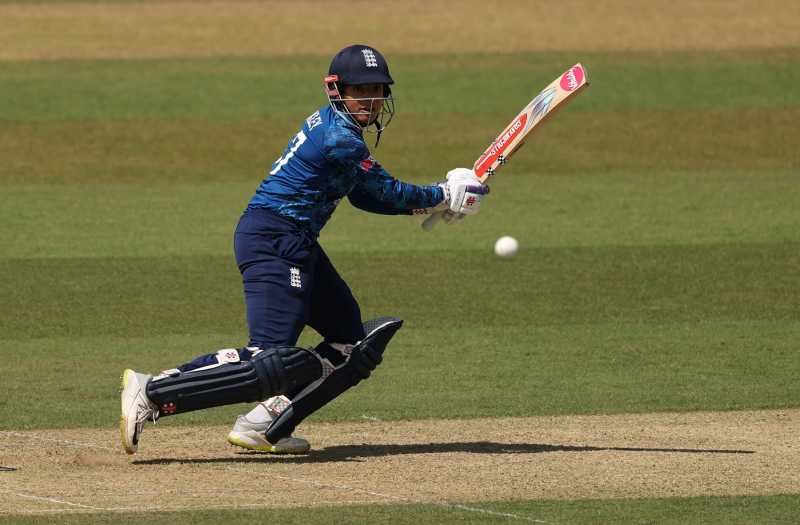
The Women’s T20 World Cup 2026 encounter between England and Scotland at Headingley began with immediate drama even before the first ball was bowled. Scotland won the toss and elected to bowl first, but the bigger talking point was England’s reshuffled lineup following a key injury blow to captain Nat Sciver-Brunt.
In her absence, England handed leadership responsibilities to Charlie Dean, while also introducing Sophia Dunkley into the playing XI at No. 3. The changes signal both a short-term tactical adjustment and a deeper test of England’s squad depth during a tightly contested ICC tournament.
For Scotland, meanwhile, two changes were made as they continue to manage fitness concerns within their squad. The match, played under bright and ideal conditions, sets up a fascinating contest between a reshuffled England side and an evolving Scotland team looking to make an impact on the global stage.
Why Nat Sciver-Brunt’s Injury Is a Major Setback for England
Nat Sciver-Brunt’s absence is a significant moment in England’s campaign. One of the most influential all-rounders in women’s cricket, she brings stability, power hitting, and tactical intelligence to the side.
Her calf injury, aggravated during England’s win against Ireland, forced the team management to make immediate changes. While England have depth in their squad, replacing a player of her caliber is never straightforward.
Sciver-Brunt’s value extends beyond runs and wickets:
- She provides balance as a top-order batter and seam-bowling option
- She stabilizes innings during middle-order collapses
- She is a natural leader on the field even without captaincy duties
- She has proven match-winning ability in ICC tournaments
Her absence forces England to redistribute responsibility across multiple players rather than relying on a single all-round influence.
Charlie Dean Steps Into Leadership Role
With Sciver-Brunt ruled out, Charlie Dean has taken over captaincy duties. This is not unfamiliar territory for Dean, who has previously led England in series against New Zealand and India during Sciver-Brunt’s earlier injury layoff.
Dean’s leadership style is built on discipline and structure. As a bowler who thrives on consistency and control, she represents a tactical, process-driven approach to captaincy rather than an instinct-heavy style.
Her immediate challenge is to manage a side undergoing forced structural changes while maintaining competitive intensity in a high-stakes World Cup fixture.
Sophia Dunkley’s Return: A Key Tactical Decision
One of the most notable selections in England’s XI is the inclusion of Sophia Dunkley at No. 3. This marks her first appearance in the tournament, and it comes at a crucial time for the team.
Dunkley’s role is not simply about replacing a player—it is about reshaping the batting order dynamics.
She offers England:
- Right-handed stability in the top order
- Ability to rotate strike under pressure
- Experience in rebuilding innings
- Flexibility to accelerate in middle overs
Her presence at No. 3 suggests England are prioritizing structure and adaptability over a purely aggressive top order.
England’s Full XI and Tactical Balance
England have opted for a balanced lineup combining power hitters, all-rounders, and elite bowlers capable of controlling all phases of the game.
The playing XI reflects a clear strategy: maintain batting depth while ensuring bowling variety across pace and spin departments.
Key components of England’s setup include:
- Top-order firepower through Amy Jones and Danni Wyatt-Hodge
- Middle-order stability with Heather Knight and Alice Capsey
- All-round flexibility from Freya Kemp and Dani Gibson
- Spin control led by Sophie Ecclestone and Charlie Dean
- Pace attack spearheaded by Lauren Bell
This combination allows England to remain competitive even after losing a central figure like Sciver-Brunt.
Scotland’s Tactical Adjustments Ahead of the Clash
Scotland also made two changes to their side, reflecting ongoing squad management as they navigate the tournament.
Pippa Sproul replaced Ailsa Lister, while Rachel Slater was replaced by Hannah Rainey in the bowling unit.
These adjustments indicate Scotland’s intent to maintain balance while managing workload and fitness concerns.
Captain Kathryn Bryce leads a side that has shown resilience in earlier matches, including a close contest against West Indies, where lower-order contributions played a key role.
Why Scotland Chose to Bowl First at Headingley
Winning the toss and electing to bowl first suggests Scotland are banking on early movement and disciplined bowling conditions at Headingley.
In women’s T20 cricket, chasing can often be advantageous under clear conditions due to better visibility and clearer batting plans.
Scotland’s decision likely reflects:
- Confidence in restricting England early
- Use of fresh pitch conditions for seam movement
- A structured chase plan under daylight conditions
- Attempt to exploit early pressure on a reshuffled England top order
Match Context: Why This Game Matters
Beyond team changes and tactical adjustments, this match carries broader significance in the Women’s T20 World Cup 2026 group stage.
For England, it is about maintaining momentum despite injury setbacks and proving squad depth under pressure.
For Scotland, it is an opportunity to challenge a top-tier side and strengthen their standing in international women’s cricket.
Matches like these often define tournament narratives, especially when key players are missing and unexpected opportunities arise for emerging talent.
Key Player Battles to Watch
This fixture is likely to be shaped by several crucial matchups:
- Sophie Ecclestone vs Scotland’s middle order spin resistance
- Lauren Bell’s pace against Scotland’s top-order stability
- Charlie Dean’s control in middle overs
- Scotland’s seamers testing England’s reshuffled top order
These duels will likely determine whether England’s depth can overcome the absence of Sciver-Brunt or whether Scotland can capitalize on the disruption.
Impact of Squad Depth in Modern Women’s Cricket
This match highlights a growing trend in international women’s cricket: the increasing importance of squad depth.
In earlier eras, losing a key player often meant a dramatic drop in team performance. Today, top teams like England are built with multiple layers of replacements capable of stepping into critical roles.
However, even with depth, leadership voids and all-rounder absences remain difficult to fully compensate for in high-pressure tournaments.
Conclusion: A Test of Adaptability for Both Teams
The England vs Scotland clash at Headingley is more than just another group-stage match. It is a test of adaptability, resilience, and tactical intelligence.
England enter the game with a reshaped lineup, a new captain for the day, and the challenge of replacing one of their most influential players in Nat Sciver-Brunt. Scotland, meanwhile, are looking to exploit that disruption while managing their own squad changes.
Sophia Dunkley’s inclusion adds intrigue, Charlie Dean’s leadership brings stability, and Scotland’s decision to bowl first sets the stage for a competitive contest.
In a tournament defined by fine margins, this match could prove to be a key indicator of how well teams handle adversity when plans are forced to change at the last moment.
For breaking news and live news updates, like us on Facebook or follow us on Twitter and Instagram. Read more on Latest Sports on thefoxdaily.com.






COMMENTS 0