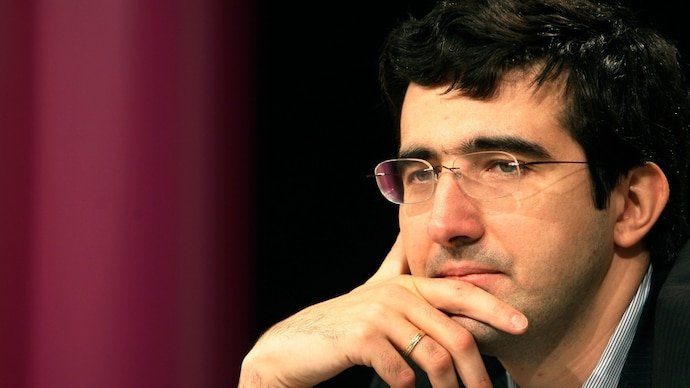
The Vladimir Kramnik FIDE suspension has become one of the most significant controversies in modern Chess, raising fundamental questions about how the sport balances the fight against cheating with the protection of players’ reputations.
FIDE, the international governing body of chess, has imposed a suspension of at least one year on former world champion Vladimir Kramnik after determining that he repeatedly made public allegations of cheating against fellow players without providing adequate evidence through official disciplinary channels.
The ruling represents a watershed moment for professional chess. It is rare for a player of Kramnik’s stature—a world champion and one of the most respected figures in chess history—to face such serious disciplinary action from the sport’s governing authority.
While Kramnik has strongly rejected the decision and pledged to appeal, the case has already sparked widespread discussion about fairness, evidence, player rights, and the growing challenges posed by online chess in the digital era.
Why the Vladimir Kramnik Suspension Matters Beyond One Individual
This case is about far more than a dispute between a former champion and FIDE.
It highlights a challenge that has increasingly defined modern chess: how to address cheating concerns without unfairly damaging the reputation of innocent players.
Advances in technology have made cheating detection more complex than ever. Powerful chess engines can now outperform even the strongest grandmasters, creating legitimate concerns about competitive integrity.
At the same time, public accusations can spread rapidly through social media, livestreams, forums, and online communities, potentially causing lasting reputational damage even when allegations are never proven.
FIDE’s decision signals that while anti-cheating efforts remain a top priority, accusations must be supported by evidence and handled through established procedures.
Who Is Vladimir Kramnik?
To understand the significance of the ruling, it is important to recognize Kramnik’s place in chess history.
The Russian grandmaster is widely considered one of the greatest players of all time. He became World Chess Champion in 2000 and played a major role in shaping modern elite chess.
Throughout his career, Kramnik earned a reputation for deep strategic understanding, exceptional preparation, and contributions to chess theory.
His victory against Garry Kasparov at the start of the century remains one of the most important moments in modern chess history.
Because of that legacy, disciplinary action against Kramnik carries unusual significance and has attracted attention far beyond traditional chess audiences.
What Led to the Suspension?
The controversy developed over a period of time as Kramnik publicly questioned the legitimacy of performances by several players.
According to FIDE’s ruling, the issue was not the act of raising concerns about cheating itself.
Instead, the federation concluded that repeated public allegations were made without sufficient supporting evidence and outside official investigative frameworks.
FIDE argued that such conduct exposed players to reputational harm and undermined the integrity of established disciplinary processes.
The organization emphasized that concerns about potential cheating should be submitted through formal channels where evidence can be reviewed objectively.
FIDE’s Growing Challenge in the Digital Chess Era
The rise of online chess has transformed the sport.
Millions of players now compete digitally every day, creating unprecedented opportunities for growth while also introducing new risks.
Unlike traditional over-the-board competitions, online games present additional monitoring challenges.
As a result, anti-cheating systems have become increasingly sophisticated.
Modern investigations may involve:
- Statistical analysis of moves.
- Engine correlation studies.
- Behavioral assessments.
- Time-management analysis.
- Expert review panels.
- Platform security monitoring.
These systems are designed to ensure that accusations are evaluated using objective evidence rather than speculation or public opinion.
The Central Question: How Should Chess Handle Cheating Allegations?
The Kramnik case has reignited one of chess’s most difficult debates.
On one side are those who argue that elite players have a responsibility to speak out when they believe something is suspicious.
On the other side are those who believe public accusations without conclusive evidence can unfairly damage careers and mental well-being.
The challenge for governing bodies is finding a balance between these competing concerns.
Too little scrutiny may allow cheating to flourish. Too many unsupported accusations may create an environment of distrust.
FIDE’s ruling appears designed to reinforce the principle that suspicion alone is not enough to justify public allegations.
The Daniel Naroditsky Dimension
One of the most discussed aspects of the controversy involves grandmaster Daniel Naroditsky, who was among the players publicly accused by Kramnik.
Naroditsky was widely respected within the chess community for his educational content, commentary, and contributions to online chess.
He consistently denied the allegations made against him.
The controversy generated significant discussion within the chess world and contributed to broader conversations about the psychological impact of public accusations.
Following Naroditsky’s death, debates intensified regarding the responsibilities that public figures carry when making allegations against fellow competitors.
Kramnik has strongly rejected any suggestion that his comments were connected to Naroditsky’s death and has described such claims as unfounded.
How FIDE Is Strengthening Anti-Cheating Policies
The suspension comes during a period when chess authorities are investing heavily in anti-cheating initiatives.
Protecting competitive integrity remains one of the federation’s highest priorities.
However, FIDE has increasingly emphasized that anti-cheating enforcement must operate within a structured framework.
| FIDE Objective | Purpose |
|---|---|
| Detect Cheating | Protect competitive fairness |
| Evidence-Based Investigations | Ensure objective decisions |
| Player Protection | Prevent reputational harm |
| Disciplinary Procedures | Maintain due process |
| Community Trust | Strengthen confidence in the sport |
The Kramnik ruling reflects an effort to reinforce all of these objectives simultaneously.
What This Means for Professional Players
The decision sends a clear message to players at every level of competitive chess.
Raising concerns about suspicious behavior remains permissible and, in some situations, necessary.
However, accusations are expected to follow established investigative channels.
Professional players now face greater incentives to report concerns privately rather than publicly.
This approach aims to ensure allegations receive proper scrutiny while minimizing unnecessary harm to individuals who have not been found guilty of wrongdoing.
Could This Become a Defining Moment for Chess Governance?
There is a strong possibility that the Kramnik case will be remembered as a turning point in how chess regulates public conduct.
Historically, disciplinary discussions focused primarily on actions taken during competition.
Increasingly, governing bodies must also address behavior occurring across social media, streaming platforms, podcasts, and other public forums.
The digital age has expanded the influence of elite players far beyond tournament halls.
As a result, organizations face growing pressure to establish clearer standards regarding public accusations and professional conduct.
Kramnik’s Appeal Could Shape the Next Chapter
The story is far from over.
Kramnik has made it clear that he intends to challenge the ruling through every available avenue.
The appeal process may provide additional insight into how governing bodies interpret issues involving evidence, free expression, professional responsibility, and player protection.
Regardless of the final outcome, the case is likely to influence future disciplinary decisions across the chess world.
Conclusion
The FIDE suspension of Vladimir Kramnik represents one of the most consequential disciplinary actions in modern chess history. At its core, the case reflects a broader struggle facing the sport: how to aggressively combat cheating while ensuring accusations are supported by evidence and handled fairly.
FIDE’s decision reinforces the importance of due process and evidence-based investigations, while Kramnik’s planned appeal ensures the debate is far from settled. As chess continues evolving in the digital era, the outcome of this dispute could help define how the sport balances integrity, accountability, transparency, and player protection for years to come.
Whether viewed as a necessary defense of reputational fairness or a controversial limitation on public criticism, the ruling has already become a landmark moment in the governance of international chess.
For breaking news and live news updates, like us on Facebook or follow us on Twitter and Instagram. Read more on Latest Sports on thefoxdaily.com.






COMMENTS 0