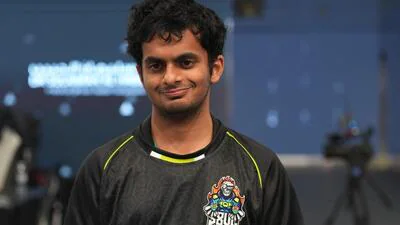
The Nihal Sarin Bullet Chess Championship victory is more than just another milestone in Indian chess. It represents the convergence of talent, preparation, technology, and the rapidly evolving world of online competitive chess.
At just 21 years old, Nihal Sarin achieved something no Indian player had accomplished before: winning the prestigious Bullet Chess Championship. While his exceptional speed, tactical brilliance, and mental resilience played decisive roles, another factor contributed significantly to the historic triumph—a carefully planned relocation to Mumbai.
Rather than returning home after competing internationally, Nihal made a strategic decision to base himself in Mumbai for the tournament. The move was designed to maximize technological advantages, including lower latency, faster server access, and superior gaming hardware.
In an era where elite chess increasingly exists at the intersection of sport and technology, his victory offers fascinating insight into how modern grandmasters prepare for the highest levels of online competition.
Who Is Nihal Sarin?
Nihal Sarin has long been regarded as one of India’s most gifted chess prodigies.
Born in Kerala, he rose through the international rankings as a young player and quickly established himself as one of the strongest speed chess specialists in the world.
Unlike many grandmasters who built their reputations primarily through classical chess, Nihal developed a strong connection with online chess platforms during his formative years.
This extensive experience in rapid and bullet formats helped shape his unique playing style—one characterized by lightning-fast decision-making, tactical precision, and exceptional clock management.
His latest achievement further strengthens India’s growing reputation as a global chess powerhouse.
What Is Bullet Chess and Why Is It So Difficult?
To understand the significance of Nihal’s accomplishment, it is important to understand the nature of bullet chess.
Bullet chess is one of the fastest and most demanding forms of the game.
In the popular 1+0 format, each player receives only one minute for the entire game and gains no additional time after making moves.
This creates a unique competitive environment where players must balance speed and accuracy under extreme pressure.
Success requires:
- Exceptional pattern recognition
- Instant tactical calculation
- Superior mouse control
- Fast decision-making
- Mental endurance
- Precise time management
At this level, even fractions of a second can determine the outcome of a game.
Why Mumbai Played a Crucial Role in the Championship
Nihal’s decision to remain in Mumbai after an international tournament was not accidental.
The city provided several technical advantages unavailable at his regular setup in Kerala.
Most importantly, Mumbai hosts server infrastructure that significantly reduces latency for Indian players competing on major online chess platforms.
In online chess, latency—or “ping”—measures the delay between a player’s action and the server’s response.
Even tiny delays can become decisive in bullet chess.
A move that registers instantly may save precious fractions of a second, while a slightly delayed response can result in time trouble or outright defeat.
For elite competitors operating at the highest level, these margins matter enormously.
The Hidden Factor Most Fans Overlook: Latency
Many casual chess fans focus exclusively on player skill, but online competition introduces technological variables that do not exist in traditional over-the-board tournaments.
Latency has become one of the most important factors in elite online chess.
Consider a situation where two players possess comparable speed and skill.
If one player consistently experiences lower latency, they may gain a measurable advantage over hundreds of moves.
In bullet chess, where games often come down to tenths of a second, this difference can be critical.
| Factor | Impact on Bullet Chess |
|---|---|
| Internet Speed | Faster move transmission |
| Server Proximity | Lower latency and quicker response |
| Hardware Performance | Smoother gameplay and faster inputs |
| Mouse Precision | Improved move execution |
| Player Skill | Decision-making and tactical strength |
Nihal’s move to Mumbai demonstrated a professional understanding of these technological realities.
The Importance of Elite Gaming Infrastructure
Another key element behind Nihal’s success was access to high-performance gaming infrastructure.
Modern esports facilities provide powerful hardware specifically designed for competitive gaming environments.
Compared with standard home setups, professional systems offer:
- Faster processing power
- Higher responsiveness
- Reduced input delay
- Stable internet connectivity
- Optimized performance under heavy usage
While chess is traditionally viewed as a purely intellectual sport, online competition increasingly shares characteristics with esports.
The championship highlighted how technological preparation can complement chess expertise.
The Remarkable Final Against Alireza Firouzja
The defining moment of Nihal’s tournament came against one of the world’s strongest speed chess players.
Alireza Firouzja entered the event with a reputation as one of the most feared competitors in bullet chess.
Known for his extraordinary speed and tactical creativity, Firouzja has long been considered among the elite specialists in the format.
What happened in the final shocked many observers.
Nihal produced an extraordinary run of victories, stringing together an astonishing sequence of wins against a player of Firouzja’s caliber.
The streak became one of the most remarkable performances ever witnessed in a major online chess championship.
The Psychology of Momentum in Speed Chess
One fascinating aspect of the final involved the psychological dimension of elite competition.
In fast-paced formats, confidence and momentum often influence performance significantly.
When players begin losing multiple games in succession, frustration can affect decision-making.
This phenomenon is commonly referred to as “tilt” within gaming and esports communities.
Tilt occurs when emotional reactions interfere with rational thinking, leading to rushed decisions and avoidable mistakes.
Managing emotions becomes particularly important in bullet chess because players have virtually no time to recover during games.
Nihal’s ability to remain composed while maintaining relentless pressure proved decisive.
India’s Growing Dominance in Global Chess
Nihal’s victory arrives during a golden era for Indian chess.
Over the past decade, India has emerged as one of the world’s most productive chess nations.
A new generation of elite grandmasters has transformed the country’s international standing.
Several factors have contributed to this rise:
- Strong grassroots programs
- Access to online training resources
- Growing popularity of chess
- Increased international exposure
- Advanced coaching systems
- Influence of pioneering Indian champions
The success of young players like Nihal reflects the depth of talent currently developing across the country.
Online Chess Has Changed the Game Forever
The championship also illustrates how online chess has fundamentally transformed professional competition.
In previous generations, elite players relied heavily on physical tournaments to gain experience.
Today, online platforms allow grandmasters to compete against world-class opposition daily.
This accessibility has accelerated learning and broadened opportunities for talented players regardless of geographic location.
For younger generations, online chess has become both a training ground and a competitive arena.
Nihal’s own development reflects this shift, as extensive online experience helped shape his strength in faster formats.
The Unique Challenge of Winning an Online Championship
Unlike traditional tournaments, online victories often lack the immediate spectacle associated with major sporting achievements.
There is no roaring crowd, no packed arena, and often no trophy presentation immediately after the final move.
Players spend hours immersed in intense concentration before suddenly returning to ordinary surroundings.
This contrast creates a unique psychological experience.
One moment a competitor is engaged in a world-class championship match; the next, they are simply sitting in front of a computer screen.
The experience highlights how digital competition has created entirely new forms of sporting achievement.
Can Bullet Chess Improve Classical Chess?
One of the most intriguing debates in modern chess concerns the relationship between fast and slow formats.
Some critics argue that bullet chess prioritizes speed over quality.
Many elite players disagree.
Fast formats help develop:
- Instinctive decision-making
- Tactical awareness
- Time-pressure management
- Pattern recognition
- Competitive resilience
Classical chess, meanwhile, provides deeper strategic understanding and long-term planning skills.
The strongest modern players often excel because they combine both approaches.
Nihal’s ability to transition between formats demonstrates the growing versatility required in contemporary chess.
What This Victory Means for Nihal’s Future
Becoming the first Indian Bullet Chess Champion is a significant milestone, but it may represent only one chapter in Nihal’s broader career.
His continued participation in major team events and classical competitions suggests ambitions that extend beyond speed chess alone.
As he continues developing his overall game, his experience across multiple formats could become a major advantage.
In an increasingly competitive global chess environment, adaptability has become one of the most valuable skills a player can possess.
A Unique Insight: Chess Is Becoming a Technology Sport
The most overlooked lesson from Nihal Sarin’s victory may be what it reveals about the future of chess itself.
Traditionally, chess success depended almost entirely on preparation, talent, and psychological strength.
Those factors remain essential, but modern online competition has introduced a new dimension: technology.
Server infrastructure, internet quality, hardware performance, and digital optimization are becoming increasingly relevant at the elite level.
Chess remains a battle of minds, but in online formats, technological readiness has become part of the competitive equation.
Nihal’s strategic move to Mumbai perfectly illustrates this new reality.
Conclusion
The Nihal Sarin Bullet Chess Championship victory was not merely the result of brilliant chess. It was the product of meticulous preparation, technological awareness, mental resilience, and world-class skill.
By becoming the first Indian to win the prestigious title, Nihal achieved a historic breakthrough while showcasing how modern competitive chess continues to evolve.
His decision to leverage Mumbai’s superior infrastructure, combined with an extraordinary performance against some of the world’s strongest speed chess players, demonstrates that success at the highest level often depends on mastering both the board and the environment surrounding it.
As online chess continues to grow, this championship may be remembered not only as a personal triumph for Nihal Sarin but also as a glimpse into the future of elite chess competition.
For breaking news and live news updates, like us on Facebook or follow us on Twitter and Instagram. Read more on Latest Sports on thefoxdaily.com.






COMMENTS 0