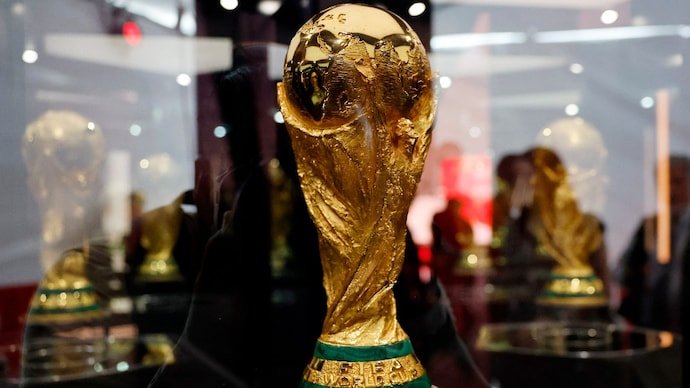
Every four years, the FIFA World Cup transforms India.
For a month, office conversations revolve around football. Sleep schedules are sacrificed. Cafes remain packed deep into the night. Streets across Kerala, West Bengal, Goa, the Northeast, and major metropolitan cities become decorated with the colors of Argentina, Brazil, Germany, France, Portugal, and England.
The remarkable part is that India has never played in a FIFA World Cup.
Yet the tournament consistently attracts one of the largest audiences outside the participating nations. Football may not dominate India’s sporting landscape the way Cricket does, but when the World Cup arrives, it becomes a national event that transcends traditional fan bases.
That is why the uncertainty surrounding FIFA World Cup 2026 broadcast rights in India has generated significant frustration among supporters. With the tournament approaching, millions of viewers have found themselves asking a simple question: where will they actually watch the world’s biggest sporting event?
While industry reports suggest a broadcast agreement is likely to be finalized, the delay has exposed larger issues involving sports media economics, football’s position in India, and the changing dynamics of the country’s broadcasting industry.
Why the FIFA World Cup Matters So Much in India
To understand why the current situation feels unusual, it is important to understand India’s relationship with football.
Unlike many countries where support is driven by national team participation, India’s connection to the World Cup is built almost entirely on passion for the sport itself.
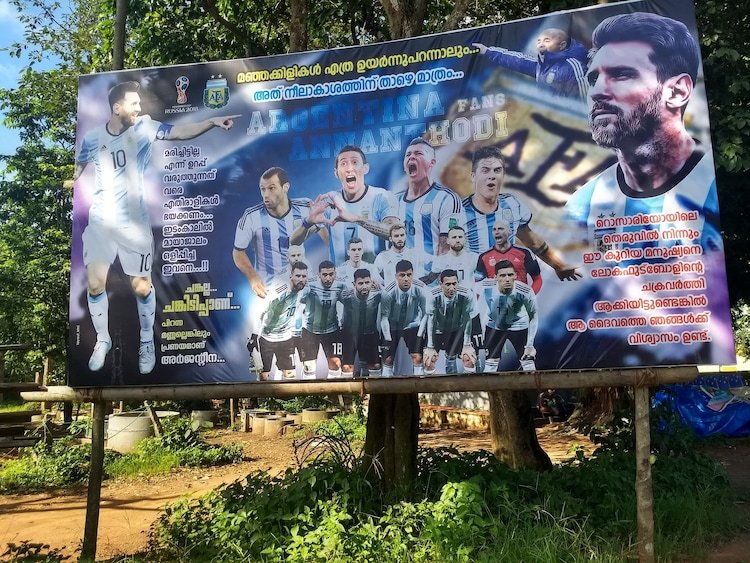
In Kolkata, entire neighborhoods traditionally divide themselves between Brazil and Argentina supporters. In Kerala, giant banners of Lionel Messi and other football legends often appear weeks before major tournaments. Across the Northeast, football culture is deeply embedded in local communities.
The FIFA World Cup has become more than a sporting event it is a cultural phenomenon.
Generations of Indian fans have grown up waking at odd hours to watch Diego Maradona, Ronaldo Nazário, Zinedine Zidane, Ronaldinho, Cristiano Ronaldo, Lionel Messi, Kylian Mbappé, and countless other stars perform on football’s biggest stage.
The absence of India from the tournament has never diminished the enthusiasm of its audience.
The Broadcast Rights Controversy Explained
The current uncertainty is not about whether the World Cup will be available in India. Most industry observers believe a broadcaster will ultimately secure the rights.
The real issue is why negotiations became so complicated in the first place.
What should have been a routine commercial agreement evolved into months of negotiations involving broadcasters, media companies, and FIFA’s commercial partners.
The situation highlights the growing gap between football’s global popularity and its commercial valuation in certain markets.
At the center of the debate lies a fundamental question: how much is the FIFA World Cup actually worth in India?
The Numbers Behind the Negotiations
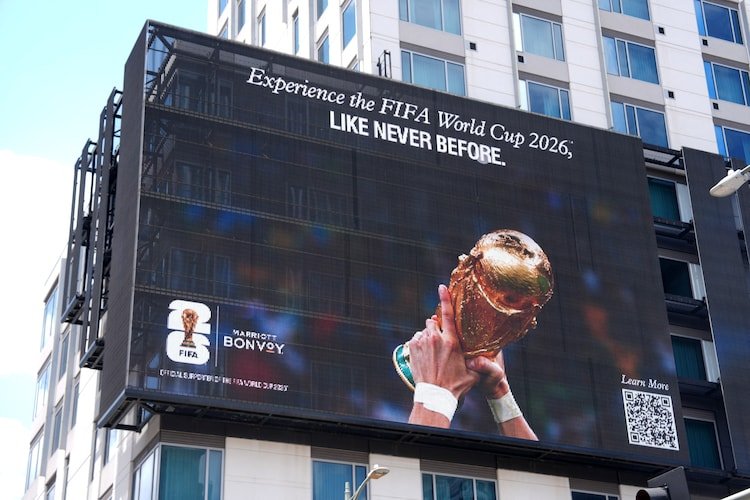
The FIFA World Cup 2026 is the largest edition in the tournament’s history.
For the first time, 48 teams will participate instead of 32. The competition will feature 104 matches, creating more content, more storylines, and more opportunities for broadcasters.
However, the expansion has not automatically translated into higher broadcaster enthusiasm.
| FIFA World Cup 2026 Fact | Details |
|---|---|
| Participating Teams | 48 |
| Total Matches | 104 |
| India’s FIFA 2022 Audience Share | Approximately 2.9% of global reach |
| Digital Viewers from India in 2022 | Over 110 million |
| Initial Rights Valuation | Close to USD 100 million |
| Later Reported Valuation | Around USD 35 million |
| Reported Offer from JioStar | Approximately USD 20 million |
The sharp difference between FIFA’s expectations and broadcaster valuations created the standoff that delayed a final agreement.
The Hidden Problem: Time Zones
One of the biggest challenges facing broadcasters is something fans rarely think about: kickoff timing.
The 2026 FIFA World Cup will be hosted across North America, including the United States, Canada, and Mexico.
This means many matches will take place late at night or early in the morning for Indian viewers.
While passionate football fans are accustomed to staying awake until 2 AM or 3 AM, advertisers view the situation differently.
Advertising rates depend heavily on audience size and viewer demographics. Midnight kickoffs generally attract fewer casual viewers compared to prime-time broadcasts.
From a broadcaster’s perspective, the challenge is straightforward: paying a premium price for rights becomes difficult when advertising revenue opportunities are limited by time-zone differences.
Why Broadcasters Are Becoming More Cautious
The economics of sports broadcasting have changed dramatically in recent years.
Historically, broadcasters often paid aggressive prices for premium sports properties because competition among networks was intense.
Today, media companies operate under greater financial scrutiny.
Streaming platforms, rising content costs, and changing viewer habits have forced broadcasters to focus more on profitability than prestige.
Football remains immensely popular, but executives increasingly evaluate sports rights through commercial metrics rather than emotional appeal.
This explains why broadcasters are reluctant to make bids based solely on India’s enormous population.
Advertisers purchase audience engagement, not population statistics.
The Cricket Comparison That Football Cannot Ignore
One uncomfortable reality continues to shape sports broadcasting in India: cricket remains the dominant commercial force.
Cricket’s success did not happen overnight.
It was built through decades of investment by broadcasters, sponsors, administrators, leagues, and governing bodies.
The sport developed a robust ecosystem that consistently delivers strong ratings, sponsorship opportunities, and year-round engagement.
Football, despite its passionate fan base, has struggled to achieve similar commercial integration.
Global football organizations have often treated India primarily as a consumption market rather than an investment market.
This distinction matters because sustainable commercial growth usually requires local ecosystem development rather than relying solely on international competitions.
Can FIFA Really Afford to Ignore India?
Despite broadcasters’ concerns, India remains one of the most strategically important football markets in the world.
The country offers several advantages that few markets can match.
- More than 1.4 billion people.
- One of the world’s largest smartphone user bases.
- Among the lowest mobile data costs globally.
- Rapidly growing digital consumption.
- A young demographic increasingly interested in global sports.
These factors explain why major football organizations continue investing resources into India despite the country’s limited success at the international level.
For FIFA, India represents future growth rather than merely current revenue.
Ignoring such a market would be strategically difficult.
How European Football Has Already Recognized India’s Potential
Many of football’s biggest organizations have already acknowledged India’s importance.
The English Premier League actively promotes itself across the country. Spanish football has established a direct presence through La Liga’s India operations. Clubs regularly conduct fan engagement campaigns targeting Indian audiences.
Major football stars command enormous popularity despite never having played professionally in India.
The excitement surrounding Lionel Messi’s appearances, transfer rumors, or potential visits demonstrates the depth of interest that exists.
Global football understands that India may not currently be a football powerhouse on the field, but it is undeniably a football powerhouse in terms of audience potential.
What Changed Since the 2022 FIFA World Cup?
One of the most important questions is why this situation did not emerge during previous World Cups.
The answer lies in the transformation of India’s media landscape.
Several years ago, multiple broadcasters aggressively competed for premium sports rights.
Today, consolidation has reduced the number of serious bidders.
The merger between major media entities has fundamentally altered negotiating dynamics.
With fewer competitors, broadcasters possess greater leverage and feel less pressure to overpay for sports properties.
This shift has not only affected football but also broader sports rights negotiations across the industry.
The Bigger Issue: A New Pricing Benchmark
The eventual broadcast agreement may solve the immediate problem, but it could create long-term consequences.
If FIFA ultimately accepts a significantly lower valuation than initially expected, future negotiations may start from that reduced benchmark.
This could influence how broadcasters value:
- Future FIFA World Cups.
- Club World Cup competitions.
- International football tournaments.
- Continental championships.
- Other premium football properties.
In many ways, the outcome of this negotiation could shape football’s commercial future in India for years to come.
A Unique Angle: Football’s Real Challenge Is Not Viewership It’s Monetization
Perhaps the most overlooked aspect of this entire saga is that football does not suffer from an audience problem in India.
It suffers from a monetization problem.
Millions of people watch football. Millions follow European clubs. Millions engage with football content online.
The challenge lies in converting that engagement into sustainable revenue streams that justify large investments from broadcasters and sponsors.
Unlike cricket, football’s audience is often fragmented across leagues, clubs, tournaments, and platforms.
This fragmentation makes monetization more complex despite strong overall interest.
Until football develops stronger local commercial ecosystems, these rights negotiations may continue to face similar challenges.
What Fans Can Expect for FIFA World Cup 2026
The good news for supporters is that the FIFA World Cup is highly unlikely to remain unavailable in India.
Industry reports suggest that a resolution is approaching, with broadcasters preparing multilingual coverage plans and production arrangements.
Once finalized, fans should expect comprehensive television and digital coverage of all 104 matches.
The larger concern is not access to this World Cup but what the prolonged negotiations reveal about football’s business landscape in India.
Conclusion
The uncertainty surrounding FIFA World Cup 2026 broadcast rights in India has highlighted the complex relationship between football passion and media economics. On one side stands one of the world’s most enthusiastic football audiences. On the other stand broadcasters facing commercial realities shaped by advertising revenue, time zones, and changing market conditions.
India remains too important for FIFA to overlook. Its audience size, digital growth, and long-term potential make it one of football’s most valuable future markets. Yet the current situation demonstrates that popularity alone does not guarantee smooth commercial agreements.
The immediate broadcast issue will almost certainly be resolved before kickoff. But the larger lessons will remain. As football’s global business continues evolving, India may become one of the most important test cases for how international sports organizations balance audience growth, media rights valuations, and long-term market development.
For now, fans can prepare for another month of sleepless nights, passionate debates, and unforgettable football moments. The World Cup will come. The question is whether the business of football can keep pace with the passion of its Indian audience.
For breaking news and live news updates, like us on Facebook or follow us on Twitter and Instagram. Read more on Latest Sports on thefoxdaily.com.





COMMENTS 0