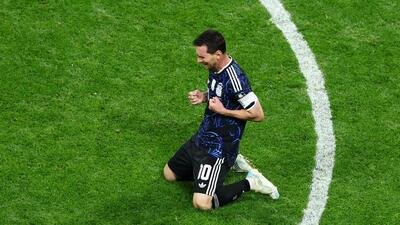
Some football matches determine champions. Others define generations. The FIFA World Cup 2026 Final between argentina and Spain belongs firmly in the second category.
At first glance, the story appears straightforward. Lionel Messi leads defending champions Argentina into another World Cup final against a talented Spanish side seeking to reclaim football’s biggest prize. Yet beneath the surface lies a far deeper narrative—one that stretches across decades of football history, tactical evolution, and cultural influence.
This final is not simply Argentina versus Spain. It is Lionel Messi versus the football philosophy that helped transform him into arguably the greatest player the sport has ever seen.
The symbolism is remarkable. The player who became the ultimate expression of Barcelona’s footballing ideology now stands opposite a Spanish team built on the same principles. In many ways, Messi is preparing to face a mirror image of the game he mastered throughout his career.
The Bigger Story Behind Argentina vs Spain
World Cup finals are often framed around national rivalries, star players, or tactical battles. This one offers something rarer.
It represents a confrontation between football’s past, present, and future.
On one side stands Messi, a player whose influence transcends trophies and statistics. On the other is a Spanish team carrying forward a football identity that has shaped the modern game more than perhaps any other national side.
For football purists, this is a dream matchup because it explores one of the sport’s most important questions:
Can the creator defeat the modern evolution of the system that helped create him?
How Barcelona Changed World Football Forever
To understand why this final is so unique, it is necessary to revisit the origins of modern positional football.
Long before Messi became a global superstar, Barcelona underwent a tactical revolution that would permanently alter football.
The foundations were laid by Johan Cruyff, whose vision emphasized possession, intelligence, movement, and technical superiority over physical dominance.
Years later, Pep Guardiola refined those ideas into one of the most influential tactical systems in football history.
The principles were simple yet revolutionary:
- Control possession relentlessly.
- Create numerical advantages across the pitch.
- Use intelligent positioning to manipulate opponents.
- Value technical quality over physicality.
- Turn the ball into the team’s primary defensive weapon.
These concepts eventually became known worldwide as positional play, or Juego de Posición.
Modern football continues to feel the impact of those ideas today.
Why Spain Became the Ultimate International Version of Barcelona
Spain’s greatest football success was never accidental.
The country’s golden generation emerged at precisely the moment Barcelona’s academy was producing extraordinary talent.
Players such as Xavi Hernandez, Andres Iniesta, Sergio Busquets, Gerard Pique, Carles Puyol, and others carried the same tactical education into the national team.
The result was one of the most dominant periods in international football history.
| Tournament | Result | Significance |
|---|---|---|
| UEFA Euro 2008 | Champions | Beginning of Spain’s dominance |
| FIFA World Cup 2010 | Champions | Spain’s first world title |
| UEFA Euro 2012 | Champions | Completion of historic treble |
No national team before or since has combined tactical sophistication and sustained dominance quite like Spain during that period.
Their success proved that possession football could conquer the international game.
Lionel Messi: The Perfect Product of the System
While Spain benefited enormously from Barcelona’s football philosophy, Messi became its ultimate masterpiece.
He arrived at La Masia as a gifted youngster and developed into the most complete expression of positional football ever seen.
Unlike many superstars who succeed through athletic superiority, Messi mastered every aspect of the game that Barcelona valued:
- Spatial awareness.
- Decision-making.
- Ball retention.
- Creativity.
- Technical execution.
- Tactical intelligence.
Under Guardiola, Messi’s role evolved dramatically.
His deployment as a false nine transformed modern attacking football and inspired tactical innovations across the world.
Defenders no longer knew whether to follow him into midfield or remain in position. Either choice created opportunities for Barcelona.
The strategy changed football forever.
The Irony of Messi Never Playing for Spain
One of football’s great historical what-ifs centers on Messi’s international allegiance.
Having spent his developmental years in Spain, he was eligible to represent La Roja.
Had circumstances unfolded differently, football history might look entirely different today.
Imagine Messi joining Xavi, Iniesta, Busquets, and Pique in a Spanish shirt.
It is difficult to think of a more intimidating national team.
Instead, Argentina secured his commitment early, preserving one of football’s most iconic national team stories.
Spain still conquered the world, but the thought of combining their golden generation with Messi remains one of sport’s most fascinating alternate realities.
Spain 2026: A New Generation, the Same DNA
The Spain Messi faces in the World Cup final is not the same team that dominated between 2008 and 2012.
However, the underlying football identity remains recognizable.
Today’s Spanish side plays a more dynamic and vertical version of possession football, adapting traditional principles to modern demands.
The team combines technical excellence with greater speed and attacking directness.
Yet the core ideas remain familiar:
- Control possession.
- Manipulate space.
- Press aggressively.
- Prioritize technical quality.
- Dictate the rhythm of matches.
This continuity explains why Messi immediately recognizes the challenge awaiting him.
Few players understand Spain’s footballing DNA better.
Lamine Yamal: The Next Chapter of the Story
If Messi represents the peak of one football era, Lamine Yamal may symbolize the beginning of another.
The young Spanish superstar enters the final carrying expectations rarely seen for a player of his age.
Like Messi before him, Yamal emerged from Barcelona’s academy system.
Like Messi, he combines extraordinary technical ability with rare football intelligence.
And like Messi, he has become the face of a generation before reaching the traditional peak years of a football career.
The final therefore offers a fascinating symbolic passing-of-the-torch narrative.
One generation’s greatest player meets the brightest talent of the next.
How Lionel Scaloni Reinvented Argentina
Another reason Argentina has reached this stage is the transformation engineered by Lionel Scaloni.
For years, Argentina’s national team appeared trapped by expectations.
Every tournament was viewed through the lens of Diego Maradona’s legacy and Messi’s pursuit of international validation.
Final defeats intensified the pressure.
What Scaloni achieved was not merely tactical.
He changed the environment around Messi.
Instead of asking the captain to solve every problem alone, Argentina built a collective structure that maximized his strengths while reducing his burden.
The rewards were historic:
- Copa America success.
- Another continental triumph.
- A World Cup title.
- A return to the top of international football.
The transformation allowed Messi’s international achievements to finally match his club legacy.
The Tactical Battle That Could Decide the Final
Beyond the emotional narratives, the match presents an intriguing tactical contest.
Spain’s Strengths
- Possession control.
- Structured pressing.
- Midfield dominance.
- Technical consistency.
Argentina’s Strengths
- Experience in big matches.
- Defensive organization.
- Transition efficiency.
- Messi’s creativity.
The team that better controls midfield spaces could gain a decisive advantage.
World Cup finals are often determined by moments rather than patterns, and both sides possess players capable of producing magic from nothing.
An Overlooked Insight: This Final Is About Football Evolution
Much of the discussion focuses on Messi versus Spain, but there is an even deeper layer.
This final showcases how football ideas evolve across generations.
Cruyff influenced Guardiola.
Guardiola influenced Barcelona.
Barcelona influenced Spain.
Spain influenced coaches worldwide.
Messi became the ultimate product of that ecosystem.
Now, as his career approaches its final chapters, he faces a team carrying those same ideas into the future.
Few sporting narratives possess such symmetry.
What Victory Would Mean for Argentina
If Argentina wins, the achievement would extend far beyond another trophy.
It would strengthen the nation’s claim as one of football’s greatest powers and potentially place Messi at the center of yet another historic milestone.
Back-to-back World Cup triumphs remain among the rarest accomplishments in sport.
Such a victory would further elevate an already extraordinary era for Argentine football.
What Victory Would Mean for Spain
For Spain, victory would signal the beginning of a new golden chapter.
It would confirm that the country’s football philosophy remains relevant despite the sport’s constant evolution.
More importantly, it would bridge two generations—connecting the achievements of Xavi and Iniesta’s era with the rise of stars such as Lamine Yamal.
Winning a second World Cup would cement Spain’s place among football’s most influential nations.
Conclusion: A Final Written by Football History Itself
The FIFA World Cup 2026 final is far more than Argentina versus Spain.
It is a story about identity, legacy, and the evolution of football itself.
Lionel Messi stands at the center of that story. He is both a product of Spain’s football philosophy and the greatest ambassador of its principles. Yet on football’s biggest stage, he must defeat the very ideas that helped shape him.
Whether Argentina triumphs or Spain ushers in a new era, the final promises something rare: a match that feels larger than the trophy itself.
For football fans, it is a celebration of the sport’s past, present, and future. For Messi, it may be the ultimate challenge—proving once again that even when facing his own footballing reflection, he remains capable of creating history.
For breaking news and live news updates, like us on Facebook or follow us on Twitter and Instagram. Read more on Latest Sports on thefoxdaily.com.





COMMENTS 0