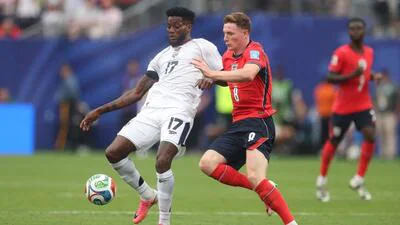
FIFA World Cup 2026 tactical revolution has revealed a major shift in how football dominance is measured. For years, possession was considered the ultimate symbol of control. Teams that kept the ball longer were often seen as the ones dictating the game. However, this tournament has delivered a different lesson: having the ball is not enough unless a team can create danger with it.
The modern World Cup is showing that success is increasingly based on intrusion rather than possession — the ability to enter dangerous areas, create high-quality chances and punish opponents efficiently.
The rise of compact defensive systems, disciplined low blocks and rapid counter-attacks has challenged the traditional belief that more possession automatically leads to better results. Some teams are proving that allowing opponents to control the ball can actually be part of a winning strategy.
How possession became football’s biggest tactical obsession
For nearly two decades, possession football dominated elite football thinking. The success of Pep Guardiola’s Barcelona and Spain’s golden generation changed how coaches viewed control.
The philosophy was straightforward: keep the ball, move the opponent around, create spaces and eventually break through. Teams that dominated possession were often considered tactically superior because they controlled the rhythm of the match.
Barcelona’s success and Spain’s international dominance, including their 2010 FIFA World Cup triumph, made possession-based football the blueprint for many teams around the world.
But football constantly evolves. As more teams studied possession-heavy systems, they also developed methods to stop them.
The biggest lesson from FIFA World Cup 2026: Ball control is not match control
The current tournament has produced several examples where teams with less possession have produced better outcomes.
Several knockout-stage teams advanced despite spending less time with the ball because they were more effective when opportunities arrived.
| Team | Average Possession Trend | Main Strength |
|---|---|---|
| Ghana | Around 33% | Compact defending and efficient transitions |
| Cape Verde | Around 36% | Organisation and discipline |
| South Africa | Around 36% | Counter-attacking approach |
| Paraguay | Around 37% | Efficiency in key moments |
| DR Congo | Around 37% | Defensive structure |
These teams have demonstrated that possession statistics alone cannot explain performance. A team can dominate passing numbers but still struggle to create meaningful scoring opportunities.
Possession without penetration: The problem for bigger teams
Some technically strong teams have discovered that controlling the ball is only useful when it leads to attacking progress.
Uruguay, Turkey and South Korea are examples of teams that enjoyed significant possession during the group stage but struggled to convert that advantage into results.
This highlights an important tactical difference:
- Possession: How long a team keeps the ball.
- Progression: How effectively a team moves the ball into dangerous areas.
- Penetration: How often a team creates genuine goal-scoring situations.
The best teams are no longer judged only by how many passes they complete. They are judged by what those passes achieve.
Why expected goals efficiency is changing football analysis
One of the biggest developments in modern football analysis is the importance of expected goals (xG). Unlike possession numbers, xG focuses on the quality of chances created.
A team may have fewer shots but still perform better if those chances come from dangerous positions.
This World Cup has highlighted how some teams are maximising limited opportunities while others are struggling despite controlling matches.
| Traditional Measure | Modern Evaluation |
|---|---|
| Possession percentage | Chance quality |
| Total passes | Progressive passes |
| Time with the ball | Ability to create danger |
| Territory control | Efficiency in attacking moments |
Famous FIFA World Cup examples that changed tactical thinking
The idea that possession is not everything is not completely new. Previous World Cups already showed that well-organised teams could defeat possession-heavy opponents.
At the 2022 FIFA World Cup, Japan shocked Germany despite having much less possession. Saudi Arabia defeated Argentina after creating fewer chances but finishing more effectively.
Morocco also demonstrated the power of defensive organisation, frustrating several major football nations with disciplined structures and dangerous counter-attacks.
The 2026 tournament is continuing that tactical trend on an even larger scale.
The rise of defensive intelligence in modern football
Today’s defensive teams are not simply defending deep and hoping for mistakes. Many have developed sophisticated systems.
- Players maintain compact distances between defensive lines.
- Teams force opponents into low-value areas.
- Midfielders block passing lanes instead of chasing the ball.
- Attackers contribute defensively before launching counters.
This means possession-based teams often face a difficult problem: they may have the ball, but they cannot find space.
Turkey vs Australia: A perfect example of efficiency over possession
One of the clearest examples came when Turkey dominated possession and attacking numbers but failed to beat Australia.
Turkey controlled the match, created attempts and spent long periods in attacking areas. However, Australia’s defensive structure absorbed pressure and punished mistakes with decisive finishing.
The match demonstrated a key modern football principle: quality of moments matters more than quantity of actions.
Why World Cup football is different from club football
The possession debate is also influenced by the difference between club and international football.
Club teams train together throughout the season and can develop complex tactical systems. National teams have limited preparation time, making defensive organisation and clear strategies even more valuable.
In a short tournament, one mistake can end a campaign. This encourages many teams to prioritise stability over domination.
Expert insight: The future of football may belong to hybrid systems
The future is unlikely to be about choosing between possession football and counter-attacking football. The strongest teams will probably combine both approaches.
Elite teams increasingly want:
- Control when they have the ball.
- Speed when they recover possession.
- Organisation when they defend.
- Efficiency near the opponent’s goal.
The next generation of successful teams may not be the ones with the highest possession numbers, but those that understand when to control and when to attack space.
What FIFA World Cup 2026 teaches about modern football
The biggest tactical lesson from this tournament is simple: control is changing meaning.
Football is no longer only about having the ball. It is about controlling the most valuable areas of the pitch and creating moments that decide matches.
A team can have 70% possession and still lose if that possession produces no threat. Another team can defend for long periods and win because every attacking opportunity has purpose.
Conclusion
The FIFA World Cup 2026 tactical revolution is proving that possession is no longer the only measure of superiority. Modern football is becoming a battle of efficiency, structure and decision-making.
Possession football remains important, but the definition of control has evolved. The teams that succeed in the future will not simply keep the ball — they will know what to do with it.
The new football question is no longer “Who has more possession?” but “Who creates the bigger impact when the moment arrives?”
For breaking news and live news updates, like us on Facebook or follow us on Twitter and Instagram. Read more on Latest Sports on thefoxdaily.com.






COMMENTS 0