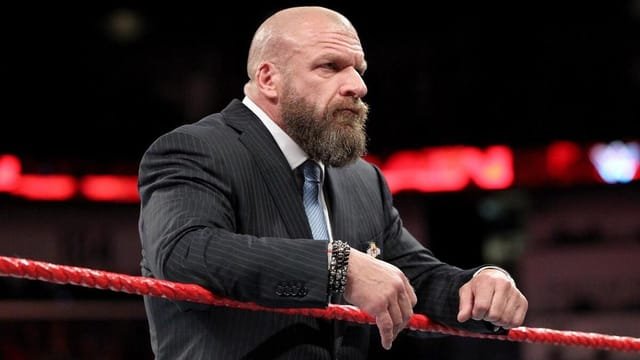
Few figures in professional wrestling history have generated as much debate about backstage politics as Triple H. A 14-time world champion, WWE Hall of Famer, and the company’s current Chief Content Officer, The Game built an extraordinary in-ring legacy that spanned multiple eras.
However, alongside his success came persistent criticism that he used his influence behind the scenes to protect his position at the top of the card.
Those conversations resurfaced this week after former WWE head writer Vince Russo alleged that Triple H once refused to lose a planned match against former Intercontinental Champion D’Lo Brown.
While the claim remains unverified and reflects Russo’s personal recollection, it has reignited a broader discussion about creative control, talent hierarchy, and the realities of WWE’s locker room culture during the late 1990s and early 2000s.
What Did Vince Russo Claim About Triple H and D’Lo Brown?
Speaking on the Behind The Turnbuckle Studios’ Coach & Bro podcast, Russo recalled an incident during his tenure as a WWE writer where he scripted Triple H to lose to D’Lo Brown.
According to Russo, Triple H objected to the creative direction and refused to go through with the proposed finish.
“I wrote in the script for Triple H to put over D’Lo Brown. Triple H had a problem with it and wouldn’t do it.”
Russo further claimed he challenged Triple H over the decision, arguing that D’Lo had frequently lost to him and deserved an opportunity to score a meaningful victory.
“He has put you over countless times. The one single time when I want you to put him over, you’re going to have a problem with that?”
It is important to note that Triple H has not publicly addressed Russo’s latest comments, and there is no independent confirmation regarding the circumstances surrounding the alleged incident.
Why D’Lo Brown Was Considered One of WWE’s Most Underrated Stars
During the Attitude Era, D’Lo Brown established himself as one of WWE’s most versatile performers.
Known for his charisma, athleticism, and memorable run with the Nation of Domination, Brown captured both the Intercontinental Championship and the European Championship.
Many fans and former colleagues have long argued that he possessed the talent to reach even greater heights.
Despite consistently delivering strong performances, Brown often found himself positioned just below WWE’s main event scene.
The latest claim from Russo has prompted renewed speculation about whether backstage dynamics may have limited opportunities for talented mid-card performers during that era.
| D’Lo Brown’s WWE Achievements | Details |
|---|---|
| Intercontinental Championships | 2 |
| European Championships | 4 |
| Key Faction | Nation of Domination |
| WWE Debut | 1997 |
| Signature Strengths | Charisma, athleticism, versatility |
The ‘Backstage Politics’ Reputation That Followed Triple H
Throughout his active wrestling career, Triple H frequently faced accusations of leveraging his backstage influence to maintain his position at the top of the card.
These criticisms intensified during the early 2000s when he became one of WWE’s most dominant performers.
Several former wrestlers have shared differing perspectives on the issue over the years.
Some have suggested Triple H was highly protective of his character and storylines, while others have praised him for his professionalism and willingness to help younger talent develop.
The reality likely lies somewhere in between.
Professional wrestling is a unique industry where creative decisions, business priorities, and individual ambitions frequently overlap.
Top stars often have greater input into storylines because they are central to a company’s commercial success.
Understanding WWE’s Creative Environment During the Attitude Era
To fully understand allegations like Russo’s, it is important to consider how WWE operated during the Attitude Era.
Creative plans regularly changed at short notice, and top performers often had direct access to senior management.
Unlike traditional sports, professional wrestling relies heavily on collaboration between performers, writers, producers, and executives.
As a result, disagreements over match outcomes were not uncommon.
Major stars—including Steve Austin, The Rock, Shawn Michaels, Hulk Hogan, and Triple H—were all known to have varying levels of influence over their creative direction at different points in their careers.
That influence was often viewed as both a privilege earned through drawing power and a source of tension among other performers seeking opportunities.
How Triple H’s Leadership Role Has Changed Perceptions
Since retiring from in-ring competition in 2022, Triple H has assumed a vastly different role within WWE.
As Chief Content Officer, he now oversees the company’s creative direction and talent development.
Under his leadership, WWE has received praise for elevating younger performers, emphasizing long-term storytelling, and creating new opportunities across the roster.
Stars such as Cody Rhodes, Gunther, Tiffany Stratton, Jey Uso, and Bron Breakker have all benefited from the current creative approach.
This evolution has led some fans to reassess older criticisms, while others believe past controversies should continue to be part of conversations about wrestling history.
Jonathan Coachman’s Recent Comments About Triple H and The Rock
Separate from Russo’s claims, former WWE broadcaster Jonathan Coachman recently made headlines by alleging that Triple H harbors jealousy toward The Rock.
Coachman suggested that Dwayne Johnson’s success in Hollywood created a contrast with Triple H’s career path, which remained centered on professional wrestling.
These comments, like Russo’s allegations, represent personal opinions rather than verified facts.
Neither Triple H nor The Rock has publicly responded to the remarks.
However, the discussion highlights how narratives surrounding WWE’s biggest stars often extend beyond what audiences see on television.
Why Stories Like This Continue to Fascinate Wrestling Fans
Professional wrestling has always blurred the lines between reality and storytelling.
Behind-the-scenes accounts offer fans a glimpse into the creative process and fuel debates about how careers are shaped.
- Who decides match outcomes?
- How much influence do top stars have?
- Which performers missed opportunities due to backstage politics?
- How do business decisions impact creative choices?
Questions like these ensure that stories from previous eras continue to generate interest years later.
While fans may never know exactly what happened between Triple H and D’Lo Brown, the conversation reflects the enduring intrigue surrounding WWE’s backstage culture.
Conclusion
Vince Russo’s claim that Triple H refused to lose to D’Lo Brown has reopened a familiar debate about power dynamics in professional wrestling.
Although the allegation remains unverified, it adds another chapter to the long-running discussion about Triple H’s influence during his active career.
More importantly, it shines a spotlight on D’Lo Brown’s contributions during the Attitude Era and raises broader questions about how opportunities are created—or denied—in the wrestling industry.
As WWE continues to evolve under Triple H’s leadership, stories from the past serve as reminders of how much the business has changed and why wrestling’s backstage history remains as compelling as the action inside the ring.
For breaking news and live news updates, like us on Facebook or follow us on Twitter and Instagram. Read more on Latest Sports on thefoxdaily.com.






COMMENTS 0