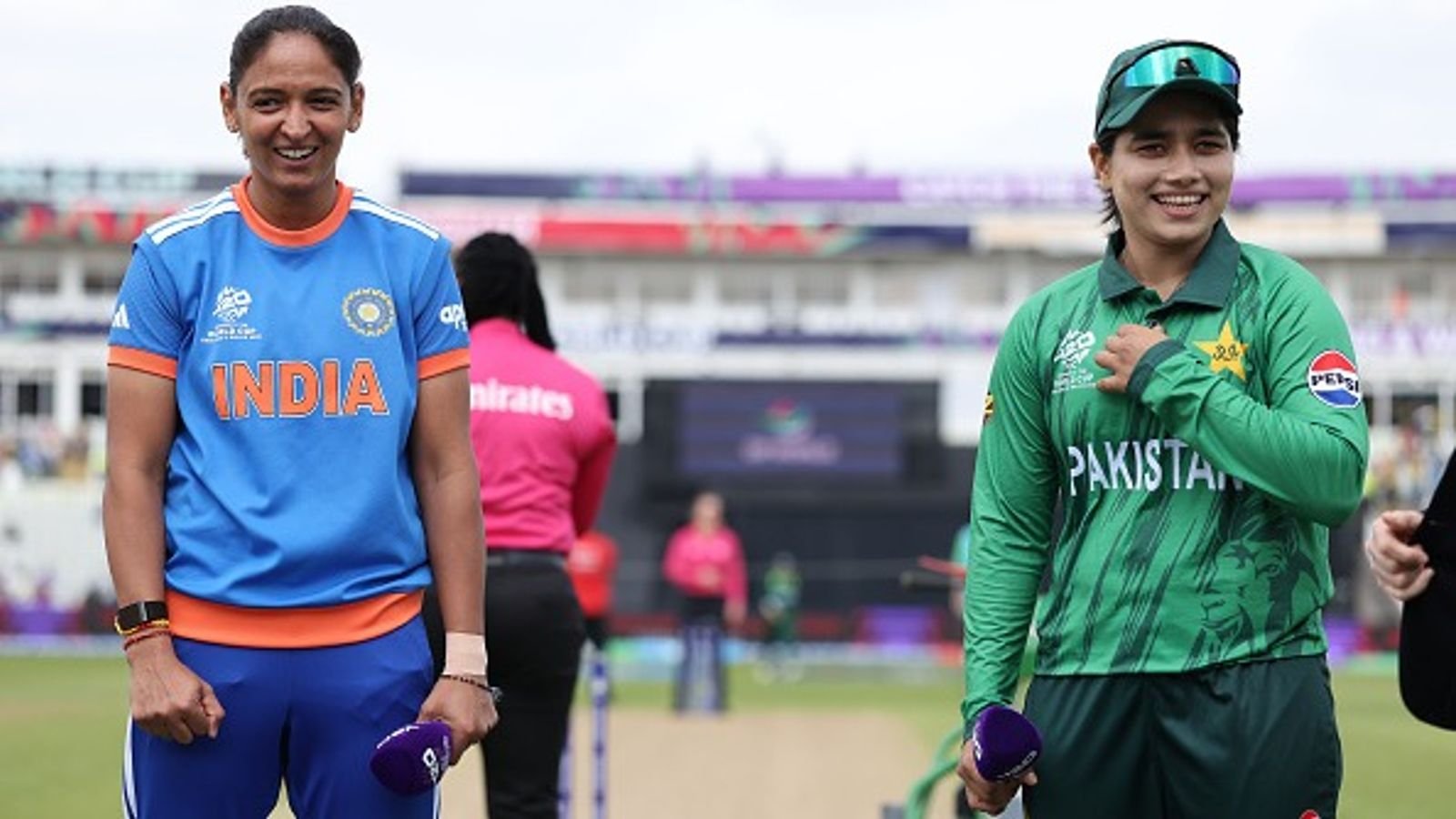
The much-anticipated India vs Pakistan Womenâs Asia Cup 2026 clash began with Pakistan winning the toss and deciding to bat first on September 5. While the cricketing contest remained the central focus, attention before the match was also drawn to the absence of the traditional handshake between the two captains.
Pakistan skipper Fatima Sana opted to put runs on the board, backing her team’s bowling unit to defend a competitive total later in the game. India captain Harmanpreet Kaur, meanwhile, welcomed the opportunity to bowl first, believing her side’s bowling attack could restrict Pakistan and create a manageable chase.
Both teams entered the contest with unchanged playing XIs, adding another layer of continuity to a fixture where every tactical decision can carry significant weight.
Pakistan Win the Toss and Choose to Bat First
Fatima Sana won the toss and decided that Pakistan would bat first. Her reasoning was straightforward: score a strong total and then put India’s batting lineup under pressure with Pakistan’s bowling resources.
The decision also reflects a familiar limited-overs strategy. When a captain believes the pitch could remain relatively consistent, posting a total first gives the team a target to defend rather than requiring its batters to respond to a known score.
Sana also confirmed that Pakistan would retain the same XI, suggesting that the team management was satisfied with the combination that had been selected for the tournament.
For Pakistan, the opening phase of the innings would therefore be particularly important. India possesses a varied bowling attack, and losing wickets early could make it difficult for Pakistan to build the imposing total its captain wanted.
Harmanpreet Kaur Happy to Bowl First
India captain Harmanpreet Kaur had a different perspective on the toss result. Although India lost the toss, she was comfortable with the prospect of bowling first.
India’s bowling unit had been among the team’s important strengths during the tournament, and Kaur backed her bowlers to put Pakistan under pressure before the batting group took responsibility in the second innings.
Her message to India’s batters was equally important. Rather than rushing into aggressive stroke-making, Kaur emphasised patience and taking time before attempting big shots.
That approach could prove especially valuable in a high-pressure India-Pakistan contest, where early wickets can dramatically alter the momentum of a chase.
Harmanpreet Kaur Reaches 150 T20I Matches as Captain
The match also carried a major personal milestone for Harmanpreet Kaur. She became the first cricketer to captain India in 150 T20I matches, making the occasion significant beyond the tournament points table.
Rather than focusing exclusively on the milestone, Kaur stressed the importance of enjoying her time on the field. That mindset can be particularly useful in a pressure-heavy contest, where excessive attention on the occasion itself can become a distraction.
Her experience is one of India’s major assets in matches against Pakistan. The ability to remain composed while adjusting bowling changes, field placements and batting tempo can become crucial when the contest enters its decisive phase.
No-Handshakes Continue Before India vs Pakistan
The pre-match proceedings once again featured the absence of a traditional handshake between the two captains. The moment has become a recurring feature around recent India-Pakistan cricket encounters amid broader political tensions between the two countries.
While the gesture attracted attention before the match, the cricket itself remained the sporting focus once play began.
For the players, the immediate challenge was to separate the wider atmosphere surrounding the fixture from the technical demands of a T20 contest. Every delivery, partnership and wicket would ultimately influence the result far more than the pre-match ceremony.
India Women Playing XI
India entered the match with an unchanged lineup, retaining a combination featuring experienced international players alongside younger options.
- Smriti Mandhana
- Shafali Verma
- Pratika Rawal
- Harmanpreet Kaur (Captain)
- Bharti Fulmali
- Richa Ghosh (Wicketkeeper)
- Deepti Sharma
- Prema Rawat
- Nandani Sharma
- Shree Charani
- Kranti Gaud
Pakistan Women Playing XI
Pakistan also kept its winning combination unchanged for the important Asia Cup encounter.
- Muneeba Ali (Wicketkeeper)
- Shawaal Zulfiqar
- Gull Feroza
- Ayesha Zafar
- Sadaf Shamas
- Fatima Sana (Captain)
- Umm-e-Hani
- Eyman Fatima
- Tuba Hassan
- Nashra Sandhu
- Sadia Iqbal
India vs Pakistan Head-to-Head in the Women’s Asia Cup
India has historically dominated the Women’s Asia Cup rivalry against Pakistan. Before this contest, India had won six of their seven meetings in the tournament.
Pakistan’s record therefore highlights the scale of the challenge facing them. However, the fact that Pakistan has already managed to defeat India in the competition provides evidence that historical records cannot decide an individual match.
| India vs Pakistan Women’s Asia Cup Record | Record |
|---|---|
| Total meetings | 7 |
| India wins | 6 |
| Pakistan wins | 1 |
| India’s overall advantage | Strong |
Why the Toss Could Matter in This Match
Pakistan’s decision to bat first puts immediate responsibility on its top order. The opening batters must provide enough stability for the middle order to attack later in the innings.
India, meanwhile, will want to make the most of the first innings with the ball. Early wickets could prevent Pakistan from reaching the kind of total that would allow its bowlers to dictate the chase.
The toss itself does not determine the result, but it establishes the tactical framework for both teams.
Pakistan wants to create scoreboard pressure. India wants to remove that pressure before its batters begin their chase.
India’s Bowling Attack Holds the Key
India’s decision to bowl first places significant responsibility on its bowling group, particularly the spinners who can control the middle overs.
Deepti Sharma provides India with experience and all-round value, while the presence of multiple spin options gives Harmanpreet flexibility when Pakistan’s batters attempt to accelerate.
The challenge will be to maintain pressure without giving Pakistan easy scoring opportunities. In T20 cricket, a few expensive overs can quickly transform an average total into a challenging one.
India’s bowlers will therefore need to balance wicket-taking intent with run-rate control.
Pakistan’s Best Route to a Competitive Total
Pakistan’s batting strategy should revolve around building a platform before increasing the scoring rate.
With India likely to attack through its bowlers during the early overs, Pakistan cannot afford a cluster of wickets at the beginning of the innings. A stable opening partnership would give the middle order freedom to take calculated risks later.
The middle overs could then become the key phase. Pakistan needs to rotate the strike effectively against India’s spinners before targeting specific matchups.
The final overs will provide the opportunity to turn a competitive score into a challenging one, provided enough wickets remain in hand.
India’s Batting Depth Gives Them Multiple Options
India’s lineup contains several players capable of changing the tempo of the innings. Smriti Mandhana and Shafali Verma can provide an aggressive start, while Harmanpreet Kaur offers experience in pressure situations.
Richa Ghosh adds another attacking option in the middle and lower order, while Deepti Sharma provides all-round balance.
However, Kaur’s emphasis on patience is significant. The objective will not simply be to hit boundaries from the beginning. India must first understand the target and conditions before deciding when to accelerate.
Key Match-Ups to Watch
| Match-Up | Why It Matters |
|---|---|
| India’s top order vs Pakistan’s new-ball attack | Early wickets could determine the chase’s direction |
| Deepti Sharma vs Pakistan’s middle order | Her control can influence the crucial middle overs |
| Shafali Verma vs Pakistan’s bowlers | An aggressive powerplay can change the required run rate |
| Pakistan’s finishers vs India’s death bowling | The final overs could significantly alter Pakistan’s total |
What India Needs to Do After Losing the Toss
- Strike early: India needs wickets during Pakistan’s powerplay to prevent a strong foundation.
- Control the middle overs: India’s spinners can play a major role in restricting Pakistan’s scoring rate.
- Protect the boundary: Pakistan will look for acceleration later, making death-over execution important.
- Assess the target: India’s batters should avoid committing too early to an aggressive chase.
- Use experience wisely: Harmanpreet and senior players will need to manage pressure during key moments.
What Pakistan Needs to Do After Choosing to Bat
- Build a strong opening partnership.
- Avoid losing wickets in clusters.
- Rotate the strike against India’s spin options.
- Keep enough wickets for the final overs.
- Create scoreboard pressure before India’s chase.
Why This Asia Cup Fixture Matters
India-Pakistan matches rarely feel like ordinary group-stage contests. The rivalry attracts significant attention, but the teams must still approach the match as a cricketing problem that can be solved through execution.
For India, the objective is to maintain its strong tournament position and continue building momentum. For Pakistan, defeating a historically dominant opponent would provide both a major result and confidence for the remainder of the competition.
The contrasting situations make the tactical battle particularly interesting: India has the historical advantage, while Pakistan has the opportunity to challenge that record on the field.
India vs Pakistan: History Favors India, But T20 Cricket Can Change Quickly
India’s six wins in seven Women’s Asia Cup meetings underline its dominance in this particular rivalry. But T20 cricket is inherently volatile.
A powerplay worth several extra runs, a couple of wickets in the middle overs or one outstanding bowling spell can completely change the balance of a match.
That is why Pakistan’s previous victory over India matters. It demonstrates that the historical record is not an unbreakable barrier.
The team that handles pressure better on September 5 will have the stronger chance of converting its tactical plan into victory.
Final Takeaway
Pakistan won the toss and chose to bat first against India in the Women’s Asia Cup 2026, setting up a contest between Pakistan’s desire to build scoreboard pressure and India’s confidence in its bowling attack.
Both teams named unchanged XIs, while Harmanpreet Kaur’s 150th T20I as India’s captain added a major individual milestone to the occasion.
The no-handshake moment once again reflected the wider sensitivity surrounding the rivalry, but the decisive story will be written through the cricket itself.
India enters with a commanding Women’s Asia Cup head-to-head record, but Pakistan has already shown that it can beat its neighbours in this competition. With the toss completed and both XIs confirmed, the focus now shifts entirely to execution: Pakistan’s ability to set a challenging total and India’s response with bat and ball.
For breaking news and live news updates, like us on Facebook or follow us on Twitter and Instagram. Read more on Latest Cricket on thefoxdaily.com.






COMMENTS 0