WWE’s Bloodline saga has always been defined by power, loyalty, and shifting hierarchies, but the latest developments on Monday Night RAW in 2026 suggest something fundamentally different is unfolding. Jacob Fatu, now officially aligned with Roman Reigns’ Bloodline structure, is already rewriting the rules of how the faction operates from within.
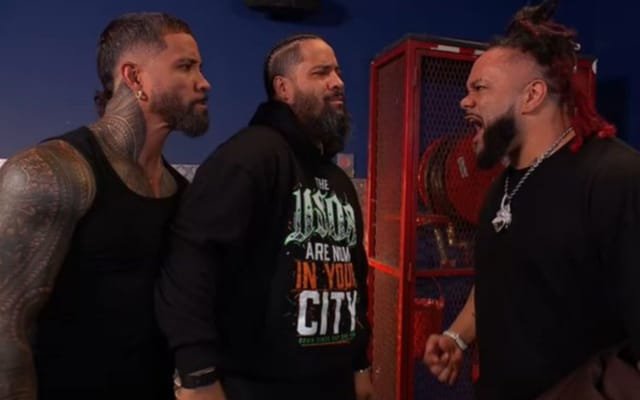
During a tense backstage exchange, Fatu reportedly clashed with The Usos over strategic direction, refusing to follow their lead in confronting Seth Rollins. Instead, he made it clear that his priorities lie elsewhere—specifically pointing attention toward a long-standing rival, LA Knight.
This moment is more than just a backstage disagreement. It signals a deeper evolution in The Bloodline’s identity, where individual ambition is beginning to override traditional hierarchy.
Primary SEO Keyword: Jacob Fatu Bloodline conflict WWE RAW 2026
Related semantic keywords: Jacob Fatu The Usos backstage tension, WWE Bloodline storyline 2026, LA Knight vs Jacob Fatu rivalry, Seth Rollins RAW segment, Roman Reigns Bloodline evolution, WWE faction conflict RAW, Usos WWE storyline 2026
The Bloodline in 2026: A Faction No Longer Built on Obedience
The modern version of The Bloodline is very different from its original structure under Roman Reigns. What once functioned as a tightly controlled hierarchy has now evolved into a loosely connected group of elite competitors, each with their own motivations and agendas.
Jacob Fatu’s arrival has only intensified this shift. While he has acknowledged Roman Reigns and aligned himself with the broader Bloodline identity, he has made it clear that he will not operate as a subordinate enforcer.
This distinction is crucial—it positions Fatu as a wildcard within the faction, someone who respects authority but refuses to be controlled by it.
Backstage RAW Tension: Jacob Fatu Rejects The Usos’ Direction
On the latest RAW, The Usos attempted to rally Jacob Fatu to support them in confronting Seth Rollins following a verbal exchange involving The Visionary. However, instead of joining the confrontation, Fatu remained silent, stared down Rollins, and walked away.
This unexpected reaction immediately created confusion among Jimmy and Jey Uso, who later questioned Fatu backstage about his behavior.
Fatu’s response was direct and uncompromising: he is not a henchman, and he is not operating under their leadership structure.
He further redirected their attention toward LA Knight, emphasizing that their focus should shift away from Rollins and toward unresolved issues with Knight instead.
Why LA Knight Is Now Central to This Bloodline Storyline
LA Knight’s involvement adds another layer of complexity to this evolving faction conflict. His history with The Usos and broader Bloodline structure has been well documented in WWE storytelling, making him a natural rival within this narrative framework.
Jacob Fatu’s decision to highlight Knight is significant because it suggests he is actively shaping the faction’s priorities rather than simply reacting to them.
This shift transforms Fatu from a reactive character into a strategic force inside the Bloodline ecosystem.
Jacob Fatu’s Role in The Bloodline: Ally, Outsider, or Future Leader?
One of the most compelling aspects of this storyline is the ambiguity surrounding Jacob Fatu’s long-term role. While he has acknowledged Roman Reigns and aligned himself with the Bloodline structure, his behavior suggests he is not fully integrated into the faction’s traditional hierarchy.
Instead, WWE appears to be positioning him as a disruptive force—someone who respects the legacy but refuses to follow outdated rules.
This creates three possible narrative directions:
- A loyal but independent Bloodline enforcer
- A rival faction leader within the same family structure
- A future challenger to internal Bloodline authority
The Usos’ Dilemma: Control vs Chaos
The Usos have traditionally served as key stabilizers within The Bloodline, operating as reliable tag team specialists and loyal family members. However, Jacob Fatu’s arrival introduces a challenge they are not fully prepared for.
Unlike previous Bloodline dynamics, Fatu does not respond to authority in a conventional way. His mindset is driven by dominance rather than hierarchy, which creates natural friction with The Usos’ more structured approach.
This tension reflects a broader theme within WWE storytelling: the breakdown of unified factions into individual power centers.
Seth Rollins, LA Knight, and the Expanding Conflict Web
The current Bloodline storyline is no longer limited to internal family dynamics. It now intersects with multiple top-tier WWE superstars, including Seth Rollins and LA Knight, creating a multi-layered narrative structure.
Rollins represents intellectual and psychological warfare, while Knight represents long-standing rivalry and external pressure. Jacob Fatu’s refusal to engage with Rollins while redirecting focus toward Knight suggests a strategic prioritization that may redefine upcoming feuds.
This interconnected storytelling approach allows WWE to keep multiple main-event level narratives active simultaneously without isolating them.
Why Jacob Fatu’s Character Direction Feels Different in 2026
Jacob Fatu’s current presentation stands out because it avoids the traditional “new faction member” formula. Instead of immediately conforming to established leadership, he is actively reshaping expectations.
This is a significant departure from earlier Bloodline introductions, where loyalty was typically immediate and unquestioned.
Fatu’s version of the character is built around controlled aggression, selective loyalty, and strategic independence.
Impact on WWE’s Main Event Landscape
This evolving dynamic has broader implications for WWE’s 2026 main-event scene. With Roman Reigns, Seth Rollins, LA Knight, and Jacob Fatu all positioned within overlapping storylines, WWE is effectively building a multi-threaded narrative structure across its top tier.
This allows for flexible storytelling where rivalries can shift, alliances can fracture, and championship implications can emerge organically from faction conflict.
| Element | Current Status | Story Impact |
|---|---|---|
| Jacob Fatu | Bloodline member with independence | Internal faction disruptor |
| The Usos | Traditional enforcers | Facing leadership challenge |
| LA Knight | Ongoing rival | External conflict catalyst |
| Seth Rollins | Main-event contender | Secondary conflict thread |
Final Thoughts: A New Kind of Bloodline Is Emerging
Jacob Fatu’s backstage confrontation with The Usos is more than a storyline disagreement—it is a sign that The Bloodline is no longer a strictly hierarchical faction. Instead, it is evolving into a collection of powerful individuals, each pursuing dominance on their own terms.
This evolution makes the faction more unpredictable, more complex, and arguably more compelling than ever before.
If WWE continues in this direction, the Bloodline saga of 2026 may not be about unity at all—but about the struggle for control within a fractured empire.
For breaking news and live news updates, like us on Facebook or follow us on Twitter and Instagram. Read more on Latest Sports on thefoxdaily.com.






COMMENTS 0