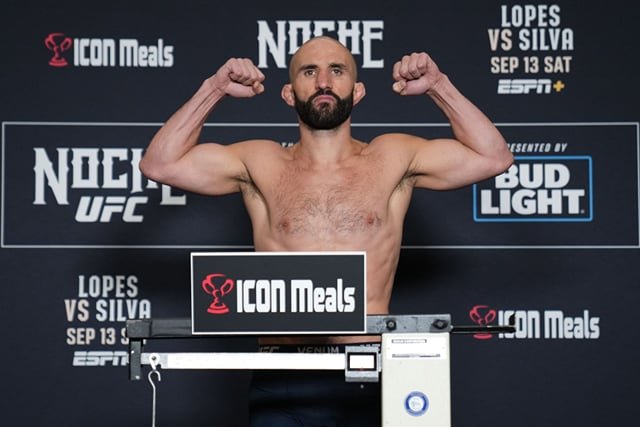
UFC lightweight fighter Jared Gordon has once again spoken publicly about a deeply painful experience from his childhood. The veteran MMA fighter recently responded to a social media clip featuring his earlier discussion of being sexually abused as a child, using the opportunity to address others who may have experienced similar trauma.
Gordon’s comments have drawn attention because he has repeatedly chosen to discuss the long-term effects of his childhood experience. Rather than presenting himself as an expert, he encouraged survivors to consider speaking with qualified mental-health professionals.
Jared Gordon Shares Message for Survivors
Gordon responded to a clip of his earlier comments by acknowledging how difficult the experience was for him and suggesting that people who have gone through similar experiences seek professional help.
Importantly, Gordon made clear that he was not speaking as a therapist or mental-health professional. His message was based on his own experience and his belief that survivors deserve appropriate care and an opportunity to talk about what happened to them.
His decision to speak openly about the subject is significant because conversations surrounding childhood sexual abuse can remain difficult for survivors for many years. Gordon’s comments also highlight the difference between sharing personal experience and giving professional advice.
Gordon Has Previously Discussed His Childhood Trauma
This is not the first time Gordon has publicly addressed what happened to him as a child. He previously discussed the experience in 2020 while reacting to a political and legal debate involving laws concerning sexual activity involving minors.
At that time, Gordon described being abused when he was a child and explained that he struggled to understand what was happening to him. He also connected the experience with serious emotional difficulties that followed during his life.
Gordon has previously spoken about how his childhood trauma contributed to a difficult period involving substance use. His comments provide a personal perspective on how traumatic experiences during childhood can have effects that continue long after the original event.
Why Gordon’s Message Matters Beyond MMA
Although Gordon is known primarily as a professional MMA fighter, his latest comments are not really about competition. They are about a personal experience that he has carried for years and his decision to speak about it publicly.
Public figures discussing difficult personal experiences can sometimes help make conversations about trauma less hidden. However, every survivor’s experience is different, and there is no single response or recovery process that applies to everyone.
That is why Gordon’s suggestion to seek professional support is an important part of his message. A qualified therapist or other appropriate professional can provide support that a fighter, celebrity, friend or social-media audience cannot replace.
Gordon’s MMA Career Continues Alongside His Personal Story
Gordon’s comments come while he remains a recognizable figure in the UFC lightweight division. According to the supplied report, he currently has a professional MMA record of 21 wins, nine losses and one no-contest.
His recent competitive results have included two consecutive losses, with his latest outing coming against Jim Miller at UFC 328. That sporting record represents only one part of Gordon’s story, however.
Professional fighters are often discussed primarily through wins, losses, rankings and performances. Gordon’s decision to discuss his childhood demonstrates that athletes also have experiences outside the cage that can shape their lives and careers.
| Jared Gordon Career Detail | Information |
|---|---|
| Sport | Mixed Martial Arts |
| Division | Lightweight |
| Professional Record | 21-9 with one no-contest |
| Recent Form | Two-fight losing streak |
| Most Recent Reported Opponent | Jim Miller |
The Difference Between Personal Experience and Professional Help
One of the clearest points in Gordon’s recent message is his acknowledgment that he is not a professional therapist. That distinction matters when discussing trauma and mental health.
Someone sharing their own experience can provide understanding and solidarity, but professional support may involve assessment, structured therapy and individualized guidance. Survivors can have very different reactions to traumatic experiences, and professional care can be tailored to those individual needs.
Gordon’s comments therefore work primarily as a message of encouragement rather than a clinical recommendation. His personal story can explain why seeking help mattered to him without suggesting that every survivor must follow exactly the same path.
Gordon’s Earlier Comments Show the Long-Term Impact
In his earlier public discussion, Gordon described not fully understanding what had happened to him as a child. He later connected the experience with emotional struggles and substance use during a difficult period of his life.
His account illustrates one reason childhood abuse can be difficult to discuss. Children may lack the knowledge or perspective needed to understand abusive behavior, and the effects can become clearer only much later in life.
For survivors, memories and emotions connected to childhood trauma can also be complicated. Some people may talk about their experiences openly, while others may choose privacy. Neither response should be treated as a universal measure of recovery.
Why Speaking About Childhood Abuse Can Be Difficult
Childhood sexual abuse is a sensitive subject that can involve fear, shame, confusion and isolation. Survivors may also worry about how other people will respond when they disclose what happened.
Gordon has acknowledged that discussing his own experience is difficult. His decision to speak about it publicly shows how personal these conversations can be, particularly when they involve experiences from early childhood.
At the same time, survivors should never feel pressured to share their experiences publicly. Speaking with a trusted adult, qualified mental-health professional or appropriate support service can provide a more private setting for discussing difficult experiences.
Gordon’s Message Goes Beyond His UFC Career
Gordon’s public identity has largely been built around MMA. His career includes years of professional competition and appearances at the highest level of the sport. Yet his latest comments reveal another part of his life that cannot be measured through fight statistics.
For athletes, personal struggles can exist alongside professional responsibilities. Training camps, fights and competition may occupy much of a fighter’s public life, while personal experiences remain largely private.
By discussing his childhood publicly, Gordon has chosen to make an extremely personal subject part of the conversation around his life. The focus of his latest message is not a fight or an opponent, but the importance of support for people who have experienced similar trauma.
A Broader Conversation About Survivor Support
Gordon’s comments also contribute to a broader conversation about how survivors can find appropriate support. Personal stories can help people feel less isolated, but they should be combined with reliable professional resources when someone needs specialized assistance.
For people dealing with the effects of childhood abuse, reaching out to a qualified professional can be one possible step. Trusted family members, school counselors, doctors and established support organizations can also help someone identify appropriate resources.
Most importantly, responsibility for abuse lies with the person who committed it. A child cannot be responsible for an adult’s abusive behavior.
What Gordon’s Latest Comments Tell Us
The latest discussion does not change Gordon’s MMA record or his current competitive position, but it adds context to the person behind the athlete. His willingness to revisit a painful chapter of his childhood shows that the subject remains meaningful to him years later.
His message also contains an important limitation: he does not claim to have all the answers. Instead, he encourages people with similar experiences to consider professional support.
That distinction makes the conversation more grounded. Gordon is sharing what happened to him and how it affected his life rather than presenting himself as someone capable of treating another person’s trauma.
Jared Gordon’s Story Has Multiple Chapters
From an MMA perspective, Gordon remains a veteran lightweight with a lengthy professional career. From a personal perspective, his story includes experiences that began long before he entered the professional fight world.
The two parts of his life exist simultaneously. His fight record can describe what happened inside the cage, while his personal experiences provide context for the challenges he has discussed outside it.
His latest comments demonstrate why athletes cannot always be understood solely through statistics. Behind every professional career is an individual with experiences, relationships and challenges that may never appear on a fight card.
Final Takeaway
Jared Gordon’s latest comments have brought renewed attention to his childhood experience of sexual abuse and the lasting impact he says it had on his life. Rather than presenting himself as a professional authority, Gordon encouraged fellow survivors to seek appropriate care and support.
His story also highlights the importance of treating conversations about childhood abuse with sensitivity. Survivors have different experiences and different ways of coping, and professional support can offer individualized guidance when it is needed.
For Gordon, the subject is one part of a much larger personal journey that exists alongside his career as a professional MMA fighter. His decision to speak about it publicly continues a conversation that extends well beyond the UFC and the sport of MMA.
For breaking news and live news updates, like us on Facebook or follow us on Twitter and Instagram. Read more on Latest MMA on thefoxdaily.com.






COMMENTS 0