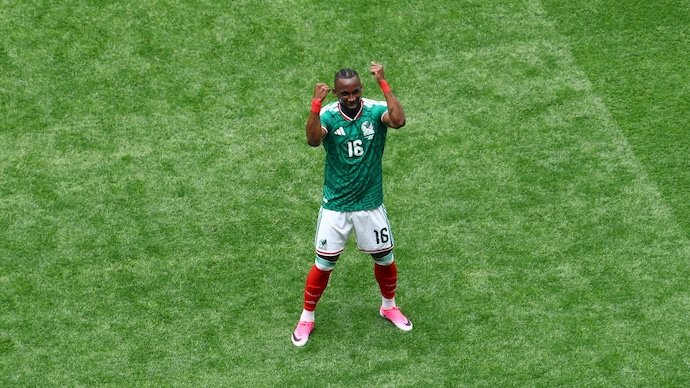
Football has a unique way of connecting generations, turning moments into memories and memories into traditions. On the opening day of the 2026 FIFA World Cup, Julian Quinones delivered a powerful reminder of that reality when he recreated Siphiwe Tshabalala’s iconic celebration after scoring for Mexico against South Africa.
What made the moment extraordinary was not merely the goal itself but the symbolism behind it. Sixteen years earlier, on the opening day of the 2010 FIFA World Cup, it was South Africa’s Tshabalala who scored the tournament’s first goal against Mexico and celebrated with a joyful dance that became one of the defining images of that World Cup.
In 2026, the roles were reversed. Mexico scored against South Africa. The celebration was the same. The memory instantly returned.
A Tribute That Transcended Generations
World Cup history is filled with memorable goals, but only a select few become cultural landmarks. Tshabalala’s thunderous strike against Mexico in Johannesburg in 2010 belongs in that category.
Beyond its technical brilliance, the goal represented hope, pride, and the excitement of Africa hosting the FIFA World Cup for the first time. The celebration that followed became instantly recognizable around the globe, symbolizing the joy and unity that football can create.
By recreating that celebration in 2026, Quinones transformed a simple goal celebration into a tribute to one of the tournament’s most cherished moments.
It was more than a nod to history—it was a reminder that the World Cup is built on stories that continue long after the final whistle.
How the Historic Moment Unfolded
The opening match of the 2026 FIFA World Cup carried immense expectations, with host nation Mexico eager to begin their campaign on a positive note in front of a passionate home crowd.
Just nine minutes into the contest, South Africa made a costly mistake while attempting to play out from the back. A misplaced sequence involving goalkeeper Ronwen Williams and midfielder Sphephelo Sithole allowed Mexico to regain possession in a dangerous area.
Quinones reacted quickly, taking advantage of the opportunity and calmly finishing through the goalkeeper’s legs.
As the stadium erupted, the forward sprinted away before recreating Tshabalala’s famous dance celebration, instantly creating one of the defining images of the tournament’s opening day.
The Beautiful Symmetry of World Cup History
Few moments in football history carry such remarkable symmetry.
| 2010 FIFA World Cup | 2026 FIFA World Cup |
|---|---|
| South Africa vs Mexico | Mexico vs South Africa |
| Siphiwe Tshabalala scores | Julian Quinones scores |
| Opening goal of the tournament | Opening goal of the tournament |
| Tshabalala celebration | Tshabalala celebration recreated |
| South Africa hosts World Cup | Mexico co-hosts World Cup |
The parallels between the two tournaments highlight why the World Cup remains football’s most emotionally powerful competition. Moments are never truly forgotten. They are revisited, reinterpreted, and celebrated by future generations.
Quinones’ celebration created a bridge between two eras of international football separated by sixteen years but united by a shared appreciation for the game’s history.
Why Tshabalala’s Goal Still Resonates Today
To fully appreciate Quinones’ tribute, it is important to understand the significance of Tshabalala’s original goal.
When South Africa hosted the World Cup in 2010, expectations were enormous. Questions surrounded the nation’s ability to stage the tournament, while hopes were high that the event would showcase African football on a global stage.
Tshabalala’s strike against Mexico delivered the perfect opening chapter.
The goal itself was spectacular, but its impact went far beyond the scoreline. It represented a historic moment for South Africa, Africa, and the World Cup as a whole.
Even today, many football supporters can instantly recall the celebration, the commentary, and the emotion that followed.
Few goals have left such a lasting cultural footprint.
Mexico’s Perfect Start to Their Home Campaign
While the celebration captured global attention, Mexico’s performance on the pitch was equally impressive.
The hosts controlled much of the match and consistently looked the more dangerous side. Their pressing forced mistakes, while their attacking movement created regular problems for South Africa’s defense.
After Quinones opened the scoring, Mexico continued to dictate the tempo and eventually doubled their advantage through veteran striker Raul Jimenez.
The experienced forward headed home from a well-delivered cross, scoring his first-ever World Cup goal and effectively putting the match beyond South Africa’s reach.
The result provided exactly the kind of start Mexico had hoped for as they seek to capitalize on home support during the tournament.
South Africa’s Difficult Evening
For South Africa, the match became increasingly challenging as events unfolded.
Already trailing on the scoreboard, they suffered another setback when Sphephelo Sithole received a red card for denying a clear goalscoring opportunity early in the second half.
The situation worsened later when Themba Zwane was also dismissed following a VAR review, reducing South Africa to nine players for the closing stages.
Competing against a confident Mexican side with such a numerical disadvantage proved an impossible task.
Although the defeat was disappointing, South Africa will still have opportunities to recover in the group stage. However, improving defensive discipline and decision-making will be crucial moving forward.
Julian Quinones Announces Himself on the Biggest Stage
Every World Cup introduces new stars to a global audience, and Quinones may have taken the first step toward becoming one of the tournament’s breakout performers.
Playing in his first FIFA World Cup, the forward demonstrated composure, intelligence, and clinical finishing when his team needed an early breakthrough.
Beyond the goal, his movement and work rate contributed significantly to Mexico’s attacking success.
Most importantly, he showed an understanding of football’s history and culture by choosing to honor a moment that transcends club and national rivalries.
That decision elevated his goal from a simple statistic to a memorable World Cup story.
The Power of Football Nostalgia
One reason the World Cup remains unmatched in global sport is its ability to create moments that resonate across generations.
Fans who watched Tshabalala score in 2010 instantly understood the significance of Quinones’ celebration. Younger supporters may have been inspired to revisit one of the tournament’s most iconic moments.
This blend of past and present is what makes the World Cup unique.
Every tournament builds upon the memories of those that came before it. Goals, celebrations, upsets, and heroes become part of a larger narrative that spans decades.
Quinones’ tribute perfectly captured that spirit.
What This Means for Mexico’s World Cup Ambitions
Beyond the emotional significance of the celebration, Mexico’s victory sends an important message to the rest of the tournament.
Historically, Mexico have been consistent participants in the knockout stages but have struggled to advance deep into the competition. Playing on home soil provides a unique opportunity to challenge that pattern.
The team showed several encouraging qualities in their opening match:
- Effective high pressing.
- Clinical finishing in key moments.
- Strong defensive organization.
- Leadership from experienced players.
- Confidence under pressure.
If these strengths continue throughout the tournament, Mexico could emerge as one of the most dangerous teams outside the traditional favorites.
A Celebration That May Define the Tournament’s Opening Week
World Cups often produce moments that become symbolic of the entire event. While it is still early in the competition, Quinones’ recreation of Tshabalala’s celebration has already established itself as one of the most memorable scenes of the tournament.
It combined history, emotion, respect, and sporting excellence in a way few football moments can.
The fact that it occurred against South Africa—the very nation connected to the original celebration—made the tribute even more powerful.
Conclusion
Julian Quinones’ goal against South Africa was important for Mexico’s World Cup campaign, but the celebration that followed ensured the moment would be remembered far beyond the final score.
By recreating Siphiwe Tshabalala’s iconic 2010 celebration, Quinones paid tribute to one of football’s most cherished World Cup memories while creating a new chapter of his own.
Sixteen years after Tshabalala thrilled the world by scoring against Mexico, the story came full circle as a Mexican player honored that moment against South Africa. In a tournament built on history, emotion, and unforgettable memories, it was a reminder that great World Cup moments never truly fade—they simply wait for the next generation to celebrate them again.
For breaking news and live news updates, like us on Facebook or follow us on Twitter and Instagram. Read more on Latest Sports on thefoxdaily.com.






COMMENTS 0