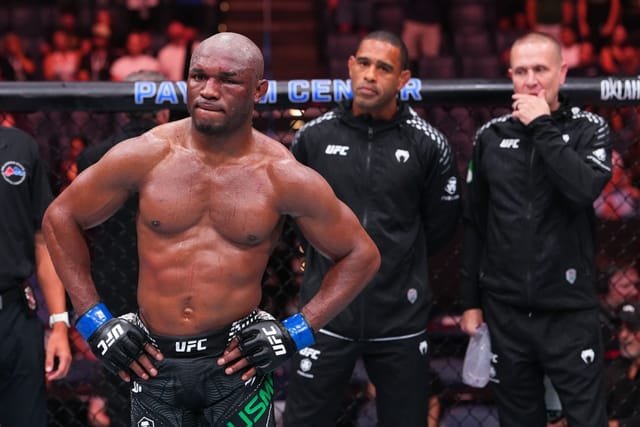
The career of Kamaru Usman has been defined by resilience, discipline, and an unwavering commitment to excellence. For years, the former UFC welterweight champion stood atop one of the toughest divisions in mixed martial arts, defeating elite challengers and establishing himself as one of the greatest champions in UFC history.
However, every legendary career eventually reaches a crossroads.
Following his latest defeat against Dricus du Plessis, Usman now finds himself confronting perhaps the most difficult decision any athlete can face: determining whether the pursuit of greatness still outweighs the physical, emotional, and personal sacrifices required to compete at the highest level.
The loss has reignited conversations about retirement, legacy, aging in combat sports, and the future of one of the UFC’s most respected champions. More importantly, it raises a broader question that extends beyond Usman himself: when should elite fighters know it’s time to walk away?
The Significance of the Dricus du Plessis Fight
On paper, losing to Dricus du Plessis is hardly a career-ending result.
The South African champion has emerged as one of the most complete fighters in the UFC, combining relentless pressure, physical strength, durability, and improving technical skills. His rise through the middleweight division has transformed him into one of the promotion’s biggest stars.
Yet for Usman, the defeat carried greater significance than the result itself.
The former champion openly admitted that this loss felt different from previous setbacks. Unlike some earlier defeats that could be explained by circumstances, injuries, short-notice opportunities, or isolated moments inside the cage, this performance forced a deeper evaluation of where he currently stands in his career.
That distinction is what makes the situation so compelling.
Why This Loss Feels Different
Throughout his career, Usman has repeatedly demonstrated an ability to overcome adversity.
When Leon Edwards shocked the MMA world with a dramatic head-kick knockout, many questioned whether Usman could recover. When he lost again in the trilogy bout, doubts intensified.
Even after setbacks, however, there remained a widespread belief that Usman was still competing at an elite level.
The defeat against du Plessis appears to have triggered a different kind of reflection.
Rather than focusing solely on technical adjustments or strategic improvements, Usman has openly discussed evaluating whether continuing to fight remains worthwhile for both himself and the people around him.
That language often signals a fighter beginning to think beyond competition.
Kamaru Usman’s Historic UFC Legacy
Before analyzing what comes next, it is important to understand what Usman has already achieved.
His accomplishments place him among the greatest welterweights in UFC history.
| Career Achievement | Significance |
|---|---|
| Former UFC Welterweight Champion | Reached the pinnacle of the division |
| Multiple Title Defenses | Established long-term championship dominance |
| Victories Over Elite Competition | Defeated several top-ranked contenders and champions |
| Long Winning Streak | Became one of the UFC’s most consistent performers |
| Pound-for-Pound Recognition | Widely regarded among the best fighters in the world during his prime |
For several years, Usman was considered the standard by which welterweight excellence was measured. His wrestling, cardio, physicality, and mental toughness made him one of the most difficult fighters to defeat in the sport.
That legacy remains secure regardless of what decision he ultimately makes.
The Reality of Aging in Mixed Martial Arts
One of the most challenging aspects of combat sports is that age eventually becomes an opponent every fighter must face.
Unlike team sports, where experience can often compensate for declining athleticism, mixed martial arts places enormous physical demands on competitors.
Reaction time, recovery speed, durability, explosiveness, and endurance all play critical roles in success.
As fighters approach their late thirties, maintaining those attributes becomes increasingly difficult.
At 39 years old, Usman is competing in an age range where very few athletes remain championship contenders, particularly in divisions filled with younger, faster opponents.
This reality does not diminish his accomplishments. Instead, it highlights the extraordinary challenge of remaining competitive at the elite level for so long.
Comparing the Recent Chapter of Usman’s Career
Recent results inevitably influence public perception.
While Usman’s overall career remains exceptional, his recent record reflects the brutal nature of elite competition.
| Period | Career Narrative |
|---|---|
| Championship Peak | Dominant title reign and pound-for-pound status |
| Leon Edwards Rivalry | Unexpected shift in divisional hierarchy |
| Khamzat Chimaev Fight | Competitive performance under difficult circumstances |
| Dricus du Plessis Fight | Raised questions about long-term future |
What stands out is that Usman himself referenced several previous fights positively, suggesting he believed there were still encouraging elements to build upon.
The du Plessis loss appears to have been different because it challenged his perception of where he currently belongs among the sport’s elite.
The Psychological Toll of Elite Competition
Fans often focus on physical damage when discussing retirement, but the mental side of the equation can be equally significant.
Preparing for world-class competition requires extraordinary commitment.
Training camps involve months of intense physical preparation, strict nutrition, strategic planning, recovery protocols, and countless sacrifices away from family and personal interests.
As athletes get older, they frequently begin asking whether those sacrifices remain worthwhile.
Usman’s comments suggest he is currently engaged in exactly that type of reflection.
The question is no longer whether he can fight. The question is whether continuing to fight aligns with his broader goals and priorities.
What Makes Retirement Decisions So Difficult?
Retirement is uniquely complicated in combat sports.
Unlike many professions, elite fighters often struggle to replicate the sense of purpose, adrenaline, and competition that define their careers.
Walking away means leaving behind not only a profession but also an identity.
For champions, the challenge becomes even greater.
These athletes have spent years proving they belong among the best in the world. Accepting decline or acknowledging that younger fighters may have surpassed them can be emotionally difficult.
This explains why so many legendary fighters wrestle with retirement decisions long after fans begin discussing the possibility.
The Dricus du Plessis Factor
Another important aspect of this story involves the quality of the opponent.
Dricus du Plessis is not simply another contender.
He represents the next generation of elite mixed martial artists, combining modern training methods, physical prime years, and championship confidence.
Many established stars across combat sports eventually encounter a similar reality: the sport continues evolving while new contenders emerge.
Facing a fighter like du Plessis is not merely a test of skill. It is also a confrontation between different eras of competition.
That context matters when evaluating what the loss truly means.
Could Usman Still Compete at a High Level?
Despite recent setbacks, writing off Usman entirely would be premature.
Elite experience remains valuable in mixed martial arts.
His wrestling credentials, fight IQ, championship experience, and professional approach still make him a difficult challenge for many opponents.
Even if another title run proves unlikely, there remains a strong argument that Usman could continue competing successfully against high-level competition.
The issue is not whether he can win fights.
The issue is whether those victories would provide the fulfillment necessary to justify continuing a demanding career.
How Fighters Protect Their Legacy
One reason retirement discussions attract so much attention is because they affect legacy.
History often remembers how athletes leave the sport.
Some retire while still performing at a high level, preserving an image of excellence. Others continue competing beyond their peak, resulting in difficult final chapters.
There is no universally correct approach.
However, many former champions eventually recognize that preserving long-term health and quality of life may outweigh the pursuit of one final title opportunity.
Usman’s decision will likely involve balancing competitive ambition against those considerations.
What Options Are Available?
As Usman evaluates his future, several potential paths exist.
- Retire from active competition and focus on broadcasting, coaching, and business ventures.
- Continue fighting selectively against high-profile opponents.
- Attempt one final run toward championship contention.
- Transition into mentorship and athlete development roles.
Each option offers different rewards and challenges.
The ultimate choice will depend on how Usman honestly assesses his physical condition, motivation, and long-term goals.
The Support of Fans and the MMA Community
One encouraging aspect of the situation is the respect Usman continues to receive throughout the MMA world.
Even critics who question his future acknowledge his contributions to the sport.
His message thanking supporters after the loss reflected the professionalism that has defined much of his career.
Rather than expressing frustration or making excuses, he emphasized gratitude and a willingness to evaluate the next step carefully.
That response illustrates why he remains one of the most respected figures in mixed martial arts.
What Happens Next?
The coming weeks may prove pivotal.
Usman has indicated that discussions with coaches, teammates, and trusted advisors will help shape his decision.
Those conversations are likely to focus on more than recent results.
Physical health, motivation, family considerations, and future opportunities outside the cage will all play important roles.
Whatever conclusion he reaches, it is unlikely to be made impulsively.
Champions who achieve sustained success typically approach major decisions with the same discipline that defined their careers.
Conclusion: A Defining Moment for a UFC Great
Kamaru Usman’s loss to Dricus du Plessis has created one of the most important moments of his professional career. For the first time, the former welterweight champion appears to be seriously evaluating whether continuing to compete remains the right choice.
Regardless of what happens next, his legacy is already firmly established. He was one of the dominant champions of his era, a pound-for-pound elite competitor, and a fighter who helped define a generation of UFC welterweights.
The coming decision is not about proving greatness. That chapter has already been written.
Instead, it is about determining how the next chapter should unfold. Whether Usman chooses retirement, one final run, or a new role within the sport, his impact on mixed martial arts will endure long after his final fight.
For now, the MMA world waits as one of its most respected champions considers a question every legendary athlete eventually faces: what comes after greatness?
For breaking news and live news updates, like us on Facebook or follow us on Twitter and Instagram. Read more on Latest Sports on thefoxdaily.com.






COMMENTS 0