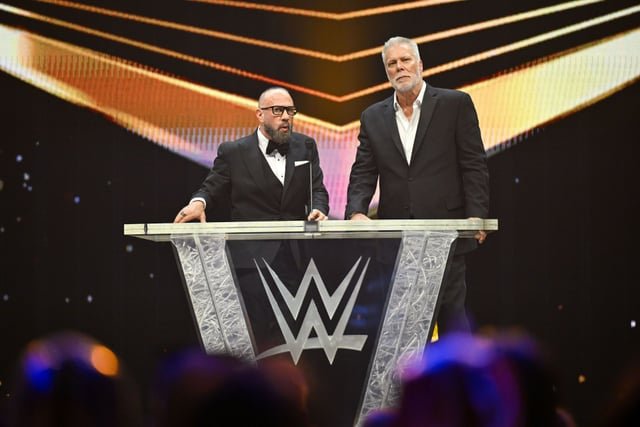
Kevin Nash has explained how a potential Kliq storyline involving Shawn Michaels, Triple H, Scott Hall and Sean Waltman came close to becoming reality before an injury changed WWE’s plans.
The Kliq remains one of the most influential groups in WWE history, even though the five-man backstage friendship never became a full-fledged storyline on WWE television during its original era.
The group consisted of Kevin Nash, Scott Hall, Shawn Michaels, Triple H and Sean Waltman. Although the members became major figures in WWE and WCW, their real-life connection was rarely presented as a unified on-screen angle.
There was eventually another opportunity to bring the group’s members together after WWE acquired WCW. Nash, Hall and Waltman had become closely associated with the nWo, while Michaels returned to WWE and eventually became involved in the faction. Triple H was the remaining major piece who could have completed the potential Kliq reunion.
According to Nash, however, his serious quadriceps injury ultimately prevented the idea from progressing.
Why the Kliq Never Became a WWE TV Storyline
The Kliq was formed during WWE’s 1990s era and became famous for the influence its members had backstage. Nash, Hall, Michaels, Triple H and Waltman were close friends and eventually became some of the most recognizable names in professional wrestling.
Despite their real-life relationship, WWE did not build a storyline around all five members appearing together as The Kliq.
The group’s path changed significantly in 1996 when Nash and Hall left WWE for WCW. Michaels and Triple H remained in WWE, with the latter eventually becoming a founding member of D-Generation X alongside Michaels and Chyna.
Waltman also eventually joined WCW before returning to WWE and becoming associated with DX. As the wrestlers moved between promotions and developed different characters, the opportunity for an original Kliq storyline became increasingly complicated.
The nWo Created Another Opportunity
WWE’s purchase of WCW in 2001 created a new possibility.
The nWo arrived in WWE in 2002, initially featuring major stars associated with the original WCW faction. Nash and Waltman were part of the WWE version, while Hulk Hogan also played a prominent role before eventually moving away from the group.
Scott Hall later departed WWE, but the company still had several members of the original Kliq available. Shawn Michaels also returned to WWE and became involved with Nash and Waltman.
That left Triple H as the obvious missing piece if WWE wanted to create a storyline that connected the four surviving members on television.
From a historical perspective, it was a rare situation where several members of the Kliq were working for the same company at the same time and could potentially have been placed in one major angle.
Kevin Nash Says His Quad Injury Changed Everything
Nash recently discussed the unrealized storyline on the Kliq This podcast.
According to Nash, there was an opportunity to involve Michaels, Waltman, himself and Triple H in an angle that could finally have brought the Kliq concept to WWE television.
However, Nash suffered a serious quadriceps injury during a RAW tag team match. The injury occurred shortly after he had returned from a biceps problem and forced him to spend roughly nine months away from in-ring competition.
Nash explained that the injury effectively ended the possibility of moving forward with the idea at that point.
His account suggests that the timing of the injury was particularly unfortunate because Michaels had already returned to active WWE programming and Triple H could potentially have been brought into the story.
Nash’s Return Had Come Earlier Than Planned
The injury was made even more significant by the circumstances surrounding Nash’s return.
The Hall of Famer had reportedly returned to action earlier than originally expected following his previous biceps injury. His comeback was therefore interrupted almost immediately by another major physical setback.
The quadriceps injury required an extended recovery period, meaning Nash could no longer participate in the potential storyline that might have connected him with Michaels, Triple H and Waltman.
For a concept that depended heavily on the presence of multiple established performers, losing Nash at that particular moment made it difficult for WWE to continue with the same plan.
What a Kliq Angle Could Have Looked Like
WWE never officially presented the proposed storyline, so its exact structure remains unknown.
However, the circumstances created several possibilities. Michaels and Triple H already had an extensive history through D-Generation X, while Nash and Waltman had their own connection through the nWo.
A storyline involving the four could have used those histories to explore the relationship between two of wrestling’s most recognizable groups from the 1990s.
It also could have provided WWE with a way to acknowledge the real-life history of the performers without necessarily presenting The Kliq as a traditional faction.
Because the idea was never completed, any specific version of the angle remains hypothetical rather than part of WWE canon.
The Kliq’s Influence Went Beyond One Storyline
Even without a dedicated television angle, the members of The Kliq became central figures in professional wrestling for decades.
Shawn Michaels and Triple H became two of WWE’s most important performers and eventually played major roles behind the scenes. Nash and Hall became closely associated with WCW’s nWo era, while Waltman had major runs in both WWE and WCW.
The group’s influence therefore did not depend on a single storyline.
Instead, its importance came from the individual careers of its members and the connections they maintained across different periods of wrestling history.
Kevin Nash Also Discussed Rey Mysterio’s Mask Loss
During the same discussion, Nash also spoke about another significant moment from his WCW career involving Rey Mysterio.
At SuperBrawl IX in 1999, Mysterio and Konnan competed against Nash and Scott Hall in a Hair vs. Mask match. Mysterio and Konnan lost the contest, resulting in Mysterio being forced to remove his famous mask.
The moment became one of the most debated decisions of Mysterio’s WCW career because the mask had been a central part of his identity as a luchador.
Nash said during the podcast that he was responsible for booking Mysterio to lose the mask.
Why Rey Mysterio’s Mask Was Removed
According to Nash, WCW was running a major advertising campaign at the time and wanted to feature Mysterio without his mask.
The decision had significant consequences for Mysterio’s presentation. After losing the mask, he competed without it for the remainder of his WCW run.
The mask was not simply a piece of ring gear. It was closely connected to Mysterio’s luchador identity and had been part of his presentation throughout his rise in Mexico and the United States.
His later WWE career would restore the mask as an essential part of his character, eventually becoming one of the most recognizable visual symbols in modern professional wrestling.
Two Different Examples of Nash’s Influence Behind the Scenes
Nash’s comments about the Kliq and Mysterio highlight two different aspects of his career.
On one side, he was an established main-event performer who became involved in major faction storylines such as the nWo. On the other, he also had influence over creative decisions during his time in WCW.
The unrealized Kliq storyline demonstrates how injuries and changing circumstances can affect wrestling plans before they ever reach television. Meanwhile, the Mysterio mask decision shows how creative choices made behind the scenes can have long-term consequences for a performer’s character.
| Storyline | Key Development | Outcome |
|---|---|---|
| Kliq reunion | Nash, Michaels, Waltman and potentially Triple H were positioned for a possible angle | Nash’s quadriceps injury ended the opportunity |
| Rey Mysterio mask loss | Mysterio and Konnan lost a Hair vs. Mask match at SuperBrawl IX | Mysterio wrestled without his mask in WCW afterward |
Why the Kliq Reunion Remains a Fascinating WWE What-If
The proposed storyline remains interesting because the necessary pieces were briefly available.
WWE had Nash and Waltman through the nWo, Michaels was back in the company, and Triple H was already one of WWE’s most important performers. A successful storyline could have connected several major chapters of wrestling history in one program.
Instead, Nash’s injury removed one of the central performers from the equation for an extended period.
The situation also demonstrates how unpredictable professional wrestling can be behind the scenes. Even when performers and creative plans appear to align, injuries, contracts, schedules and changing storylines can prevent an idea from reaching television.
Kevin Nash’s Kliq Legacy Remains Intact
Although the Kliq never received the major WWE television storyline that fans might have expected, the group’s legacy has remained firmly connected to wrestling history.
Its members went on to become world champions, Hall of Famers and influential figures in multiple promotions. The friendships and professional relationships formed during the 1990s continued to be discussed long after the original group stopped functioning as a unified backstage presence.
Nash’s latest explanation provides additional context for one of wrestling’s notable unrealized storylines. Rather than the idea simply being abandoned without explanation, his account points to a major injury as the event that prevented the angle from developing.
Final Verdict
Kevin Nash’s account offers a glimpse into what could have been a major WWE storyline involving several members of The Kliq. With Nash, Shawn Michaels and Sean Waltman together and Triple H potentially available, the pieces appeared to be in place for a unique angle.
Nash’s quadriceps injury changed those plans and kept him out of action for around nine months. As a result, WWE never presented the Kliq reunion storyline that fans could have seen on television.
His comments about Rey Mysterio’s WCW mask loss also shed light on another major creative decision from his career. Both stories underline how much behind-the-scenes decisions, injuries and timing can influence the direction of professional wrestling.
For breaking news and live news updates, like us on Facebook or follow us on Twitter and Instagram. Read more on Latest Sports on thefoxdaily.com.






COMMENTS 0